 in Barcelona
 3 to 5 Nov 2026
The US city of Shreveport is one of Louisiana's best -known cities packed with culture, film and music history. It was even a key location in Charlene Harris's Sookie Stackhouse novels and its HBO TV adaptation True Blood. But despite being a recognized city, it is also one of the poorest big cities in the country with a poverty rate of around 30 percent according to world population review this shows in the city's digital divide and was seen by former cto keith hansen when the mayor asked him to join the city in 2019 we don't have access problems right it's an urban center right so we're 99.9 percent covered by cable wires along houses. We've got a wire next to every house, but not nearly as many people can afford that. Hansen's priority was to bridge that digital divide. To find out exactly how great it was, Hansen, who has an extensive experience in software and his team mapped out how many houses had actual internet connections. The map showed clearly a need for internet adoption. The city though only had 2.4 million dollars from the american rescue plan to spend on bringing internet to those unconnected so hansen had to scratch out a traditional telecom due to cost turning to decentralized wireless and cbrs and partnering with spread networks to use poland mobile we're deploying a network utilizing cbrs citizens broadband radio service and that is a license -free broadband uh spectrum that is available to any operator that wishes to deploy that in the u .s it was given to the citizens by the military as the precursors to 4g basically this technology supports e -sim you don't need to tie yourself to one network so that's why it's not wi -fi right i mean it is wireless um it's just cellular and so because of that you need a cellular modem connected to it, right? You need a special one, though. It's not AT &T's network. It's not Verizon's network. It's not a premium network. Us, as citizens, business owners, what have you, to build our own networks. And at the end of the day, radio, big fat backhaul pipe, and then a receiver on the other side. That's what you're paying for when you pay big conglomerate IST. to build all this for you when we asked them hey we want to build our equipment we want to own it we want it on our rooftops on our water towers etc how much will this cost it was a million dollars a year well we spent a million dollars and covered seven uh seven neighborhoods the antennas were installed on the public library roofs to blast the library's network to neighborhoods that needed it initially shreveport and networks were going to use a helium network but decided to go with Poland Mobile instead because of their gateways. They have omnidirectional antennas right so so they're blasting signal equally powerful which means it dilutes the you know it shortens up the leg that you can you can blast to right but it hits every angle it makes no sense when you're a water tower with a light behind you and the meanie neighborhood in front of you right we wanted the strongest wavefront possible to hit that house right and so we use what are called sector antennas so instead of blasting 360 degrees you know equally powerful in all directions we focus all that power and then blast into a sector to get the free internet access all residents need is a library card which they can acquire for free with an id by presenting the card they get the modem for free as well as everything needed to operate it like the eSIM card. Right. Which only helps the library get more grant funding and provide more services and all the things that they need to function. Right. So because the project was paid through funds and uses the Internet network of the library, the only long term costs the city has are maintenance, which is already set in the contract. Keith is no longer working for the city, but when he was in charge, he and his team in searching for an open standard network for smart city applications. turned to LoRaWAN for the long -range capability and Helium for the decentralization of the connectivity. For Hansen, even though cellular was readily available, it was an overkill for him to connect smart sensors that send small packets of data. When cities use open standards like LoRa, it enables citizens and new businesses the ability to ride that same network, which, for Keith, promotes a community around the network as well as... economic benefits when businesses operate within the city network and none of this is possible using networks provided by typical carriers right proprietary networks and spectrums you can't do this kind of you know quick shift to another option open technologies are what i that was a drum i beat over and over and over if it's if it's proprietary i don't want a commitment right i want to make sure where we can switch to other things. The network was clear, but they needed to figure out the use cases for Shreveport. You know, a few things around environmental monitoring, helping to manage systems for the water utility. So in Shreveport, there is a need to upgrade, modernize their metering system for reading, for example, water utility meters. And that is one of the... the best and ideal use cases for LoRaWAN. Right now we have a bunch of environmental quality sensors, things like weather monitors, CO2 monitors and the like. The water utility is in the process of vetting vendor proposals for the first LoRaWAN solution that they'll be delivering and that's for the advanced metering infrastructure. The Shreveport project has shown communi- can function without the need of telcos and cable operators by deploying two DY networks, one CBRS network for internet access and one LoRa for smart city applications, with the view of expanding both bringing internet to 15 other neighbourhoods. If you want more stories like this one and updates, don't forget to follow up on Current Insights.
DeWi Networks in Shreveport Offer Free Internet & Smart City Apps
ConnectivityPrivate NetworksShreveport
In this video
-
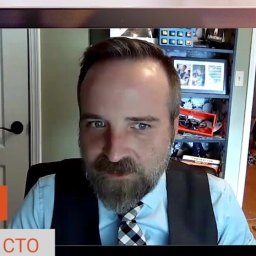 Keith Hanson
Former CTO, City of Shreveport
-
 Winston Lazar
CEO, Spread Networks
About this video
In our latest video, we delve into the innovative world of Decentralized Wireless (DeWi) networks, showcasing how they empower communities with limited budgets to establish their own connectivity infrastructure. This bypasses the traditional reliance on telecommunications companies and cable operators, paving the way for a more accessible and community-driven approach to internet connectivity.
Our discussion features Keith Hanson, who served as the Chief Technology Officer for the City of Shreveport, alongside Winston Lazar, the CEO of Spread Networks. Both bring a wealth of experience and insight into the implementation of DeWi networks. Their collaboration on a groundbreaking project has been instrumental in providing free internet access to homes and communities in a US municipality that previously lacked connectivity.
This video explores the technical and logistical aspects of setting up a DeWi network. We discuss the challenges and solutions involved in deploying this innovative technology, particularly in areas with financial constraints. The focus is on how non-proprietary solutions and an Internet of Things (IoT) network can be leveraged for a smart city project, offering a scalable and sustainable model for other communities to follow.
Moreover, we examine the broader implications of such projects on digital inclusion and community development. The initiative by Hanson and Lazar is more than just providing internet access; it's about bridging the digital divide and fostering an environment where technology serves as a tool for empowerment and progress.
Join us in this insightful video as we navigate through the intricacies of DeWi networks. Learn about the practical steps involved in setting up these networks, the benefits they bring to communities, and the future prospects of decentralized connectivity.
Read the transcript machine-generated
Latest Originals
See all 4:45
AI Agents in Digital Twins: Bringing Promises to Life?
 5:57
Nature as a Sensor: Rethinking Smart Cities, Utilities
 2:57
Audio, the Forbidden Fruit of Smart Cities in France
 2:56
Why did the metaverse fail?
 4:54
High-resolution, Predictive Weather Data: The Next Step for Mobility
 5:20
The State of the Smart Traffic Industry in 2026
Latest news
All news- Bryan Texas Utilities To Replace 50,000 Smart Meters Over Five Years29 Oct 2026
- UK National Parks Launch Wildfire Resilience Programme In Cairngorms29 Oct 2026
- Ameresco Completes $5.9M Water Metering Upgrade Covering 8,000 Meters In Mustang, Oklahoma29 Oct 2026
- Victoria Adds 11 AI Bushfire Cameras To Seven-Unit Plantation Network In A$3.8M Programme29 Oct 2026
Kurrant advisory
Planning a smart city or utility project? Talk to Kurrant.
Behind these interviews is Kurrant's advisory team, working with utilities, cities and the companies that serve them.
- Strategy AdvisoryKurrant is actively involved in resolving the challenges that cities, utilities and industry players are facing.
- M&A AdvisorySmart city and utility expertise for successful deals, turning insights into strategic gains.
- Engineering & ProcurementBetter engineering and procurement decisions, by identifying and developing digital and IoT solutions across use cases.
Or write to us: contact@kurrant.com
Send us a message