Interoperability

Why does it matter?

Interoperability streamlines smart city solutions integration, boosting efficiency while preventing vendor lock-in. This fosters innovation and ensures operational flexibility, enabling sustainable and competitive investments in connected infrastructure. Kurrant has developed a proven expertise in major smart city interoperability standards like TALQ, FIWARE and uCIFI. We've helped leading cities, utilities, system integrator and solution vendor specify, develop, and implement interoperable projects and solutions.

Smart street lighting · Working together

Three standards, one data stream from luminaire to city

Zhaga, the DALI Alliance and the TALQ Consortium work together to unify the data of smart street lighting. Each keeps its own specification. Together they cover the whole chain, so cities can mix certified products and still get one consistent stream of data.

LED engine and sensors→Luminaire→Communication node→City management software
1 The fitting Zhaga Consortium

Standard sockets and interfaces for LED engines, sensors and communication nodes, so parts from different makers fit the same luminaire.

Zhaga Book 18 · Zhaga-D4i

Zhaga: standardized interfaces for smart outdoor lighting

Zhaga is the global alliance of lighting companies that standardizes interfaces of LED light sources and luminaires. The Zhaga specifications ensure interoperability between LED modules, LED drivers, sensors, and communication modules from different suppliers. By establishing common interfaces and standards, Zhaga enables cities and lighting professionals to mix and match components from various manufacturers, creating flexible and future-proof outdoor lighting solutions. This ecosystem approach reduces costs, prevents vendor lock-in, and accelerates innovation in smart lighting applications.

2 The data DALI Alliance

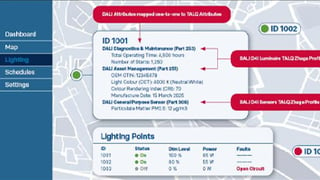
Digital lighting control (IEC 62386). With D4i, each luminaire reports energy, diagnostics and asset data to the node on top.

DALI-2 · D4i · DALI+

DALI: Digital Addressable Lighting Interface

The DALI Alliance is the global industry organization for DALI lighting control technology. DALI (Digital Addressable Lighting Interface) is an internationally recognized and standardized protocol (IEC 62386) that enables seamless communication between lighting control devices from different manufacturers. This open standard ensures interoperability, flexibility, and future-proof lighting installations. With DALI, you can create sophisticated lighting control systems that combine luminaires, sensors, control devices, and gateways from various vendors on a single network. The DALI Alliance drives innovation, ensures product certification, and promotes best practices for intelligent lighting control across commercial, industrial, and smart building applications.

3 The city platform TALQ Consortium

One protocol between outdoor device networks and the city’s central management software, for lighting and other smart city devices.

TALQ Smart City Protocol

TALQ: standardized APIs for smart lighting control

TALQ is a world-wide industry consortium that focuses on promoting open interoperability among smart city solutions by designing a standardized TALQ openAPI specification. This specification facilitates communication and integration between various smart city solutions, enabling cities to deploy a mix of products from different manufacturers that can work seamlessly together using the same Central Management Software platform, thereby enhancing the efficiency and flexibility of smart solutions for cities. Smart city solution vendors can join the Consortium as members, support the TALQ API and pass the TALQ certification to be listed as part of the TALQ-certified product on the TALQ web site.

Watch and read

Smart city devices

More open standards for smart cities

The device data model

uCIFI: smart city interoperability

One open data model and a certification program so smart city devices from different vendors work on any network.

Unified data model · LwM2M · Device certification

The uCIFI® Alliance is composed of leading companies and municipalities committed to multi-vendor smart city solution interoperability. The Alliance is promoting interoperability confidence through the development of the uCIFI® open unified data model and a smart city device certification program. uCIFI® leverages and extends existing standards (Lightweight M2M and Device Management Smart Objects) with implementable and testable device-specific profiles of the unified data model. The uCIFI® Alliance closes the interoperability gap by providing network-agnostic device communications for use on various cellular, mesh and low-power wide-area networks. By eliminating expensive proprietary API integrations that can lead to vendor lock-in, the Alliance’s mission of full interoperability for all smart city devices can be realized.

Visit website

Seeking guidance on your journey towards interoperability?

At Kurrant, we are experts in specifying and developing solutions compliant with key interoperability standards. Our team contributed to founding the TALQ Consortium and the uCIFI Alliance and we have been actively involved in FIWARE projects.