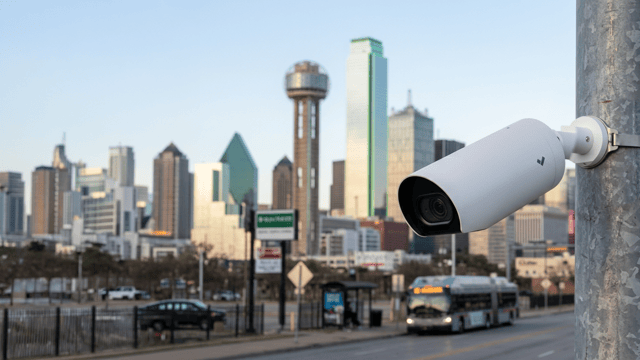
The Oakland City Council voted to continue deploying nearly 300 automated license plate reader cameras across the city under a two-year agreement with Flock Safety, the Georgia-based surveillance technology provider. The decision also authorizes the Oakland Police Department to install 40 additional video surveillance cameras in commercial areas, expanding the municipality’s monitoring infrastructure amid ongoing national debates over data privacy and civil liberties.
Data-Sharing Restrictions Address Federal Access Concerns
Council members introduced amendments prohibiting federal agencies and out-of-state law enforcement from accessing Oakland’s surveillance data. The provisions specifically bar the company from including Oakland data in national or multi-state search queries, with financial penalties of up to $200,000 for violations.
The restrictions respond to documented concerns about Flock’s data-sharing practices. The Electronic Frontier Foundation reported in November 2025 that more than 50 federal, state, and local agencies conducted hundreds of searches through Flock’s network in connection with protest activity. Research from the University of Washington Center for Human Rights found that U.S. Border Patrol accessed license plate data from at least ten law enforcement agencies that had not explicitly authorized such sharing during 2025.
The Oakland amendments also prohibit data sharing for reproductive healthcare investigations or federal immigration enforcement. California state law already restricts sharing license plate reader data with federal authorities, though investigations have found some agencies circumventing these protections.
Crime Statistics Cited But Causation Remains Unverified
The police department presented operational data showing 232 arrests linked to Flock camera data between July 2024 and November 2025, along with 68 firearm recoveries. The department’s 293 cameras captured approximately 1.4 million vehicle license plates during the month preceding the council vote.
Oakland has experienced significant crime reductions during the period Flock cameras have been operational. Homicides declined from 126 in 2023 to 86 in 2024, with 59 recorded through late November 2025. Carjackings dropped 66% and homicides fell 53% compared to prior peaks.
However, these trends align with broader national patterns. The FBI’s 2024 crime statistics showed murder and non-negligent manslaughter decreased 14.9% nationwide compared to 2023, with overall violent crime dropping 4.5%. The Council on Criminal Justice reported homicides fell 16% across its study cities in 2024, with the decline continuing into 2025.
No independent studies have established a causal link between Oakland’s Flock deployment and the observed crime reductions. Oakland’s Ceasefire program, a focused deterrence initiative rated “Effective” by the National Institute of Justice, contributed to a 50% reduction in homicides and shootings between 2012 and 2019 before being largely dismantled during the pandemic.
National Scrutiny Intensifies Over Privacy Practices
Flock Safety operates in more than 5,000 communities across 49 states, performing over 20 billion vehicle scans monthly. The company has faced mounting criticism over data access practices and potential misuse.
In August 2025, Evanston, Illinois, deactivated 19 Flock cameras after concluding the company violated state privacy laws by sharing data with federal immigration agents. Austin, Texas, Denver, and other municipalities have declined to renew Flock contracts amid similar concerns.
Independent security researchers published findings earlier in 2025 demonstrating vulnerabilities in Flock’s camera systems that allowed unauthorized data access. The company subsequently committed to security improvements.
Council member Carroll Fife cast the sole opposing vote, citing the company’s security record rather than opposition to surveillance technology generally. The remaining council members approved the contract while acknowledging reservations about the vendor.
Contract Includes Future Vendor Review
The approved agreement requires Oakland police to conduct a public procurement process for alternative license plate reader vendors during the two-year contract period. This provision responds to concerns about Flock’s market dominance and documented policy violations.
A former member of Oakland’s Privacy Advisory Commission has filed litigation alleging the police department violated its own data-sharing policies. The commission did not support the new contract.
The council’s decision reflects tensions between law enforcement demands for investigative tools and civil liberties protections. With staffing at 509 sworn officers, the department characterized the technology as essential for supplementing limited patrol capacity.