Los Angeles-based Automotus has closed a $9 million funding round to accelerate the deployment of its AI-powered curb management technology across U.S. cities and airports. The investment arrives as municipalities increasingly seek automated solutions to address mounting commercial vehicle congestion at urban curbsides.
Funding Structure and Investor Consortium
The capital infusion comprises $7.5 million in equity financing alongside $1.5 million in credit facilities, according to CEO Jordan Justus in an interview with GovTech. The round was backed by Santa Barbara Venture Partners, Weatherford Capital, BarronKent Ventures, Techstars Ventures, and kineo, among other investors.
This latest investment follows a $9 million seed round the company closed in December 2022, which was led by CityRock Venture Partners, Quake Capital, and Bridge Investments. The new round brings Automotus’s total equity funding to $26 million since its founding in 2017.
Technology Addressing Urban Curbside Congestion
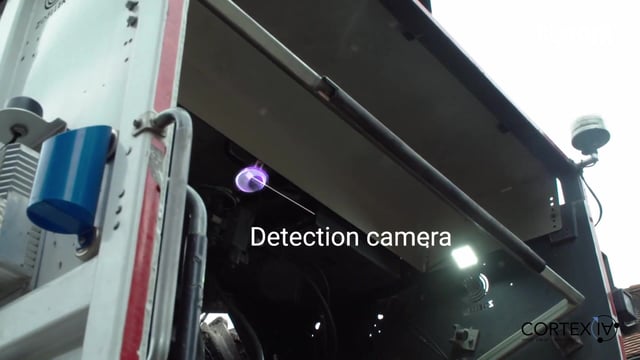
Automotus deploys cellular-enabled cameras equipped with proprietary computer vision algorithms on existing urban infrastructure such as streetlight poles and traffic signals. These devices monitor curbside activity in real time, capturing license plate data and vehicle movements to enable automated payment collection, violation enforcement, and occupancy analytics without requiring drivers to download mobile applications or interact with parking meters.
The platform powers what the company terms “Smart Loading Zones” and “Zero Emissions Delivery Zones,” designated areas where delivery vehicles, ride-hailing services, and commercial fleets can load and unload with automated time-based billing. Cities can implement dynamic pricing structures and offer discounted rates for electric vehicles to incentivize cleaner commercial fleets.
Municipal Deployments
The company has established partnerships with multiple U.S. municipalities including Pittsburgh, Santa Monica, Los Angeles, Omaha, Nashville, and Lincoln, Nebraska. Pittsburgh’s smart loading zone program, launched in 2021 in partnership with Automotus, has expanded from 20 initial locations to 75 zones. The city reported a 95 percent reduction in double-parking incidents and a 60 percent decrease in average parking duration within monitored areas. Pittsburgh has been an active testing ground for curb management technologies.
In Lincoln, Nebraska, the company’s cameras are informing parking policy development as part of the city’s Downtown Corridors Project.
Growth Capital Deployment Strategy
Company leadership indicated the fresh capital will fund deeper product development, geographic market expansion, and enhanced customer support capabilities. The investment reflects growing investor confidence in curb management technology as cities grapple with the convergence of e-commerce delivery growth, ride-hailing proliferation, and autonomous vehicle integration.
Market Context and Competitive Landscape
The curbside management technology sector is experiencing substantial growth as urban planners recognize the curb as a critical infrastructure asset requiring active management. Market research suggests the global curbside management systems market reached approximately $1.84 billion in 2024, with projections indicating growth at a compound annual rate exceeding 10 percent through the early 2030s.
Automotus competes with other curb technology providers including Hayden AI, which focuses on mobile automated bus lane enforcement, and Populus, which offers digital curb management platforms. The company’s differentiation centers on full automation through computer vision, eliminating the need for driver-side mobile applications that have historically shown adoption rates below 9 percent among commercial drivers.
Company Background
Jordan Justus and Harris Lummis founded Automotus in 2017 while students at Loyola Marymount University in Los Angeles. Justus serves as chief executive officer while Lummis leads technology development as chief technology officer. The company has grown to approximately 24 employees and maintains its headquarters in the Los Angeles area.
The platform has earned recognition on the GovTech 100 list and joined several accelerator programs including the NVIDIA Metropolis ecosystem, Qualcomm Smart Cities Accelerator Program, and AWS Sustainable Cities Mobility cohort.