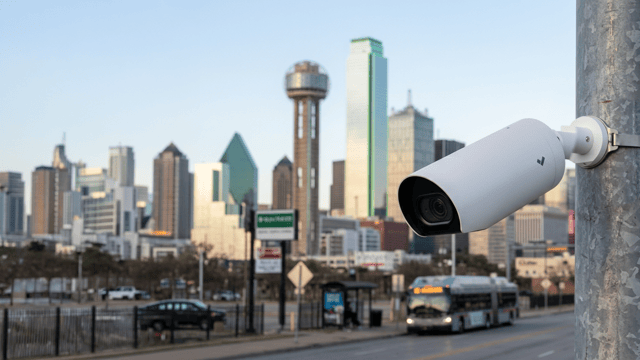
The East Lansdowne Police Department in Delaware County, Pennsylvania, has begun installing a network of 41 artificial intelligence-enabled surveillance cameras throughout the 0.2-square-mile borough, marking one of the most comprehensive real-time tracking systems deployed by a small municipality in the Philadelphia region.
State-Funded Initiative Partners Local Police With Cloud Security Provider
The deployment, announced in early January 2026, represents a strategic partnership between the borough, regional systems integrator DELCO Solutions, and California-based cloud security company Verkada Inc. The project received partial funding from the Pennsylvania Department of Community and Economic Development.
More than half of the planned cameras are already operational along Baltimore Avenue, Pembroke Avenue, and other public thoroughfares within the borough.
AI Search Capabilities Streamline Evidence Review
Unlike conventional surveillance systems that require manual footage review, the Verkada platform incorporates AI-powered analytics that allow investigators to search recorded video using keyword descriptors. Officers can filter footage by attributes such as vehicle characteristics, clothing descriptions, or movement patterns, reducing the time required to locate relevant evidence.
The cameras also provide pre-arrival situational awareness for responding officers. Personnel can access live feeds directly from patrol vehicles while en route to calls, allowing them to assess conditions at a scene before physical arrival.
According to department statements, the system will cover public monuments, municipal parking lots, and major entry and exit points throughout the borough. When fully deployed, comprehensive coverage will make it difficult for anyone to enter or leave East Lansdowne without being recorded.
Privacy Safeguards Distinguish System From Facial Recognition Networks
Department officials emphasized that the cameras are positioned exclusively along public roadways and sidewalks, with deliberate measures to exclude private residences and business interiors from surveillance zones. Window areas captured inadvertently will be digitally obscured to protect residential privacy.
The system does not employ biometric facial scanning or license plate number reading, according to police statement, distinguishing it from automatic license plate reader (ALPR) networks operated by competitors like Flock Safety that have drawn scrutiny from civil liberties organizations. The American Civil Liberties Union and Electronic Frontier Foundation have both raised concerns about the Fourth Amendment implications of widespread vehicle tracking systems, particularly following reports of data being shared with federal immigration enforcement agencies.
Geographic Position Creates High-Traffic Surveillance Corridor
East Lansdowne’s location contributes to the strategic importance of its surveillance infrastructure. The borough sits approximately half a mile west of Southwest Philadelphia and serves as a transit corridor between the city and surrounding Delaware County communities. Despite its population of roughly 2,700 residents, the municipality experiences significant through-traffic given its position along major thoroughfares.
Chief Cadden acknowledged this dynamic, noting that the borough encounters substantial criminal activity relative to its size—a factor that influenced the decision to pursue comprehensive camera coverage.
Verkada’s Growing Municipal Footprint
San Mateo-based Verkada, founded in 2016 by Stanford University graduates, has expanded rapidly in the municipal security market. The company’s hybrid cloud architecture processes video both on-device and through centralized servers, enabling AI-powered search capabilities while minimizing bandwidth requirements. Verkada reports serving over 33,000 organizations across 93 countries, including 91 Fortune 500 companies and numerous school districts, healthcare facilities, and government agencies.
The company has positioned its platform as an alternative to traditional server-based video management systems, offering features including license plate recognition, persons-of-interest alerts, and integration with access control and environmental monitoring systems.
Constitutional Questions Surround AI-Enhanced Public Surveillance
The East Lansdowne deployment arrives amid intensifying legal and scholarly debate over the constitutional boundaries of AI-powered surveillance in public spaces. A June 2024 ruling in Norfolk, Virginia, found that location data collected from license plate readers constitutes a search under the Fourth Amendment, potentially requiring warrants for certain investigative uses.
The Brennan Center for Justice has documented how AI-driven data analysis tools can enable law enforcement to extrapolate information about individuals’ movements, habits, associations, and personal characteristics—capabilities that some legal scholars argue exceed the surveillance powers traditionally available to police without judicial oversight.
Academic analysis published in the Texas Law Review argues that video analytics systems fundamentally differ from traditional public observation, noting that while individual movements in public have historically lacked privacy protection, the aggregate tracking capabilities of AI-powered cameras create a qualitatively different surveillance dynamic that may warrant constitutional reconsideration.
For municipalities weighing similar deployments, these evolving legal standards suggest that policies governing data retention, access protocols, and integration with external databases will likely face increasing scrutiny as courts continue to define the constitutional limits of persistent public surveillance.