Greek authorities have begun full enforcement operations of an artificial intelligence-powered traffic camera system across portions of the country, marking the start of one of Europe’s most ambitious road safety digitalization initiatives. The automated system commenced issuing fines to drivers on January 26, 2026, following months of pilot testing that revealed widespread traffic violations.
Dual Camera Networks Target High-Risk Corridors
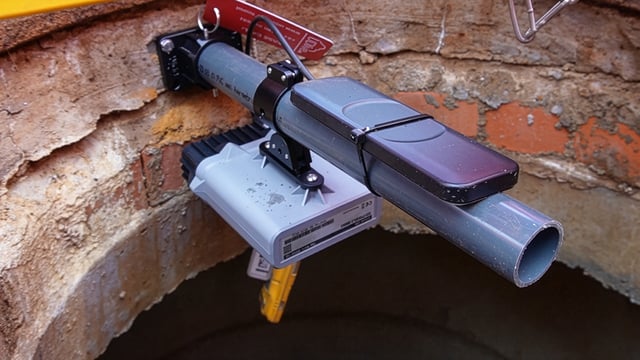
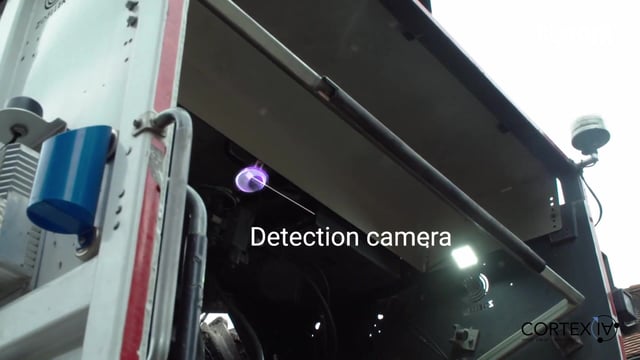
The enforcement infrastructure comprises two distinct camera networks operating in tandem. The first consists of eight AI-enabled cameras owned directly by the Greek Ministry of Digital Governance, positioned at high-risk intersections identified in consultation with the Hellenic Police. These units possess multi-violation detection capabilities, identifying infractions including speeding, mobile phone usage while driving, seatbelt non-compliance, and helmet violations for motorcycle riders.
The second network, operated by the Region of Attica, will ultimately encompass 388 cameras deployed across 100 locations and 17 municipalities throughout the greater Athens metropolitan area. This regional component focuses exclusively on red-light violations, with complete installation anticipated by June 2026.
Pilot Phase Exposed Scale of Non-Compliance
Early operational data underscored the magnitude of traffic safety challenges in the Greek capital. During the initial four-day pilot period in December 2025, a single camera positioned on Syngrou Avenue, the primary artery connecting central Athens to the Piraeus port, recorded more than 1,000 violations related to mobile phone use and seatbelt non-compliance. The same location documented approximately 800 speeding incidents in a 90 km/h zone.
Red-light running proved equally prevalent at monitored intersections. The junction of Mesogeion Avenue and Chalandri in Agia Paraskevi registered 480 violations, while the Vouliagmenis Avenue and Tinos Street intersection in Kallithea recorded 285 instances of drivers failing to stop.
€93.8 Million Investment in National Expansion
The nationwide deployment represents a €93.8 million project implemented jointly by the Ministry of Digital Governance, the Ministry of Infrastructure and Transport, and the Ministry of Citizen Protection, with Information Society S.A. serving as the implementing body. Funding derives from revenues generated under the revised Road Traffic Code that took effect in September 2025.
Upon full deployment, the national network will comprise approximately 2,500 units: 2,000 fixed cameras at high-risk locations and 500 devices mounted on public transport vehicles to monitor bus lane violations. Completion across all Greek regions is projected by the end of 2026.
Digital Notification Infrastructure Replaces Paper Fines
Drivers identified by the system receive digital notifications through Greece’s gov.gr portal or via SMS to registered mobile numbers, accompanied by time-stamped photographic evidence. A 13-day window exists for submitting electronic objections. Those without registered contact information will continue receiving traditional mail notifications until a unified national platform becomes operational, expected around the Easter holiday period.
The digital architecture centers on the Unified Electronic System for Recording and Managing Violations, designed to consolidate detection, processing, and penalty administration while eliminating administrative fragmentation. Encrypted transmission protocols protect personal data, with anonymized datasets made available to researchers and local authorities for evidence-based road safety planning.
Deterrence Prioritized Over Revenue Generation
Greek Minister of Digital Governance Dimitris Papastergiou emphasized that the initiative prioritizes behavioral modification rather than fine collection. Camera placement was deliberately made visible, with locations publicly disclosed to encourage compliance rather than maximize enforcement revenue.
The system represents a core component of road safety reforms enacted by the government of Prime Minister Kyriakos Mitsotakis. Greece recorded 665 road fatalities in 2024, placing the country 25th among the 27 EU member states—ahead of only Bulgaria and Romania. Preliminary data indicates a 21% decline in road deaths during 2025, with authorities attributing the improvement to intensified enforcement of helmet-wearing requirements and drink-driving regulations alongside the new Traffic Code provisions.
Privacy Considerations and EU Compliance Questions
The deployment occurs amid ongoing examination of privacy implications associated with AI-powered traffic enforcement across European jurisdictions. The cameras employ automated license plate recognition, image analysis, and centralized data processing—technologies that have prompted regulatory scrutiny in several EU member states regarding compliance with data protection frameworks.
Greek authorities maintain that the system operates within applicable legal boundaries, with encrypted data transmission and defined retention protocols designed to safeguard personal information while enabling enforcement objectives.
The full enforcement phase follows Athens’ initial rollout of automated smart traffic cameras announced in August 2025, which marked the capital’s first deployment of fully automated penalty processing systems at high-risk corridors including Kifissias with Ethnikis Antistaseos and Mesogeion with Halandriou.