Vodafone Business has secured a 10-year connectivity contract to support the deployment of thousands of AI-driven water quality sensors across rivers in England. The agreement, struck with environmental technology firm Additive Catchments, will underpin what is being positioned as one of the most ambitious real-time freshwater monitoring programmes in the country, with full-scale deployment targeted by 2030.
Always-On Connectivity Replaces Periodic Sampling
Under the terms of the partnership, Vodafone Business will deliver the communications infrastructure needed to keep Additive Catchments’ sensor network operational around the clock. Each sensor will transmit water quality readings at 15-minute intervals, replacing the intermittent data collection and delayed laboratory analysis that have characterised conventional river monitoring in the UK for decades.
The sensor network feeds into Additive Catchments’ Catchment Monitoring as a Service (CMaaS) platform, a cloud-native system built on Google Cloud infrastructure that integrates data from IoT sensors, satellite imagery, Met Office feeds, and Environment Agency datasets. The platform is designed to distinguish between pollution sources, whether contamination originates from rainfall runoff, agricultural discharges, or sewage overflows, and deliver actionable intelligence to regulators, utilities, and the public.
A Multi-Partner Consortium Driving Delivery
Additive Catchments is leading the project through a consortium of technology and infrastructure partners. Siemens provides the digital infrastructure and low-code development capabilities through its Mendix platform, while AtkinsRéalis contributes engineering and environmental consultancy expertise.
The Rivers Trust, a network of more than 60 local conservation organisations across the UK, is also part of the initiative. The trust plans to use the platform’s real-time data to support community-level river restoration efforts and strengthen environmental governance through its citizen science networks.
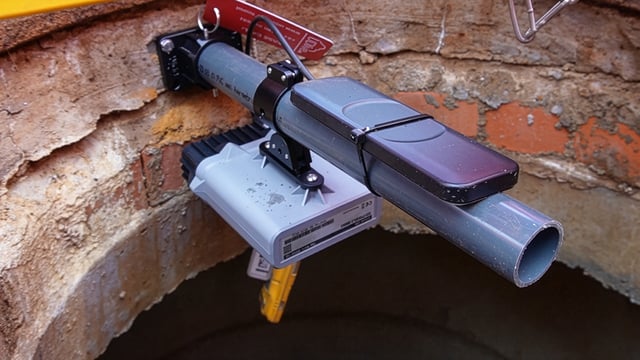
The CMaaS platform itself runs on Google Cloud services including BigQuery, Vertex AI, Earth Engine, and Looker, providing processing capacity across entire river basins. Additive Catchments’ patent-pending RiverStation hardware units combine IoT sensor networks with advanced lab-on-chip pollutant detection to analyse multiple water quality parameters simultaneously.
Regulation Is Accelerating Demand For Continuous Monitoring
The project arrives as the UK water sector faces mounting regulatory pressure. Section 82 of the Environment Act 2021 requires all sewerage companies in England to implement continuous water quality monitoring upstream and downstream of storm overflows and wastewater treatment works. By 2030, at least 25% of applicable assets must be fitted with continuous monitoring equipment, with complete coverage mandated by 2035.
Only 14% of rivers in England currently meet good ecological health standards, a figure that has drawn sustained public scrutiny and political attention. The Water (Special Measures) Act, enacted in early 2025, further tightened oversight of water companies, demanding greater transparency around sewage discharges and pollution incidents.
The financial scale of the transformation is significant. The AMP8 regulatory cycle, running from April 2025 through March 2030, is channelling over £100 billion in investment into UK water infrastructure and environmental outcomes, making it the largest single investment period in the sector’s history. This spending is creating substantial demand for connectivity, sensor hardware, and data analytics services capable of supporting always-on environmental monitoring at national scale.
Public Transparency And Practical Access For River Users
Beyond regulatory compliance, the initiative is designed to make water quality data accessible to the general public. The platform will present information in formats intended for recreational river users, including swimmers, kayakers, and anglers, enabling them to assess conditions before entering the water. Regulators, water companies, and infrastructure operators will simultaneously draw from the same data, creating what Additive Catchments describes as a shared evidence base for catchment-level decision-making.
The Rivers Trust has indicated the partnership will help operationalise a River Health Index that combines environmental monitoring data with community input, designed to serve as a measure of progress and public trust in water governance. This approach responds to the Cunliffe Review’s recommendations for greater transparency and accountability across the water sector.
IoT Connectivity As A Growth Engine For Environmental Services
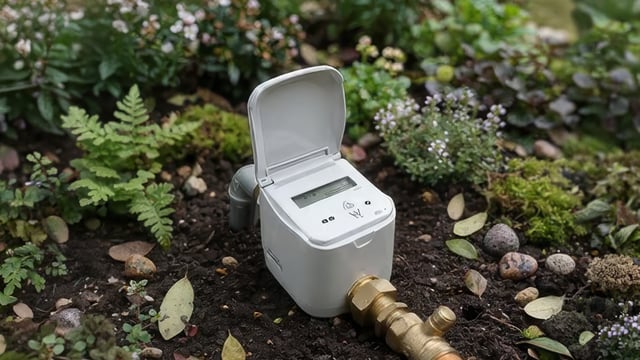
The agreement represents a broadening of Vodafone’s IoT footprint in the UK water and environmental sector. The company’s Narrowband IoT (NB-IoT) network already covers 98% of UK geography and supports applications across smart metering, leak detection, and asset tracking for water utilities including SES Water and United Utilities. Vodafone has also partnered with SUEZ on a programme to deploy over two million NB-IoT water meters globally.
Environmental monitoring is emerging as a significant growth segment within the broader IoT services market. The convergence of tightening regulations, falling sensor costs, and maturing cloud analytics platforms is driving demand for persistent connectivity in remote and challenging outdoor environments where traditional mobile coverage may be insufficient. The 10-year duration of the Vodafone-Additive Catchments contract reflects the long operational lifecycle typical of environmental monitoring infrastructure and the sustained connectivity requirements that come with always-on sensor networks.
Additive Catchments is structured as a majority non-profit-owned entity, and its CMaaS platform has been designed with exportability in mind. The company has stated its ambition to extend the model beyond UK rivers to international catchment management programmes, positioning the platform as a globally applicable standard for digital environmental monitoring.
The UK’s AMP8 regulatory cycle is driving major connectivity investments, as seen in Netmore and Cellnex’s expansion of LoRaWAN infrastructure for smart water metering, including a 1.3 million meter rollout with Yorkshire Water.