Lincolnshire County Council has awarded a £357,426 contract to Yunex Traffic for the deployment of Yutraffic FUSION, a cloud-hosted adaptive traffic signal platform that will manage 67 signalised nodes across 15 regions of the county. The project, funded through the Department for Transport‘s Green Light Fund, will introduce real-time multimodal optimisation to one of England’s largest road networks.
Government Funding Drives Signal Modernisation in Rural England
The contract was procured through the Crown Commercial Service’s RM6099 Transport Technology framework. Lincolnshire’s investment draws on the DfT’s Green Light Fund, a £20 million programme established under the government’s 2023 Plan for Drivers to help English local authorities outside London modernise traffic signal operations and improve network flow.
The Green Light Fund is part of a broader £70 million package that also includes a £30 million Traffic Signal Obsolescence Grant and a £20 million Intelligent Traffic Management Fund — though the latter was subsequently cancelled by the current government. Allocations under the Green Light Fund were awarded in £500,000 lots following a competitive challenge process managed by the Transport Technology Forum and the Local Council Roads Innovation Group.
Why Lincolnshire’s Network Presents a Distinct Challenge
Lincolnshire manages approximately 9,000 kilometres of highway, making it the sixth-largest local road network in England. Unlike dense urban grids where adaptive traffic systems are most commonly deployed, the county’s network spans a mix of rural corridors, market towns, and arterial routes serving Lincoln, Boston, Grantham, and Spalding. The deployment of an advanced adaptive control system across such a dispersed geography represents a notable test case for the technology beyond metropolitan environments.
The scope of the rollout, 67 nodes across 15 distinct regions, suggests the council is targeting key corridors and town-centre clusters rather than blanket coverage, an approach consistent with rural authorities seeking maximum impact from limited capital.
How the FUSION Platform Differs From Legacy Systems
Yutraffic FUSION was developed by Yunex Traffic in partnership with Transport for London as part of TfL’s Real Time Optimiser programme, designed to eventually replace the SCOOT (Split Cycle Offset Optimisation Technique) system that has managed London’s traffic signals for over three decades. SCOOT, originally developed by the UK’s Transport Research Laboratory in 1979, relies primarily on in-ground inductive loop detection and focuses on minimising vehicle delay.
FUSION takes a fundamentally different approach. The platform models all road users, including pedestrians, cyclists, buses, heavy goods vehicles, and emergency services, and allows authorities to assign configurable policy weightings to each mode at the individual junction level. Before changes are applied to live signals, proposed timing adjustments are iteratively tested within a digital twin environment, reducing the risk of unintended network disruption.
Policy-Driven Optimisation as a Governance Tool
One of the platform’s more significant capabilities lies in its ability to translate local transport policy directly into signal behaviour. If a council prioritises active travel on a particular corridor, or wants to provide enhanced bus priority during peak hours, those objectives can be encoded as modal weightings within the system configuration. This means elected officials’ transport priorities — such as promoting walking and cycling or ensuring equitable access for disabled road users — can be operationalised at the junction level without requiring manual signal engineering each time policy shifts.
For Lincolnshire, the council has indicated particular interest in using the system to prioritise public transport and active travel modes, alongside the integration of advanced detection technology to improve data inputs for optimisation decisions.
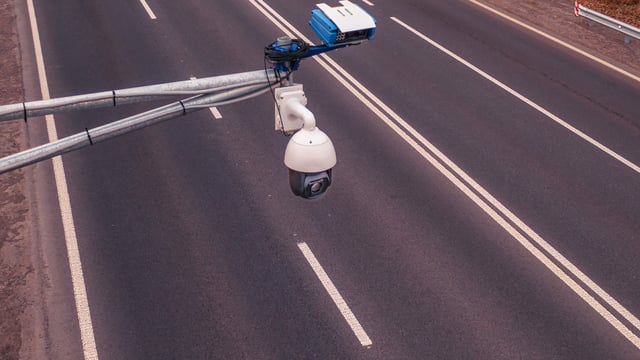
The contract value of £357,426, identified via public procurement records on the Stotles platform, covers the cloud-hosted FUSION solution but it is not confirmed whether this includes any associated detection hardware upgrades or whether those will be procured separately. The council’s reference to “interfacing new and advanced detection” suggests that additional sensor investment may be planned to complement the software deployment, but specifics have not been publicly detailed.
The timeline for full operational deployment across all 67 nodes has also not been disclosed.