Águas e Energia do Porto, the municipal utility responsible for managing water supply, wastewater, and stormwater drainage in Portugal’s second-largest city, has become the first management entity in the country to pilot an AI-driven electrical probe system capable of detecting structural defects in sewer collectors with centimetre-level precision. The pilot, conducted across approximately three kilometres of Porto’s wastewater network, identified more than 1,000 anomalies responsible for an estimated 80 litres per second of improper groundwater infiltration, equivalent to roughly 6.8 million litres of extraneous water entering the sewage system each day.
How Electrical Conductivity Replaces Visual Inspection
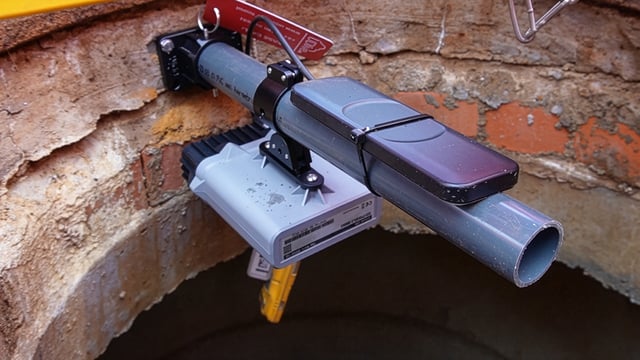
The system works on a fundamentally different principle from the acoustic sensors and closed-circuit television (CCTV) cameras that have long dominated sewer condition assessments. Rather than relying on visual observation or sound detection, the probe emits a low-voltage electrical current as it travels through a water-filled collector. Because most sewer pipe materials, including clay, concrete, and PVC, are electrical insulators, the current can only escape the pipe wall where a physical defect exists. Surface-mounted sensors detect these current dissipation points, pinpointing faults to within one centimetre of their actual location.
This approach addresses a well-documented limitation of conventional methods. CCTV inspections can miss hairline cracks that do not produce visible water ingress at the time of survey, while acoustic techniques may fail to register defects below the waterline. The electrical conductivity method detects every breach in the pipe’s insulating barrier regardless of whether water is actively leaking at the moment of inspection.
Over 1,000 Defects Uncovered in Three-Kilometre Pilot
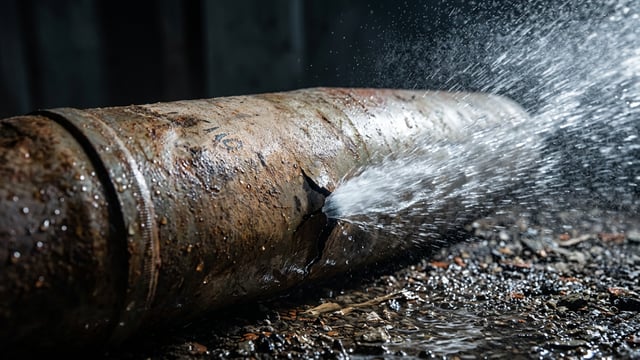
The Porto pilot covered roughly three kilometres of gravity sewer mains across targeted catchment areas identified by the utility as high-priority zones. The inspection revealed defects ranging from micro-fractures invisible to camera operators to severe structural ruptures. Collectively, these faults were allowing approximately 80 litres per second of groundwater and stormwater to infiltrate the wastewater network, a volume that places significant additional load on downstream pumping stations and treatment facilities.
That daily volume of 6.8 million litres of extraneous inflow represents a substantial hidden cost for the utility. Improper infiltration dilutes sewage, reduces treatment efficiency, and can contribute to combined sewer overflows during storm events. By quantifying the infiltration rate at each individual defect, the system enables the utility to rank rehabilitation priorities based on actual measured flow rather than subjective visual severity scores.
AI-Driven Data Processing Via Cloud Platform
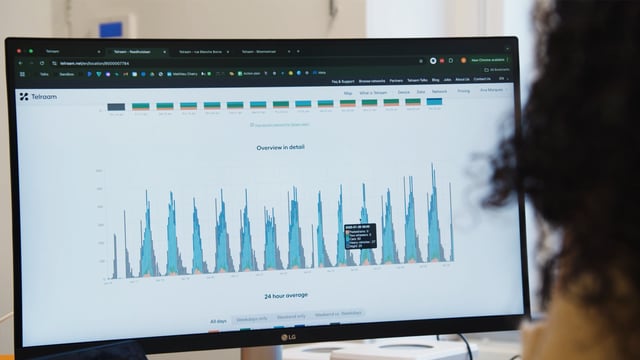
One of the more distinctive elements of the deployment involves the data processing pipeline. Raw electrical current readings collected in the field are transmitted to a cloud-based platform in the United States, where AI algorithms automatically convert variations in electrical conductivity into estimated infiltration flow rates expressed in litres per second. This automated conversion eliminates the subjectivity inherent in traditional CCTV coding, where different operators reviewing the same footage frequently assign inconsistent severity ratings.
The real-time diagnostic capability allows Águas e Energia do Porto to prioritise the most urgent rehabilitation interventions, direct public investment toward the highest-impact repairs, and reduce operational costs associated with treating extraneous flows. The utility has indicated that this data-driven approach supports its broader strategic goals for infrastructure resilience in the face of increasing climate pressures on urban drainage systems.
Electro Scan’s FELL Technology as the Likely Platform
While the original Portuguese-language reporting does not name the technology vendor, the technical characteristics described, including the low-voltage conductivity probe, centimetre-level defect localisation, AI-processed cloud analytics hosted in the United States, and prior deployments limited to the United Kingdom, France, and Germany, align closely with the Focused Electrode Leak Location (FELL) system developed by Sacramento-based Electro Scan Inc. and delivered in Europe through its UK subsidiary, Electro Scan (UK) Ltd.
In December 2025, Electro Scan (UK) Ltd. publicly announced that it had been awarded a five-kilometre sewer condition assessment trial in Porto, to be delivered in collaboration with Águas e Energia do Porto. The company described the project as a landmark engagement intended to demonstrate FELL’s value in the Portuguese and broader European market. The FELL system has previously been deployed across projects in the United States, United Kingdom, Australia, and the Middle East, and was recognised with the 2024 UKSTT Detection, Location, and Inspection award for work with Saudi Aramco.
Where Porto Fits in the European Sewer Digitalisation Landscape
The pilot positions Porto among a small but growing number of European utilities exploring alternatives to CCTV-dominated sewer assessment workflows. Across the water sector, the limitations of visual inspection for quantifying infiltration have driven interest in complementary technologies that can measure actual defect flow rates. In the UK, utilities operating under Ofwat regulatory pressure to reduce infiltration have been early adopters, while growing attention to sewer network resilience in Southern Europe, where climate change is intensifying both drought and extreme rainfall cycles, is expanding the addressable market for these tools.
The broader push toward data-driven wastewater management is also reflected in recent consolidation activity. Badger Meter‘s $185 million acquisition of SmartCover Systems, a provider of real-time sewer monitoring sensors that detect overflow risks and infiltration patterns, underscored the growing commercial value of digital intelligence applied to wastewater collection networks.
For Águas e Energia do Porto, which serves more than 150,000 households and manages Porto’s full urban water cycle including supply, wastewater drainage, stormwater, and coastal bathing water quality, the pilot represents a step toward condition-based asset management. If the remaining kilometres of the planned five-kilometre trial confirm the initial results, the utility could build one of the most granular sewer defect inventories of any Portuguese city, providing a data foundation for targeted capital investment rather than the broad-brush rehabilitation programmes that have historically characterised the sector.