The Arkansas Department of Transportation (ARDOT) is upgrading its highway work zone camera systems to detect drivers using handheld devices, marking a significant expansion of artificial intelligence technology for roadway enforcement. The software enhancement, scheduled for deployment by mid-January 2026, builds upon existing speed enforcement cameras that have operated in interstate construction zones since 2023.
Technology Upgrade Targets Persistent Safety Challenge
The camera technology, developed by Australian road safety company Acusensus, should enable detection of motorists holding cell phones or other electronic devices while navigating active construction areas.
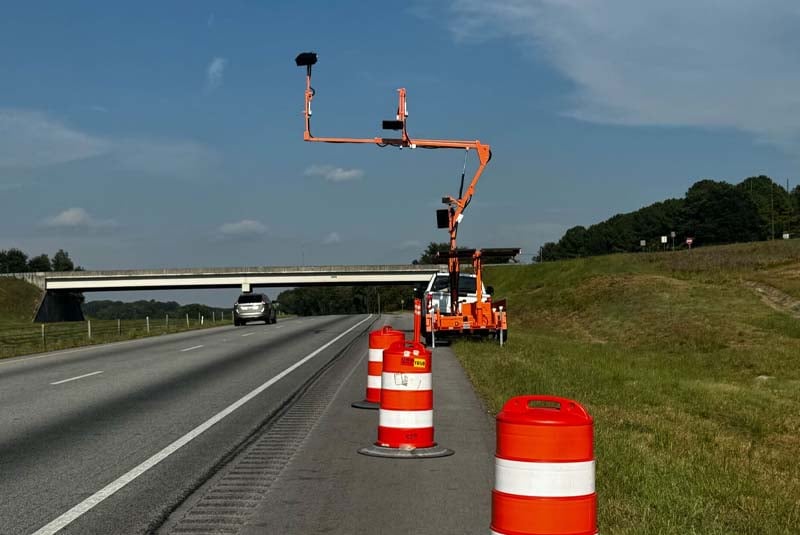
The system captures high-resolution images of passing vehicles using infrared cameras capable of photographing through windshields in varying light conditions. AI software analyzes each image to identify potential violations, filtering out compliant drivers and flagging only suspected offenders for human review.
Enforcement Model Prioritizes Officer Involvement
Arkansas officials have emphasized that the technology functions as a detection aid rather than an automated ticketing system. When the camera identifies a potential violation, it transmits the flagged image downstream to an Arkansas Highway Police (AHP) officer stationed near the work zone exit.
The officer reviews the image and, if the evidence confirms a violation, coordinates with a colleague to conduct a traffic stop after the vehicle exits the construction area. This approach ensures human judgment at every enforcement stage and eliminates automated citation by mail.
Data Retention Governed by State Law
Privacy considerations figured prominently in the program’s design. Arkansas law mandates that camera-captured data cannot be retained unless used to issue a warning or citation. According to ARDOT, images of non-violating vehicles are deleted within the same day or the following day, preventing accumulation of surveillance records on motorists who have not committed offenses.
Work Zone Crashes Prompted Legislative Action
The enforcement expansion responds to persistent safety concerns in Arkansas construction zones. Between 2019 and 2023, highway work zone crashes resulted in 71 traffic fatalities statewide, according to the nonprofit transportation research organization TRIP. In 2021 alone, more than 2,500 crashes occurred in Arkansas work zones, producing over 80 serious injuries or fatalities.
These statistics prompted the Arkansas State Legislature to authorize speed enforcement cameras in interstate work zones in 2023, laying the groundwork for the current distracted driving detection expansion. The state’s Slow Down, Phone Down campaign, launched in February 2022 through partnership between ARDOT, Arkansas Highway Police, and Arkansas State Police, has complemented these technological measures.
Expanding U.S. Deployments Reflect Growing Interest
Arkansas joins a growing number of U.S. jurisdictions exploring AI-powered distracted driving enforcement. In Minnesota, the South Lake Minnetonka Police Department deployed Acusensus cameras on Highway 7 in February 2025, detecting 10,000 violations in a single month and issuing 300 warnings or citations. The department obtained the technology through a state grant exceeding $400,000.
University research partnerships have also facilitated camera trials at the University of Alabama and University of California, San Diego, where the technology monitors commercial truck drivers for unsafe behaviors including phone use, speeding, and seatbelt non-compliance.
Hands-Free Laws Demonstrating Measurable Impact
Broader adoption of hands-free driving laws has shown promising results nationally. According to Cambridge Mobile Telematics, the world’s largest telematics provider, distracted driving decreased 8.6% in 2024, preventing an estimated 105,000 crashes, 59,000 injuries, and 480 fatalities. States that enacted hands-free laws in 2023, including Ohio, Alabama, Michigan, and Missouri, experienced an average 11.8% reduction in distracted driving since implementation.
The National Highway Traffic Safety Administration (NHTSA) reports that distraction-affected crashes claimed 3,275 lives in 2023, representing 8% of total traffic fatalities. However, NHTSA acknowledges significant underreporting, with some analyses suggesting distraction may contribute to nearly 30% of all crashes.
Penalties and Signage Requirements
Under Arkansas law, motorists using handheld devices in work zones face fines up to $250 for first offenses and $500 for subsequent violations. When workers are present, all moving traffic violation fines double. Drivers approaching camera-equipped work zones will encounter advance signage indicating enforcement camera operation.
The cameras will rotate among work zones across the state’s interstate system, with deployment locations determined by construction schedules and safety priorities.