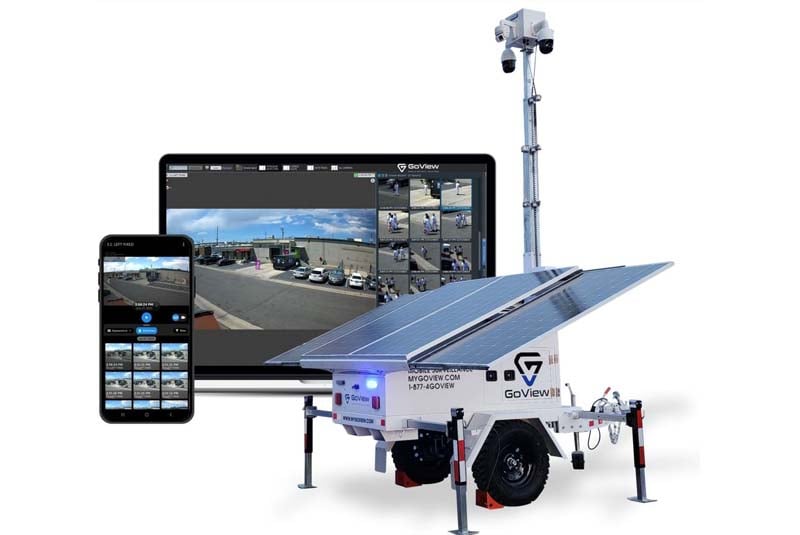
The City of Midland, Texas, has approved a US$412,956 investment to deploy AI-enabled surveillance across public parks, aiming to bolster public safety. The pilot program, using equipment from GoView LLC, will feature four mobile surveillance trailers and 22 pole-mounted cameras. Installations are scheduled to begin at parks with full deployment targeted by spring 2026.
How the AI Surveillance Works
City officials say the system is intended to ensure safety in high-traffic and historically high-incident zones. Some of those parks are part of broader renovation or funding efforts, and the presence of surveillance was even cited as a factor in securing up to US$20 million for park improvements. The mobile trailers add flexibility: they can be towed to any location the city designates for events or high-traffic times.
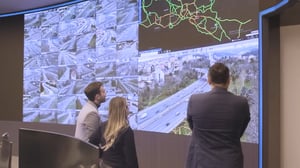
According to public documentation of AI-powered gun- and violence-detection systems, such cameras use computer-vision and deep-learning models to analyze video in real time, identifying visible firearms or potential violent behaviors such as fights, then triggering instant alerts to emergency services.
Recent academic reviews of these systems show detection precision ranging from ~78% to 99.5%, and recall from ~83% to 97%, depending on conditions such as lighting, camera angles, and training datasets. In practical deployments, AI-based monitoring can significantly reduce reliance on human operators struggling to observe multiple video feeds simultaneously, a major limitation of traditional CCTV.
Benefits, Limitations and Broader Considerations
The main benefit: such technology can act as a force multiplier for public-safety resources, effectively placing “eyes” on more public spaces, 24/7, without requiring additional officers at all times. This could allow the Midland Police Department (MPD) to re-allocate personnel to other critical areas. City leaders have acknowledged recruitment and retention of sufficient police and security staff is a challenge.
However, experts in surveillance technology warn there remain important caveats. A systematic review of AI-weapon-detection systems notes that, despite high reported accuracy, evaluation standards remain inconsistent and real-world deployments often lack independent benchmarking.
There are also broader civil-liberties considerations. While these AI systems do not necessarily rely on facial recognition, the deployment of surveillance in public spaces raises questions around privacy, transparency, and the risk of over-policing — issues increasingly debated as cities adopt AI-based monitoring.
What This Pilot Means in Context of Midland’s Tech Strategy
The AI-camera initiative builds on a larger push by Midland to integrate technology into municipal services. Earlier in 2025, the city proposed a technology fund of US$9.2 million and expanded its IT budget to US$12.1 million, signaling long-term commitment to automation, communication improvements, and AI-enabled public services.
If the surveillance pilot succeeds, it may lay the groundwork for broader AI deployments, potentially beyond parks and into other public-safety domains.