Miami-Dade County has launched a pilot program with recycling technology startup Scrapp to address its waste diversion challenges through a consumer-facing mobile application. The initiative, funded by a $100,000 grant from the Miami-Dade Innovation Authority (MDIA), represents one of three technology deployments selected from the Authority’s fifth Public Innovation Challenge focused on waste reduction solutions.
Addressing South Florida’s Waste Crisis Through Resident Engagement
The county generates approximately five million tons of waste annually while maintaining a recycling rate of just 37%, significantly below the national average of 50%. Compounding the challenge is a contamination rate of approximately 39%, which undermines the effectiveness of existing curbside recycling programs. The Scrapp deployment aims to reduce contamination by providing residents with real-time, location-specific guidance on proper waste sorting.
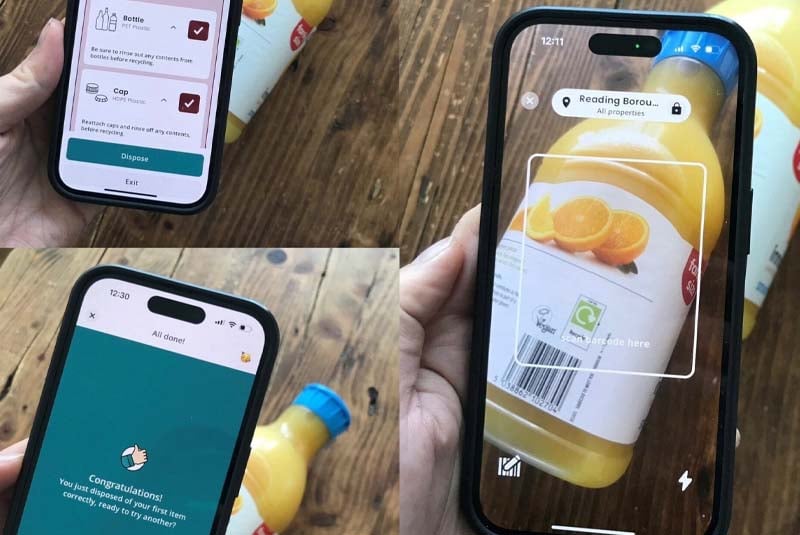
The application will be customized to accommodate the county’s 39 municipalities and unincorporated areas, each operating distinct collection schedules and recycling requirements. Features under development include collection day reminders tailored to specific neighborhoods, barcode scanning for item-specific disposal guidance, and interactive maps of recycling drop-off locations. Multilingual support for Spanish and Haitian Creole will address the diverse demographic composition of the region.
Technology Platform Built on University Research
Scrapp emerged from student research at the University of New Hampshire, where its co-founders developed an early prototype focused on campus recycling optimization. The platform now provides location-based recycling guidance across the United States, United Kingdom, and Canada, serving over 400 million people according to company materials. The startup maintains enterprise clients including consumer products companies and sports organizations, utilizing backend data analytics to help organizations redesign procurement processes to minimize waste generation.
The consumer application uses barcode scanning technology to identify packaging materials and provide disposal instructions according to local recycling rules. For Miami-Dade, the platform will integrate directly with the Department of Solid Waste Management‘s (DSWM) collection schedules and accepted materials lists, creating what the company describes as a centralized information resource for residents navigating the fragmented waste management landscape.
Part of Broader Zero Waste Strategy
The Scrapp pilot operates alongside two complementary waste diversion initiatives selected through the same innovation challenge. Clean Earth Innovations, a South Florida sustainability company, will deploy rotary pyrolysis technology at the South Dade Landfill and Old South Dade Landfill beginning in 2026, converting organic waste into nutrient-rich biochar. Fertile Earth Worm Farm, a Homestead-based composting operation active since 2008, will expand its vermiculture-based soil production to process county organic waste streams.
The three pilots will inform Miami-Dade’s Zero Waste Master Plan, a comprehensive roadmap mandating at least a 40% reduction in waste sent to disposal. County officials have indicated that landfill capacity at the South Dade facilities is projected to reach limits between 2026 and 2030, intensifying the urgency for waste diversion alternatives.
Infrastructure Challenges Shape Technology Selection
Miami-Dade’s waste management infrastructure faces compounding pressures following the 2023 fire that destroyed the county’s refuse-derived fuel plant in Doral. The facility had processed approximately half of the county’s collected waste before its closure, forcing increased reliance on landfill disposal. County officials are evaluating proposals for a Sustainable Solid Waste Campus that could include waste-to-energy incineration capacity, though the technology remains controversial among environmental advocates.
The MDIA’s Public Innovation Challenge model represents an alternative procurement approach designed to accelerate technology deployment. Since launching in 2023 with $9 million in combined public, private, and philanthropic funding from Miami-Dade County, the Knight Foundation, and Citadel CEO Ken Griffin, the Authority has reduced typical pilot timelines from 18 months to approximately six months. The waste diversion challenge attracted over 80 applicants from both local and international technology companies.
Market Context For Municipal Recycling Technology
The Scrapp deployment reflects broader municipal investment in resident-facing digital tools for waste management. Cities across North America and Europe have increasingly experimented with mobile applications, AI-powered sorting assistance, and sensor-enabled collection systems to improve diversion rates and reduce contamination. However, the effectiveness of education-focused applications depends heavily on sustained resident adoption and behavioral change.
Miami-Dade’s Department of Solid Waste Management serves more than 340,000 households in unincorporated areas and ten municipalities, providing curbside waste collection twice weekly and recycling service every other week. The Scrapp platform will also aim to reduce call volume to the county’s 311 information system by centralizing recycling inquiries within the application interface.