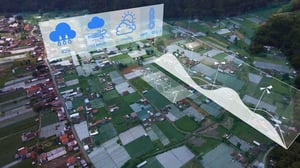
The City of Murcia is set to transform nearly 100 ornamental fountains with IoT-enabled water quality monitoring, remote management systems, and multimedia spectacle infrastructure as part of Spain’s broader push to digitalize tourism destinations using EU recovery funds.
The municipal government board approved the €550,000 fountain digitalization contract, representing one component of a larger €5.14 million allocation that Murcia received after scoring the highest among all Spanish applicants in the national Digital Transformation Plan for Tourism Destinations competition.
IoT Infrastructure to Monitor Water Quality in Real Time
The project will deploy Internet of Things sensors across 17 priority fountains to continuously track water quality parameters including pH levels, oxidation-reduction potential (ORP), free chlorine concentration, turbidity, temperature, and electrical conductivity. The sensor network will feed data directly into the MiMurcia smart city platform, which the municipality has developed since 2018 to centralize urban monitoring and decision-making capabilities.
Beyond the sensor-equipped fountains, all approximately 90 ornamental water features across the municipality will receive remote switching capabilities, replacing what had previously been predominantly manual on-off operations.
Funding Framework and Broader Digital Transformation Roadmap
The fountain digitalization effort sits within the Component 14 framework of Spain’s Recovery, Transformation, and Resilience Plan, which channels EU Next Generation funding toward tourism sector modernization. The Ministry of Industry and Tourism has allocated approximately €94 million to 46 destination projects across Spain through this initiative.
Murcia’s grant application competed against 305 proposals nationally, with only 29 selected in the funding category for municipal-scale digital transformation projects. The successful bid built upon the city’s existing MiMurcia infrastructure, which includes a Centro Único de Seguimiento (CEUS) operations center that aggregates data from environmental sensors, traffic systems, parking infrastructure, and irrigation management across the municipality.
The fountain contract represents one of 30 projects that Murcia plans to execute before 2026 under the digital transformation roadmap. Recent municipal government approvals have included accessibility technology deployments across more than 30 public spaces, digital kiosks and public information screens, and expansion of NaviLens wayfinding signage throughout the urban core. NaviLens is a QR-style code system originally developed at the University of Alicante that enables visually impaired users to access location information via smartphone from distances up to 12 meters without precise camera alignment.
Smart City Integration and Regional Context
The integration of fountain data with the MiMurcia platform follows the FIWARE open-source architecture that Spain has promoted for municipal smart city deployments. This approach enables interoperability between local systems and the national PID node, allowing municipalities to share modules for functions such as waste management, carbon footprint calculation, and lighting optimization.
The Spanish Federation of Municipalities and Provinces coordinates the Red Española de Ciudades Inteligentes (RECI), which now includes more than 140 member councils working to standardize approaches to urban digitalization. Spain’s broader España Digital 2026 strategy commits €20 billion in public investment toward digital infrastructure, with smart city initiatives representing one dimension alongside 5G deployment, cybersecurity, and workforce development programs.