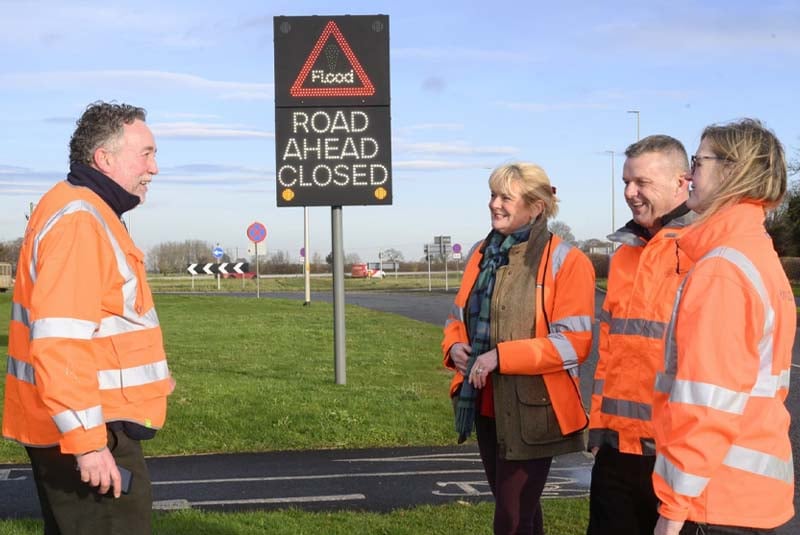
North Yorkshire Council has deployed three additional electronic warning signs along the A684, extending an automated flood detection system that now covers a critical east-west corridor spanning the Yorkshire Dales. The £100,000 investment adds sensor-activated signage at Warlaby crossroads and both approaches to the eastern Bedale bypass roundabout.
From Manual Response to Automated Detection
The expansion builds on a pioneering £418,000 flood detection network installed in 2022 using funding from the UK Government’s Safer Roads Fund. That original deployment introduced seven variable message signs at flooding hotspots where the A684’s proximity to the River Ure causes an average of three flood events annually.
Before automation, the council relied on public reports before dispatching crews to manually erect temporary signage. The sensor-based system eliminates this delay by detecting rising water levels and automatically activating LED warnings when conditions become hazardous. Signs can also be repurposed to alert drivers about snow, high winds, or other road closures.
Technology Partnership Delivers Regional Expansion
Swarco UK & Ireland, the intelligent transport systems provider that delivered the 2022 installation, has partnered with the council again on this extension. The company has deployed similar flood warning infrastructure across the UK, including systems in Warrington where detection sensors automatically trigger traffic signals to red when flooding is detected, with remote monitoring capabilities through a centralized management platform.
The latest deployment was funded through the council’s Economic, Regeneration, Tourism and Transport Project Development Fund Agreement, with additional support from the Environment Agency via the West Yorkshire Flood Innovation Programme (WYFLIP). This multi-agency initiative brings together local authorities, Yorkshire Water, and academic partners to develop innovative flood resilience solutions across the region.
Parliamentary Attention on Water Resilience
The announcement coincides with broader national discussions on climate resilience. Matthew Robinson, North Yorkshire Council’s Head of Resilience and Emergencies, recently provided testimony to the House of Lords Environment and Climate Change Committee examining drought preparedness in England. The parliamentary inquiry has explored connections between drought and flooding, with committee members characterizing them as interconnected aspects of water management challenges.
Growing Market for Automated Flood Systems
The deployment reflects broader momentum in intelligent flood monitoring infrastructure. Market analysts project the global road flood detection systems sector will grow from approximately $1.12 billion in 2024 to $3.36 billion by 2033, driven by smart city investments and increasing frequency of extreme weather events. The UK and broader European market is seeing particular growth in automated sensor networks that integrate with urban traffic management systems.
North Yorkshire’s approach—combining water level sensors with vehicle-activated signage—represents an emerging model for rural road authorities managing flood-prone routes with limited resources for manual monitoring.