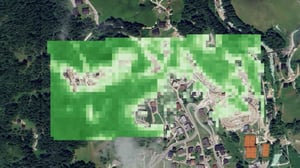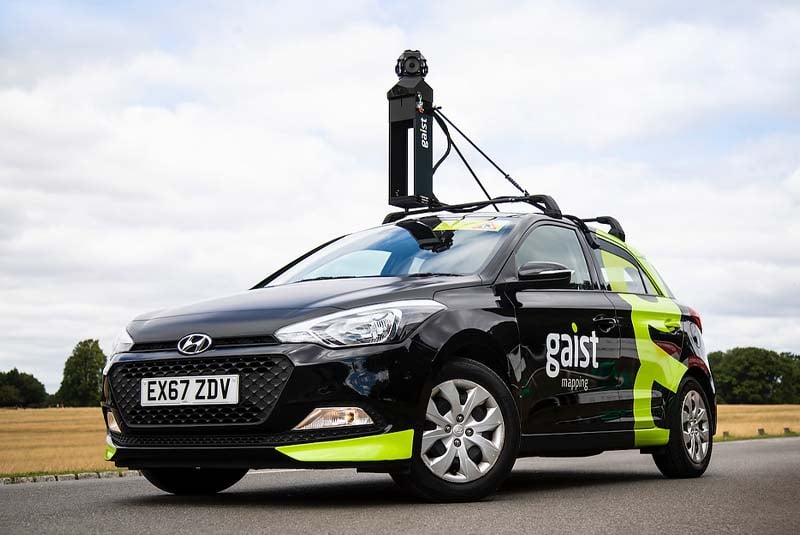
The Department for Infrastructure (Northern Ireland) (DfI) has awarded a contract to Gaist to produce a comprehensive “digital twin” of every public road, footway, cycleway and associated street asset across Northern Ireland. The contract will use HD imagery, AI-based image analysis and roadscape modelling to map all carriageways as well as footpaths, cycle lanes, and street furniture (signage, lamp posts, manhole covers, verges, etc.).
Strategic Significance
-
By producing a high-resolution, georeferenced baseline, DfI aims to shift from reactive maintenance (e.g., fixing potholes) toward data-driven, proactive and strategic infrastructure management.
-
Northern Ireland’s road network comprises approximately 25,922 km of public roads, along with 9,700 footways, 5,800 bridges, and around 290,000 streetlights, representing infrastructure assets valued at roughly £36 billion.
- The digital twin is described as the first commissioned and funded full national survey of its kind in the United Kingdom and Ireland.
Technical Approach and Deliverables
Gaist will combine:
-
High-definition, 360° panoramic imagery of roads, footways, and surrounding assets.
-
Advanced AI and machine-learning algorithms to automatically detect and classify defects (e.g., cracks, potholes), as well as to geolocate street furniture and roadside assets.
-
A cloud-based “roadscape intelligence platform” delivering a dynamic, constantly updated digital twin — useful for real-time insights, lifecycle modelling, and integration with connected-vehicle or sensor data.
The output should be a georeferenced, data-rich model covering every road and relevant street asset in Northern Ireland. The contract is expected to be completed within six months, per official statements.
What the Digital Twin should Enable
-
Prioritized Maintenance & Lifecycle Planning: The twin will allow DfI to identify urgent repairs and model how the network will age under different funding and maintenance scenarios — enabling better long-term investment decisions.
-
Improved Quality Assurance: Utilities companies performing street works will be held to clearer standards when reinstating surfaces.
-
Support for Active Travel & Safety: Including footways, cycleways, and roadside assets will help highlight where upgrades can support walking and cycling, aligning with active-travel and accessibility goals.
-
Future-Proofing for Automated Mobility: A unified and precise digital map positions Northern Ireland to better prepare for emerging mobility technologies such as autonomous vehicles.
-
Environmental and Cost Efficiency: By optimizing maintenance interventions, the twin could help reduce carbon emissions associated with redundant repairs and avoid unnecessarily disruptive resurfacing.
Strategic and Financial Context
Historically, infrastructure maintenance in Northern Ireland has faced funding constraints, prompting criticism over reactive “patch-and-mend” practices and rising road deterioration. Under a newly published draft Northern Ireland Roads Maintenance Strategy (open for public consultation until 30 January 2026), DfI identifies “higher-quality maintenance,” “targeted maintenance,” and “sustainable maintenance” as core principles, with data-driven tools like the Gaist survey central to delivering on them.
DfI spends hundreds of millions on roads annually: in 2024–25, total road expenditure reached approximately £466 million, with around £136 million allocated to structural maintenance. By generating a detailed digital baseline, DfI aims to make that funding go further, targeting the most critical stretches, improving efficiency, and supporting long-term infrastructure resilience.