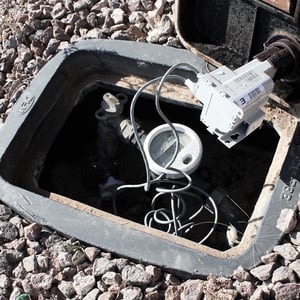
The Puerto Rico Aqueduct and Sewer Authority (PRASA) has selected Badger Meter to overhaul its aging metering network in what ranks among the largest advanced metering infrastructure (AMI) rollouts ever undertaken globally. The supply-only contract covers approximately 1.6 million service connections across the island and will deploy the Milwaukee-based company’s cellular AMI stack, including E-Series Ultrasonic meters, ORION Cellular endpoints, and BEACON software-as-a-service (SaaS). Shipments are scheduled to begin in 2026, with larger revenue contributions anticipated in the second half of the year.
Why Puerto Rico’s Water Crisis Demands Digital Intervention
PRASA serves roughly 97 percent of the island’s 3.2 million residents and manages one of the most challenged water networks in the United States. According to the American Society of Civil Engineers (ASCE), approximately 59 percent of treated water in Puerto Rico is lost as non-revenue water through inaccurate meters, unauthorized consumption, and pipe leaks. That figure has only marginally improved from 62 percent five years prior.
The authority operates more than 5,300 miles of sewer lines, 51 wastewater treatment plants, and 824 pumping stations, much of which sustained severe damage during Hurricanes Irma and Maria in 2017. A declining population, down 14 percent since 2010, has simultaneously reduced the ratepayer base available to fund necessary capital work. The ASCE estimates that PRASA requires $551 million in renewal and replacement spending over the next six years, and the broader infrastructure investment gap across Puerto Rico runs between $13 billion and $23 billion over a decade.
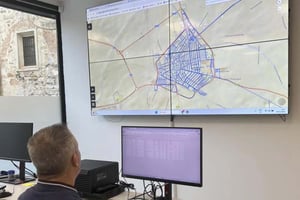
Against that backdrop, the shift to cellular AMI represents a foundational step toward addressing both revenue losses and operational inefficiencies. Real-time consumption data from ultrasonic meters eliminates the manual read cycles that PRASA has historically relied upon, while automated leak alerts and usage analytics create direct pathways to reducing the island’s outsized water losses.
What Badger Meter’s BlueEdge Platform Brings To The Table
The PRASA deployment draws on Badger Meter’s BlueEdge platform, a unified suite introduced in 2024 that integrates smart measurement hardware, communications infrastructure, and data analytics software. The specific technology stack selected by PRASA, E-Series Ultrasonic meters paired with ORION Cellular radios and the BEACON SaaS platform, reflects the company’s push toward cellular connectivity as the standard for North American water utilities.
Unlike fixed-network alternatives, cellular AMI transmits meter data over existing telecommunications infrastructure, reducing the need for proprietary network buildouts. For an island geography like Puerto Rico, where terrain and hurricane vulnerability complicate fixed-infrastructure investments, cellular technology offers a degree of resilience that traditional approaches may not.
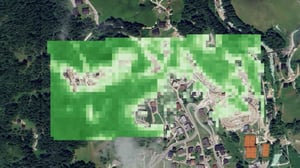
Badger Meter’s platform also gained broader capabilities in early 2025 through the $185 million acquisition of SmartCover Systems from XPV Water Partners. SmartCover specializes in real-time sewer line and lift station monitoring, using sensors to predict and prevent overflow events. The addition extends the BlueEdge portfolio beyond metering into collection system surveillance, addressing a segment that industry analysts describe as less than one percent digitally penetrated in North America.
Scale Comparison: Where PRASA Ranks Among Global AMI Projects
At 1.6 million service connections, the PRASA deployment stands out as one of the largest single-utility AMI projects currently in progress worldwide. For context, New York City’s Department of Environmental Protection is upgrading 600,000 connections from AMR to AMI. In the United Kingdom, Thames Water awarded a contract valued at over £180 million for smart meter supply across its network, while Northumbrian Water is working with Connexin to deploy up to 900,000 LoRaWAN-enabled meters over a 15-year period.
The PRASA project is notable not only for its size but also for the severity of the infrastructure challenges it aims to address. Few utilities in the developed world contend with non-revenue water losses approaching 60 percent, making Puerto Rico something of a proving ground for whether large-scale cellular AMI can deliver measurable efficiency improvements under extreme conditions.
Execution Risks And Deployment Challenges Ahead
The scale and complexity of the PRASA rollout carry meaningful execution risk. Puerto Rico’s mountainous terrain, hurricane exposure, and historically underfunded infrastructure create logistical challenges that differ substantially from mainland deployments. The project is structured as a supply-only arrangement, meaning Badger Meter will provide hardware and software, but PRASA and its partners will manage physical installation, which shifts some operational risk but also limits the company’s control over deployment timelines.
Management declined to disclose the total contract value and the financial terms of the agreement have not been made public. The company characterized PRASA as a project that will begin contributing meaningful revenue in the second half of 2026, with shipments ramping through a multi-year deployment window.
Integration of SmartCover capabilities into the broader PRASA engagement also remains an open question. While the acquisition expands Badger Meter’s ability to offer sewer and stormwater monitoring alongside metering, applying those tools across Puerto Rico’s extensive collection system infrastructure would represent a significant additional scope.
For Puerto Rico, the modernization effort represents a critical test of whether digital infrastructure can help stabilize a utility system that has struggled with chronic underinvestment, natural disaster recovery, and population decline. The outcome will likely inform similar large-scale deployments in other island and disaster-vulnerable territories.