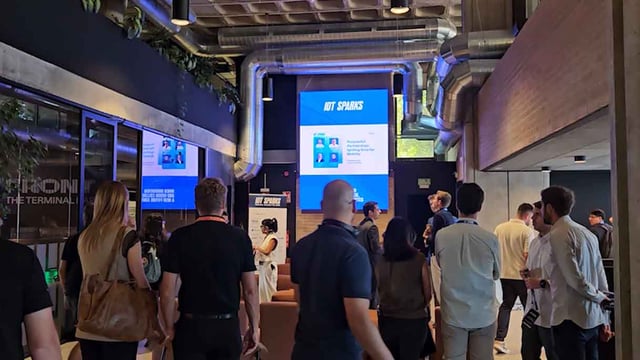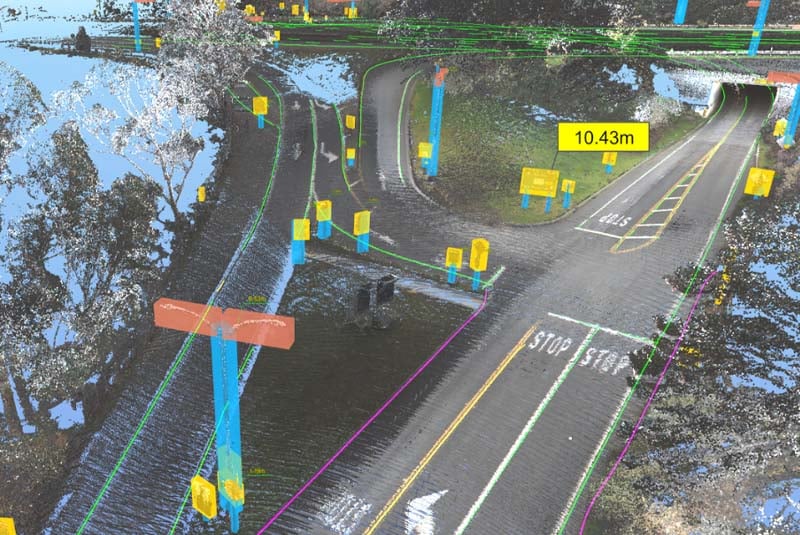
San Jose has activated a continuously updated, AI-powered digital replica of its streets and infrastructure, built by Voxelmaps in collaboration with NVIDIA. Announced on March 17, 2026, the system captures real-time street-level data, processes it through accelerated computing at the network edge, and presents city teams with an always-current 3D model they can query in plain language. The deployment, unveiled during NVIDIA’s GTC 2026 conference in San Jose, also forms part of a wider initiative between NVIDIA and T-Mobile to transform 5G wireless infrastructure into a distributed AI computing platform.
From Snapshot to Continuous Sensing
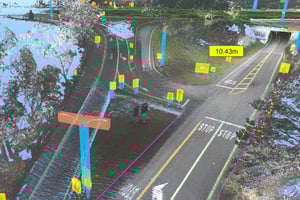
The core challenge the project addresses is one that has undermined smart city programs for years: digital models go stale almost as soon as they are created. Voxelmaps approaches this differently, deploying its Reality Capture Network, which uses proprietary SYMBO Duo Realtime 3D Mapping Sensors combining LiDAR and HD cameras, to collect street-level data on a continuous basis. That data feeds into City Insights, the company’s 4D digital twin platform, which generates photorealistic spatial representations that reflect physical changes without requiring manual site visits or periodic survey campaigns. The result is a model that city teams can treat as a live operational tool rather than a reference document.
NVIDIA Hardware and Software at the Core
Handling the computational demands of continuous urban sensing at city scale requires purpose-built processing infrastructure. NVIDIA‘s Jetson edge computing platform manages preprocessing directly at the sensors, while NVIDIA-accelerated computing handles the broader analytical workload. The platform is also being integrated with the NVIDIA Metropolis Blueprint for Video Search and Summarization (VSS), now in its third iteration, which enables the development of video analytics AI agents capable of searching hours of footage in under five seconds and processing long-form video content at speeds far exceeding manual review. This framework lowers the development barrier for city operations teams and third-party software builders who want to extend the platform’s capabilities.
A 5G Network Recast as Edge AI Infrastructure
The connectivity layer underpinning the San Jose deployment goes well beyond standard data transmission. T-Mobile‘s 5G Standalone network, paired with Nokia‘s anyRAN software and NVIDIA RTX PRO Blackwell Server Edition hardware, forms what the partners describe as AI-RAN infrastructure: a model where GPU-accelerated computing is co-located directly within cell sites and mobile switching offices. This architecture allows computationally intensive AI workloads to be offloaded from individual cameras and sensors to the nearest network edge location, reducing hardware requirements at the device level and enabling the kind of low-latency processing that real-time city operations demand. T-Mobile was the first US operator to pilot this NVIDIA AI-RAN infrastructure configuration.
Software Partners Building on the Platform
LinkerVision and Inchor are collaborating with Voxelmaps to develop computer vision systems that interface directly with the San Jose digital twin. The three companies are currently testing what they describe as City Operations Agents: AI agents that can perceive conditions, simulate scenarios, and take decisions such as adjusting traffic signal timing in real time. The target performance benchmark for this capability is a fivefold improvement in incident response times compared to current methods. LinkerVision’s Video Reasoning AI platform, which draws on NVIDIA Cosmos world foundation models for environmental understanding, is already deployed in smart city contexts in Taiwan and Vietnam, giving the San Jose pilot access to a tested operational foundation.
Practical Gains for City Operations
For the City of San Jose, the platform is positioned to reduce dependence on specialist GIS expertise by enabling any authorized user to query current street conditions in natural language. Operational use cases include proactive infrastructure maintenance, asset monitoring, and more granular data for capital planning decisions. The platform is designed to generate traceable outputs with clear governance over how insights are produced, which matters for public-sector deployments where audit trails and accountability are requirements rather than optional features. San Jose’s existing status as a hub for AI and technology companies makes it a practical testbed for validating these capabilities before wider deployment.
The city’s ongoing engagement with digital infrastructure tools is not new. Kurrant has previously reported on comparable efforts elsewhere in the US, including Raleigh’s digital twin initiative and Arcadis’s water distribution digital twin for Houston, illustrating a growing appetite among American municipalities for continuously maintained spatial intelligence tools.
Expansion Target: 100 US Cities in Two Years
San Jose is explicitly positioned as the first node in a national buildout. Voxelmaps has stated plans to expand the Reality Capture Network and City Insights platform to 100 US cities over the next two years, with the goal of establishing a standardized high-resolution spatial data infrastructure for real-time urban management at scale. The broader NVIDIA and T-Mobile AI-RAN collaboration is itself designed to be a scalable blueprint: as telecom operators upgrade infrastructure, the same edge computing layer that supports digital twins in San Jose can be replicated in other cities without requiring purpose-built deployments each time.