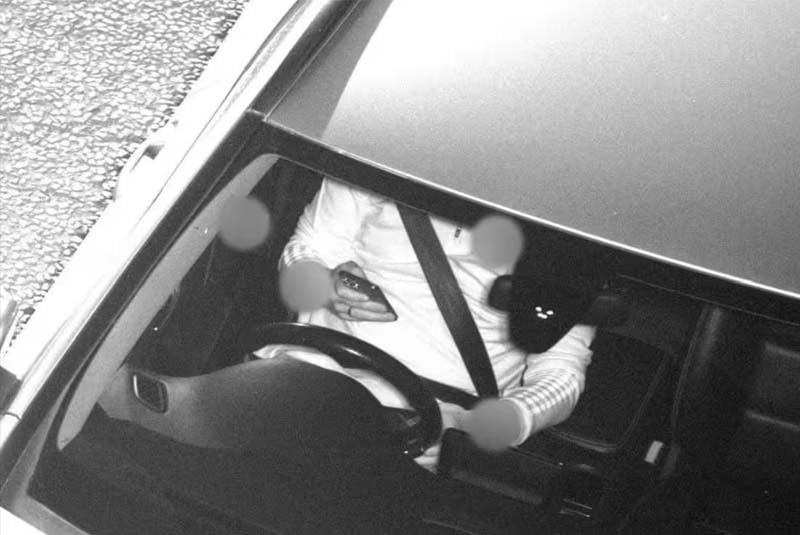
Transport Scotland has awarded a £350,000 contract to trial artificial intelligence-powered cameras on Scottish roads, targeting motorists who use mobile phones or fail to wear seatbelts while driving. The pilot, awarded to Edinburgh-based engineering consultancy AECOM, deploys Australian-developed Acusensus “Heads-Up” technology that uses computer vision to scan passing vehicles and flag potential violations for human review. The initiative forms part of Scotland’s broader Road Safety Framework to 2030, which aims to give the country the strongest road safety record in the world within the next four years.
How the Enforcement System Operates
The Acusensus Heads-Up platform combines multiple cameras mounted on a sensor vehicle or trailer with infrared illumination and AI-driven image processing. As vehicles pass the unit, the system captures high-resolution photographs through windshields at speeds of up to 300 km/h, even in poor lighting or adverse weather. Onboard algorithms then assess each image in near real time, assigning a confidence score to potential offences such as handheld phone use or seatbelt non-compliance. Only images flagged as likely violations are forwarded to trained human analysts for a secondary verification before any enforcement action is considered.
AECOM confirmed the system draws on a combination of proprietary hardware and software alongside its own analyst team to review flagged incidents. The contextual data generated by the cameras, including traffic conditions and demographic patterns, can also feed into policy development and help authorities design targeted road safety interventions.
Scotland’s Road Safety Ambitions Behind the Pilot
The contract award aligns with Scotland’s national ambition to halve the number of road deaths and serious injuries by 2030, relative to a 2014–2018 baseline, and ultimately reach zero fatalities by 2050 under its Vision Zero commitment. Transport Scotland stated that detailed rollout plans are being finalized and will be announced separately.
Scotland’s Transport Secretary Fiona Hyslop has previously highlighted the deterrence value of the technology, noting that drivers increasingly use phones in ways that are difficult for officers to spot from passing patrol cars, such as looking down at screens rather than holding devices to their ears. Between 2015 and 2020, 24 drivers using phones were killed on Scottish roads, underscoring the scale of the challenge traditional enforcement methods face.
Lessons From Earlier UK and International Deployments
The Scottish trial builds on extensive testing carried out across England since 2021 under a partnership between National Highways, AECOM, and Acusensus. The initial trial operated at 33 separate sites across 346 hours over nine months, with Warwickshire Police among the first forces to participate. In one documented 64-hour period, the system recorded 152 mobile phone violations and 512 seatbelt offences, roughly one offence every six minutes.
Twelve UK police forces have since tested the technology. Transport for Greater Manchester reported that 3,205 motorists were caught during a five-week trial in 2024. Meanwhile, Devon & Cornwall Police said AI cameras captured 10,000 images over 12 months, identifying approximately 6,000 seatbelt violations and 4,000 phone-use offences. Notably, the region found that a disproportionate share of fatalities involving unbelted occupants were young people aged 16 to 24.
In April 2025, Vision Zero South West deployed the first free-standing Acusensus unit in the UK on the A30 in Devon, detecting nearly 300 violations in just 72 hours of operation.
Internationally, the technology originated in New South Wales, Australia, where it was introduced in 2019 as the world’s first statewide program targeting distracted driving through automated camera enforcement. The detection rate of phone use dropped six-fold within two years, from 1 in 82 drivers in 2019 to 1 in 478 by 2021. Queensland subsequently adopted the system for seatbelt compliance enforcement, and programs are also active in North Carolina in the United States.
Privacy Concerns and the Surveillance Debate
Not everyone views the expansion of AI-driven road enforcement favorably. Big Brother Watch, a UK civil liberties organization, criticized the Scottish program, with its Head of Research and Investigations Jake Hurfurt describing the surveillance as intrusive. The organization argues that AI-powered monitoring effectively treats every motorist as a potential suspect, raising questions about proportionality and the role of automated systems in law enforcement decisions.
The AA motoring organization has also cautioned that AI cameras should complement rather than replace traffic officers. Camera systems, by their nature, cannot detect impairment-related offences such as drink or drug driving, a gap that still requires physical roadside stops to address.
These concerns reflect a broader tension playing out across the UK and Europe as cities and transport agencies expand the use of computer vision for enforcement. The Netherlands has operated automated AI cameras for phone-use enforcement since 2021, issuing thousands of fines. The European Union’s General Safety Regulation now mandates in-cabin driver monitoring systems for all new vehicles by mid-2026. Meanwhile, the Dutch Data Protection Authority has raised concerns about the privacy implications of intelligent traffic infrastructure that can track individual movements.
Penalty Framework and What Drivers Face
Under current UK law, drivers caught using a mobile phone face fines of up to £1,000 and six penalty points on their licence. Seatbelt violations carry fines of up to £500 plus penalty points. For newly qualified drivers, accumulating six points within two years of passing the test triggers automatic licence revocation.
The penalties, combined with persistent high violation rates uncovered in earlier pilots, suggest that traditional deterrence has been insufficient. Road safety charity Brake has cited research showing phone-using drivers are four times more likely to be involved in a collision, while the Parliamentary Advisory Council for Transport Safety (PACTS) estimates around 30% of UK vehicle occupant road deaths each year involve unbelted occupants.
Broader Context for AI in Urban Traffic Enforcement
Scotland’s pilot is part of a growing global trend toward using AI-enabled cameras to enforce road safety and traffic regulations. In the United States, cities like Pittsburgh have deployed AI cameras for automated parking enforcement, while startups such as PathPulse AI are pursuing decentralized, crowdsourced road-intelligence networks as alternatives to fixed infrastructure.
The critical question for Scotland, and jurisdictions worldwide, is whether AI-driven enforcement can deliver measurable reductions in road trauma while maintaining public trust. The Australian experience suggests behavioral change is achievable at scale, but the technology’s expansion will likely continue to face scrutiny from privacy advocates and require clear governance frameworks to manage the data it generates.