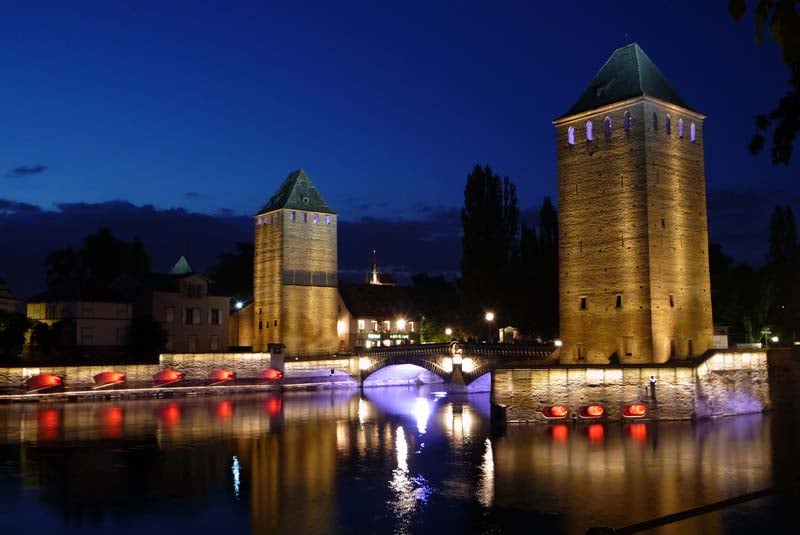
The City of Strasbourg is testing a new demand-responsive public lighting system in the Neudorf district, allowing municipal operators to remotely adjust brightness levels based on real-time conditions. The demonstration, held on Tuesday, January 13, 2025, showcases the city’s advancement toward fully connected street light infrastructure as part of its broader energy efficiency strategy.
Remote Management Enables Dynamic Dimming Capabilities
The pilot system functions similarly to a household dimmer switch, enabling operators to modulate light intensity throughout nighttime hours depending on pedestrian and vehicle activity. Through telecommunications-based remote management technology, municipal staff can switch lights on or off and adjust brightness from a centralized platform without dispatching crews to individual fixtures.
This approach represents a significant evolution from Strasbourg’s current street lighting infrastructure, which relies primarily on scheduled extinction periods and fixed-intensity LED luminaires. The city currently operates 27,500 light points across the municipality, with 50% now equipped with LED technology as of early 2025.
Neudorf District Serves As Testing Ground For Adaptive Lighting
The Neudorf neighborhood was selected for the demonstration given its mix of residential streets and varied pedestrian traffic patterns. The district previously hosted street lighting experiments in 2018, when the city tested motion detection modules on Rue de Belfort and Rue de Saint-Dié using 26 LED luminaires equipped with infrared and optical sensors.
The latest pilot expands on these earlier trials by incorporating full remote management capabilities rather than localized sensor-based automation. Municipal officials demonstrated how the system can respond to different scenarios throughout the night, adjusting output based on the time of day and anticipated usage levels.
Smart Lighting Rollout Tied To Broader Metropolitan Connectivity Project
Strasbourg’s remote management pilot coincides with a larger contract recently awarded to Agora Makers, a Nancy-based public lighting and urban furniture manufacturer, to connect the Eurometropole’s entire street lighting network to a centralized management platform. Under that agreement, 3,500 luminaires will be directly connected to remote management systems in the initial phase, with all 33,000 metropolitan light points expected to be administered through the platform by late March 2026.
Agora Makers is deploying its Wizard connectivity solution, developed through its subsidiary Nexiode, a Quimper-based smart lighting technology firm acquired in 2024. The WixLi platform enables remote programming, energy consumption monitoring, and diagnostic reporting for networked luminaires using ZigBee or LoRa communication protocols.
Energy Consumption Reductions Already Significant Under Current Measures
Strasbourg has achieved measurable energy savings through its existing street lighting modernization program. Annual energy consumption for public lighting dropped from 13.6 GWh in 2020 to 10 GWh in 2024, supported by ongoing LED conversions and partial nighttime extinction policies implemented since 2023.
The city currently dims 30% of its street lights—approximately 8,500 fixtures—between 1:00 AM and 5:00 PM in residential areas not designated as major thoroughfares or priority zones. Light points along tramway routes and major circulation axes operate at graduated intensity levels, running at full power until 8:00 PM, then dimming to 75% until 11:00 PM, and further reducing to 50% until morning.
On-Demand Technology Could Address Extinction Policy Debates
The remote management pilot may offer Strasbourg a middle path between full nighttime extinction and continuous illumination, a topic that has generated ongoing political debate within the municipal council. Some neighborhoods have requested relighting of streets currently subject to the 1:00-5:00 AM blackout period, with the city recently announcing plans to restore illumination to several streets in the Krutenau district.
Demand-responsive lighting could allow the municipality to maintain energy savings while providing adequate illumination when sensors or traffic patterns indicate pedestrian or vehicle presence. Industry research suggests adaptive street lighting systems can achieve energy savings between 30% and 80% compared to conventional fixed-output installations, depending on traffic conditions and dimming protocols.
Municipal Investment Continues At €1 Million Annually Through 2030
Strasbourg allocates €1 million annually to its public lighting renovation program, with completion of the 100% LED conversion targeted for 2030. Priority areas for 2025 include high-consumption circulation axes and fixtures along tram corridors, according to municipal officials.
The city’s approach aligns with broader European trends toward connected street lighting infrastructure. Market projections indicate Europe holds approximately 35% of the global smart street lighting market, with LED technology accounting for over 70% of new municipal installations.