Vienna-based Another Earth has closed a €3.5 million funding round to expand its AI-powered platform that generates synthetic satellite imagery for environmental monitoring and geospatial analysis. The investment will support the deployment of the company’s simulation tools across vulnerable ecosystems in Brazil and Sub-Saharan Africa, where access to high-quality Earth observation data remains limited.
Bridging the Training Data Gap in Earth Observation
The round was led by new investor WakeUp Capital, an Ireland-based early-stage climate and impact venture fund. Existing backers Rockstart, Inovexus, and Stamco AG also participated, alongside strategic support from the Austrian Research Promotion Agency (FFG) and Austria Wirtschaftsservice (AWS).
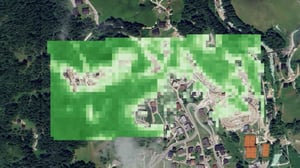
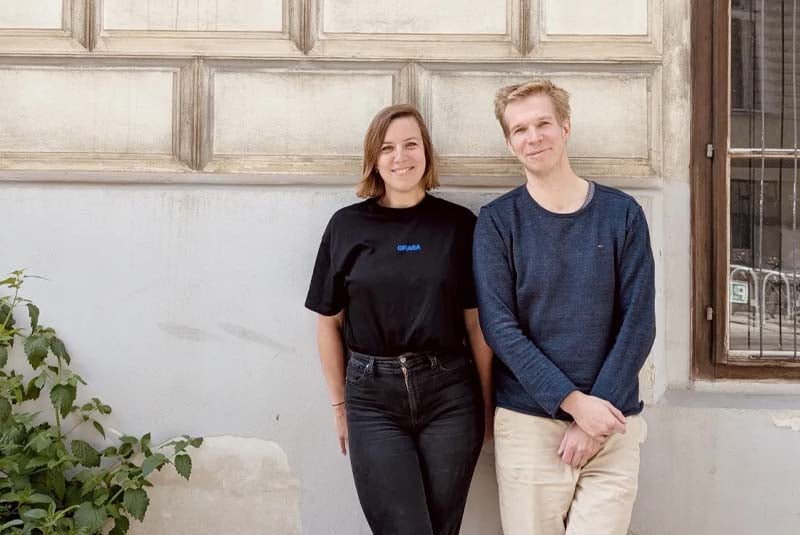
Founded by Maya Pindeus and Felix Geremus, Another Earth develops a Synthetic Data Engine that combines generative AI with procedural 3D modelling to produce high-resolution, auto-labelled satellite imagery. The resulting datasets allow organisations to train Earth observation AI models without relying entirely on costly, manually annotated real-world imagery.
How Synthetic Geospatial Data Works
Traditional satellite-based AI development requires large volumes of labelled image pairs: a satellite capture alongside a corresponding colour mask that identifies surface types such as roads, vegetation, water bodies, or buildings at the pixel level. Compiling these datasets is labour-intensive, expensive, and subject to privacy constraints under regulations like the EU AI Act and GDPR.
Another Earth’s platform sidesteps these bottlenecks by digitally simulating satellite observations of landscapes and infrastructure. The system automatically generates fully segmented and annotated geospatial data, eliminating the manual labelling step that has traditionally constrained the pace of AI development in the sector. Its simulation engine can also model rare environmental scenarios and edge cases that are difficult to capture through conventional satellite passes, improving the robustness of downstream AI models.
The company has been training its multimodal diffusion models on European high-performance computing infrastructure through AI Factory Austria (AI:AT), part of the EuroHPC Joint Undertaking, using datasets of over 1.4 million image patches across GPU-intensive workloads.
Deployment Across Brazil and Sub-Saharan Africa
Another Earth is already operating commercially through partnerships with geospatial analytics firms in two priority regions. In Sub-Saharan Africa, the company collaborates with GeoTerra Image (GTI), a Pretoria-based remote sensing consultancy established in 1999 with extensive experience across the African continent. Their joint work focuses on monitoring the environmental impact of mining and industrial operations.
In Brazil, Another Earth has partnered with NovaTerra, a Rio de Janeiro-based geoinformation consultancy with 20 years of experience in environmental planning, forestry, and energy infrastructure. The partnership targets applications including deforestation detection, agricultural monitoring, and climate risk analysis across some of the world’s most ecologically sensitive biomes.
The new funding should accelerate the rollout of the Synthetic Data Engine in both regions, with a focus on producing high-resolution datasets tailored for biodiversity monitoring, land use analysis, and environmental risk assessment.
A Growing Market for AI-Driven Earth Observation
The funding arrives at a moment of rapid expansion in the satellite data services market. Industry estimates project the global sector could reach between USD 27.8 billion and USD 55.2 billion by the early 2030s, with environmental and climate monitoring identified as the fastest-growing application segment. The broader synthetic data generation market is also expanding sharply, with one estimate projecting growth from roughly USD 576 million in 2024 to over USD 3.4 billion by 2030.
The scarcity of labelled training data has been widely identified as a key constraint on the scalability of Earth observation AI. While companies like Planet Labs, Maxar Technologies, and Airbus dominate the upstream satellite imagery market, a separate ecosystem of startups is emerging around the challenge of making that data usable for machine learning at scale. Another Earth’s approach of generating entirely synthetic geospatial datasets positions it in a distinct niche, focused on reducing the dependency on real-world satellite captures for AI training purposes.
The company also notes that because its data is synthetically generated through algorithms and 3D modelling rather than captured from real environments, it is inherently compliant with privacy regulations, an increasingly relevant consideration as the EU AI Act takes effect.
Austria’s Growing Profile in Space-Adjacent Technology
Another Earth is the second Austrian space-related company to announce funding in recent weeks, reflecting a broader wave of investment flowing into Europe’s space and Earth observation sector. The company has been incubated at Science Park Graz and maintains operations in both Vienna and London.
The round positions Another Earth to shift from research-stage development to large-scale commercial deployment, with its immediate priorities centred on expanding its customer base across emerging markets where environmental intelligence is both critically needed and chronically under-resourced.