 in Barcelona
 3 to 5 Nov 2026
Welcome to FabLab Barcelona at IAAC, which is the Institute for Advanced Architecture of Catalonia. For over 10 years, FabLabs have served as an international workshop where students and makers can exchange ideas and create solutions to power the next wave of innovation. Originally designed for communities as a destination to prototype platforms for local entrepreneurship, Fab Labs have increasingly been adopted by schools for hands -on STEM education. The movement now includes 600 labs spanning across 50 countries, and this one here in Barcelona was Europe's first, founded in 2007. So, we have occupied a couple of factories here in this neighborhood in Barcelona, which is called Poblenó, and we're creating another type of factory, a factory of knowledge maybe. You can call us a factory of knowledge. We are a research, innovation and education institution. We're trying to look how digital technologies are going to transform the way we design, the way we make cities, and also the way we transform the way people live in cities. In 2014, the concepts behind the FabLab movement expanded into cities. Former Barcelona Mayor Javier Trias made a commitment for the city to produce everything it consumes within 40 years. The challenge gave rise to a globally connected community of fab cities in which data gets shared across borders but products and innovation happens at the local level. Maybe you have heard about 3D printing, you have heard about open source technologies, basically what we're trying to do is to use manufacturing tools that can be connected to a computer to allow anyone to make anything anywhere in the world. So a fab lab, which is a fabrication lab, allows people to learn how to make almost anything. And then under this paradigm, you can have people sharing data about things that can be made locally in cities, but then only the information is what travels globally. This is a fundamental change in the way cities work. We develop different types of technologies here. This is a Smart Citizen Kit. This is a project that we have been developing since 2011. It's a low -cost sensor device that allows anyone to collect data and to share it with other citizens in the world. It was developed here in the Fab Lab, and now it's being used for more than, I would say, 40 or 50 cities in the world. We have distributed around 2,500 sensors. For Diaz, the push to create a circular economy is... He grew up in Venezuela, a country that imports 76 percent of the resources it consumes and has an economy dependent upon oil. As a country now fights to revive its collapsing economy, it's one of the many reasons Diaz remains passionate towards creating a self-sufficient city. I think that when developing technology, we tend to make some mistakes. I'm a techno-optimist, also here in the Fab Lab we have developed. technology that we expected the citizens to use, like low -cost sensors to measure pollution With the Smart Citizen Project, we realized also that technology is not enough, and somehow we are lacking that kind of, I call it the soft software, right? So you have, you know, you can have a technological innovation that has a component, in our case a sensor device that is a hardware, it has the firmware that goes in the sensor and the the software but then this is not enough to engage citizens to implement these technologies and to kind of engage with them so you need that soft software mean like approaches to work with citizens not because they are you know they are better citizens and or because some kind of a demoral morality but actually to create technologies that make the city more convenient for them while making at the same time the city better for everyone else right so i think that we have failed into creating that kind of bridge between the technological advancement that you've seen the smart city expo in a you know in a building minutes away from the center where it seems that the companies are living in a bubble while you know the city is is happening now 28 cities have pledged their involvement to the fab city movement and they're seeing results in norway animal herders are making rich radio collars and wireless networks to track their animals, while farmers in India have created instruments that verify the quality of milk. Two use cases that Diaz says showcases the true value of technology when it's developed by communities who will use it, something he worries can get lost in the age of big So right now what we're seeing is actually a change of tendency towards centralization On one hand you have the governments owning the physical infrastructure, but then you have, you know. The large corporations like Amazon, Google, or Facebook owning somehow pieces of the internet because they have more servers that can have more computing power. Therefore, they can actually use information with advantage in terms of in relationship with the other smaller players. Taking consideration what is happening is kind of a recent realization of the digital space. I think that the Smart City promise is failing deeply. And unless we... you know we enter into a kind of a deep criticism with a constructive criticism but criticism about what about what is happening unless we take more risk on really deploying you know distributed technologies for instance or put it in the hands of citizens certain decision power that is not just to choose representatives but actually to be able to be co -producers of the cities I think then we're just gonna have like another you know Actually, we're going to make Big Brother possible in 1984 possible, finally.
Fab Lab Brings Circular Economy To Life With Smart City Tech
In this video
-
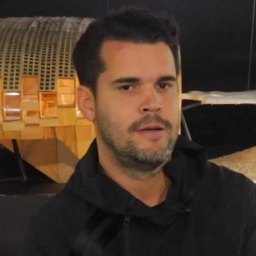 Tomás Díez
Director, Fab Lab Barcelona
About this video
As the concept of Fab Labs and Fab City garners increasing attention and popularity worldwide, the focus is not solely on pioneering groundbreaking technologies, revolutionary fix-all machines, or inventions that dramatically alter our understanding of the world. Rather, what's unfolding is the development of an extensive international platform. This platform serves as a welcoming space that brings together a diverse group of individuals including makers, urban planners, creative thinkers, designers, students, and essentially anyone interested in contributing.
The purpose of this platform is to facilitate a rich exchange of ideas and best practices pertaining to a variety of crucial areas. These areas encompass urban design, workforce development, manufacturing processes, and food production, among others. In our insightful interview, we engage in a thought-provoking conversation with Tomas Diez, the Director at Fab Lab Barcelona.
This dialogue delves into the nuances and impacts of such collaborations and initiatives. This content is highly recommended for individuals passionate about smart cities, community engagement, urban development, city managers, educational leaders, and those curious about the future of manufacturing and sustainable city planning.
Read the transcript machine-generated
Latest Originals
See all 4:45
AI Agents in Digital Twins: Bringing Promises to Life?
 5:57
Nature as a Sensor: Rethinking Smart Cities, Utilities
 2:57
Audio, the Forbidden Fruit of Smart Cities in France
 2:56
Why did the metaverse fail?
 4:54
High-resolution, Predictive Weather Data: The Next Step for Mobility
 5:20
The State of the Smart Traffic Industry in 2026
Latest news
All news- Bryan Texas Utilities To Replace 50,000 Smart Meters Over Five Years29 Oct 2026
- UK National Parks Launch Wildfire Resilience Programme In Cairngorms29 Oct 2026
- Ameresco Completes $5.9M Water Metering Upgrade Covering 8,000 Meters In Mustang, Oklahoma29 Oct 2026
- Victoria Adds 11 AI Bushfire Cameras To Seven-Unit Plantation Network In A$3.8M Programme29 Oct 2026
Kurrant advisory
Planning a smart city or utility project? Talk to Kurrant.
Behind these interviews is Kurrant's advisory team, working with utilities, cities and the companies that serve them.
- Strategy AdvisoryKurrant is actively involved in resolving the challenges that cities, utilities and industry players are facing.
- M&A AdvisorySmart city and utility expertise for successful deals, turning insights into strategic gains.
- Engineering & ProcurementBetter engineering and procurement decisions, by identifying and developing digital and IoT solutions across use cases.
Or write to us: contact@kurrant.com
Send us a message