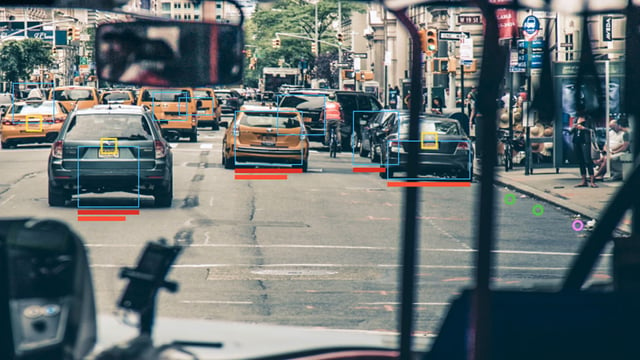
The Hawaii Department of Transportation (HDOT) has awarded a 10-year, approximately $160 million contract to Verra Mobility to scale its dual-purpose red-light and speed camera network from 17 locations to 187 across all major islands. The deal establishes the first automated traffic enforcement program in the United States to operate at statewide scale, arriving at a moment when Hawaii’s road fatality numbers are trending sharply upward and federal policy on camera-based enforcement is shifting.
Why Hawaii Chose a Statewide Camera Rollout
The expansion follows encouraging safety data from the program’s initial deployment on Oahu. Over the first year of red-light enforcement operations, daily violations at camera-equipped intersections fell by 62 percent, while the rate of severe crashes dropped 76 percent. Ninety percent of drivers who received an initial citation did not reoffend, a metric that suggests enforcement cameras are altering driving habits rather than merely generating citations.
The speed enforcement component, activated earlier in 2025, underscored the scale of the problem. Within six months of going live, the system recorded more than 510,000 speed violations, with some vehicles clocked at over 100 mph. That volume of high-speed offenses provided a compelling case for extending coverage beyond Oahu to the neighbor islands.
Rising Fatalities Underscore the Urgency
Hawaii’s push toward automated enforcement coincides with a worsening safety picture. HDOT reported 102 traffic fatalities statewide in 2024, a 10 percent increase over the prior year. By October 2025, the state had already surpassed that figure with 106 deaths recorded, a trajectory running 48 percent above the same period in 2024, according to National Highway Traffic Safety Administration estimates. The state’s deterioration contrasted sharply with a national decline in road deaths of roughly 8 percent during the first half of 2025.
Speeding has been a persistent factor. A 2024 behavioral survey conducted by HDOT found that nearly one in four Hawaii residents admitted to exceeding the speed limit by more than 20 mph. Pedestrians have been especially vulnerable, with pedestrian fatalities rising 61 percent in 2024 compared to 2023.
Contract Structure and Deployment Timeline
Under the new contract, Verra Mobility will install 187 dual-enforcement cameras capable of monitoring both red-light violations and speeding at each site. Thirty additional cameras are expected to become operational during 2026, with subsequent phases rolling out across Hawaii’s major islands in the following years. The roughly $160 million contract value covers equipment, installation, operations, and multi-year support over the decade-long term.
The per-site investment of approximately $856,000 over the contract’s life includes hardware, back-office processing, and ongoing maintenance, a figure broadly in line with large-scale municipal enforcement deployments elsewhere in the country.
Verra Mobility’s Growing Government Portfolio
The Hawaii agreement extends a period of significant contract momentum for the Arizona-headquartered company. Just eight days before the Hawaii announcement, Verra Mobility finalized a five-year, $998 million contract with the New York City Department of Transportation to manage the city’s automated enforcement camera programs, the nation’s largest such network. That NYC deal, effective January 1, 2026, represents a 34 percent increase over the previous five-year agreement and includes expansion of the city’s red-light camera program from 150 to 600 signalized intersections.
Together, the New York and Hawaii contracts illustrate Verra Mobility’s strategy of pursuing large, multi-year government mandates in automated enforcement. The company was also recognized on the GovTech 100 list in February 2026.
Federal Policy Creates a Complicated Backdrop
Hawaii’s statewide commitment to camera-based enforcement arrives against a shifting federal landscape. In early February 2026, the U.S. Department of Transportation announced it would no longer approve grants for traffic safety cameras under the Safe Streets and Roads for All (SS4A) program outside of school and work zones. The policy change reflects the current administration’s view that camera programs are primarily revenue-generating mechanisms rather than safety tools.
Hawaii’s program, however, is funded through a direct state contract rather than federal grants, insulating it from the immediate effects of the SS4A restrictions. Still, the federal posture could complicate the broader rollout of automated enforcement in other states considering similar programs. Nearly 300 bills addressing automated traffic enforcement were introduced across U.S. state legislatures in 2025, according to policy tracking firm MultiState, and the legislative environment remains active heading into 2026.
A Market in Rapid Expansion Despite Political Headwinds
The global smart traffic camera market grew from an estimated $15.26 billion in 2025 and is projected to reach $30.74 billion by 2030, according to a February 2026 report from Research and Markets. North America leads adoption, driven by a combination of smart city initiatives, rising road fatality awareness, and the integration of AI and IoT capabilities into enforcement platforms.
Within the U.S., automated enforcement remains politically contentious. Eleven states still prohibit traffic cameras entirely or for specific violation types. Yet the safety evidence continues to accumulate. NHTSA data indicates that automated speed enforcement cameras can reduce roadway fatalities and injuries by 20 to 37 percent, and programs in cities such as San Francisco have reported speeding declines of up to 72 percent at camera-equipped locations.
What This Means for Other States
Hawaii’s decision to move from a pilot on a single island to statewide coverage represents a significant proof point for the scalability of automated enforcement at the state level. If the expansion replicates the safety improvements observed during the Oahu pilot, particularly the 76 percent reduction in severe crashes, it could provide a compelling model for other states weighing similar programs.
The fact that the contract is structured as a long-term, state-funded engagement rather than a grant-dependent program also offers a template that sidesteps the current federal restrictions on camera funding. For transportation agencies and policymakers watching the interplay between state-level safety mandates and federal policy, Hawaii’s approach will be closely monitored over the coming years.