← Back to all events
Smart City Expo World Congress Barcelona 2025
Gérard Wolf on The French Recipe for Sustainable Cities Video
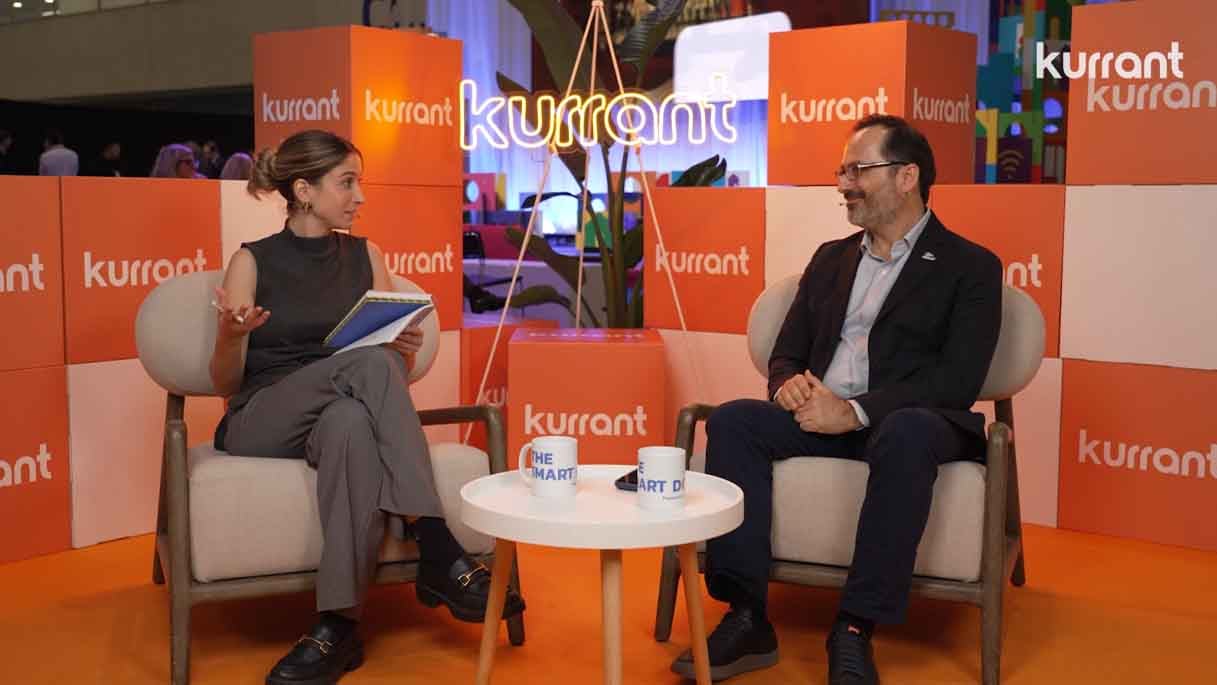
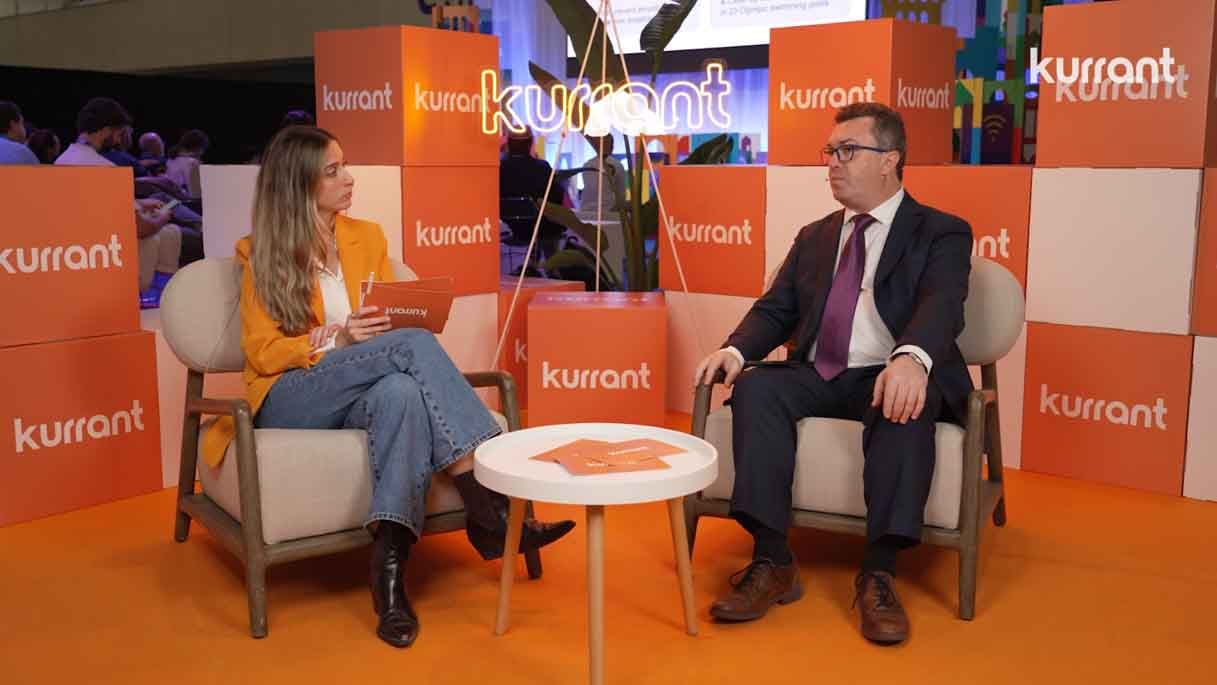
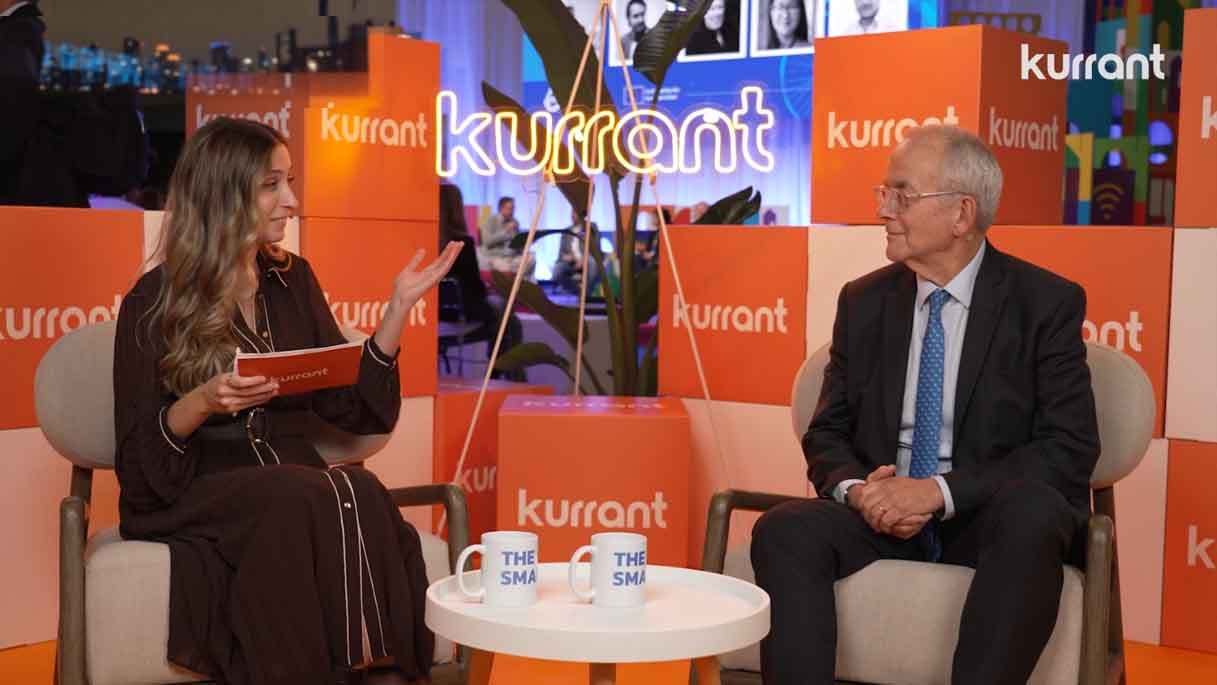
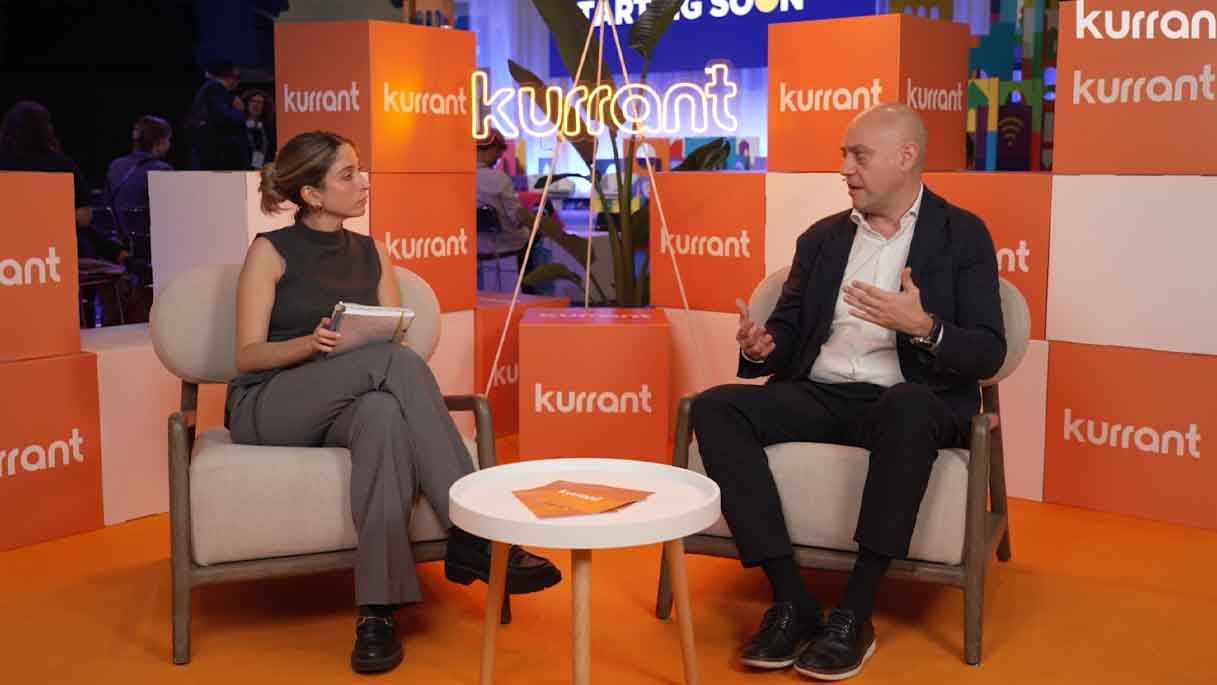
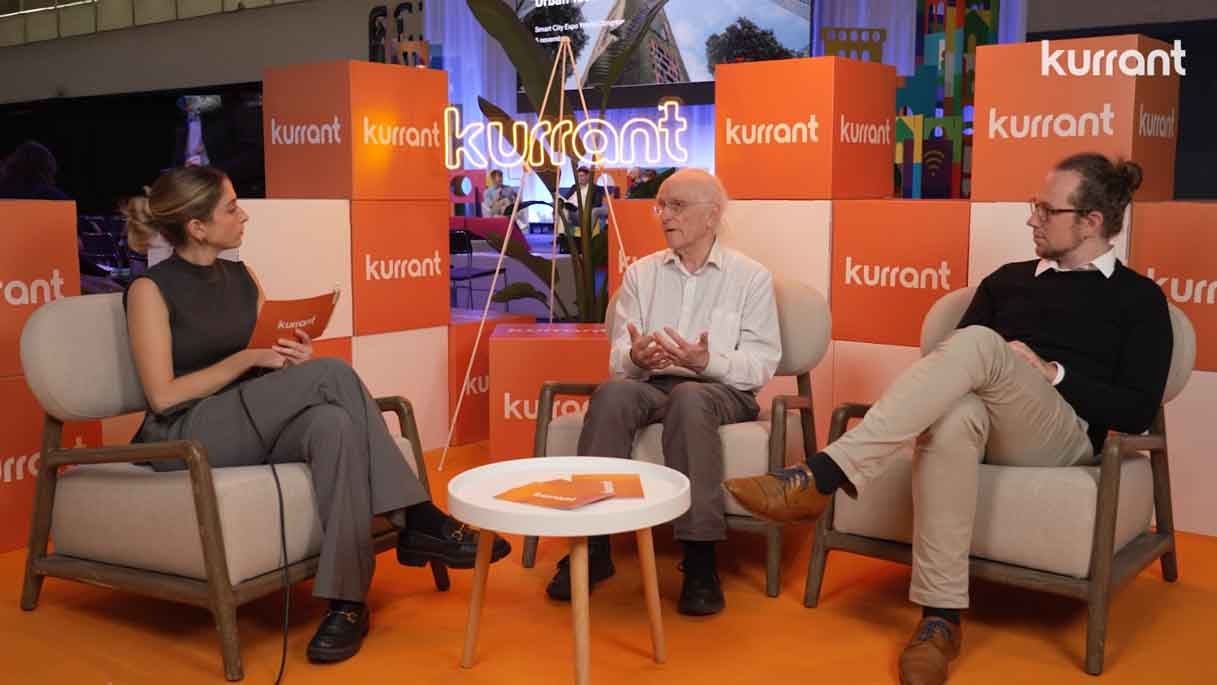
In this interview recorded at the Kurrant studio, Gérard Wolf, Special Adviser to the French Minister for Foreign Affairs in charge of sustainable cities, shares the foundations of the smart city “à la française”. From accessibility and essential urban services to public-private partnerships and local capacity building, he explains how France approaches sustainable urban development and adapts its solutions to cities around the world.
📖 Read Video Transcript
I'm joined at the Kurrant studio by Gerard Wolf. He is special adviser to the French Minister for Foreign Affairs in charge of sustainable cities. And we're going to be discussing the smart city ‘à la française’. So can you tell me a bit about this concept? The concept is very clear. We consider that French cities have to be able to provide solutions for all people. Meaning accessibility, the first part. And then we go to what we call the essential services, which are four of them, not 200. Water, waste management, energy and transportation. And la ville durable à la française, sustainable cities à la française, is the combination everywhere in the world of these components. What makes this strategy different to other strategies? Like, for example, in the UK or the US? Well, I would say that, always French people say we are the best, which is by evidence sure. But to be more serious, we are not the best. And especially I think that all our colleagues have specificities that we don't have. Everybody has one one better part of the other. So the French approach is that, we have a long story on public partnership, public private partnerships. And we have a long story in rebuilding cities after world wars or different periods of our history. So the thing which may be different is that we consider a city as a whole. I was talking about the the pieces of the puzzle, if I can say so. And, our vision is that you have to make all the pieces and to think before playing the puzzle, before building the puzzle, you have to think about all of them to be sure that it fits in. Okay. Makes sense. And you've helped promote French urban know how. You were just saying how the French know how to rebuild. Abroad, what makes French solutions appealing in other markets? Again, we cannot say that we are the only one in the world to do so. But recently we had the Olympics last year, if you remember. We promised to the International Olympic Committee that we would provide solutions, all the facilities, the Olympic Village, everything that was built with a carbon footprint divided by two. We did it. 47%, to be precise. -47, in terms of carbon footprint. So the way we proceed is that, we said we will do it. We did it. And on time and on budget. It doesn't mean that we are the only one to do so. And hopefully we are not. And we know that. But the thing is, we're a country of engineers, and we want to be sure that we can deliver what we have been asked to do and that we can adapt our solutions to the country. It's not the same solution if you talk about Colombia or Senegal or Uzbekistan. There are different needs. It's different. And even if the need in transportation of this is the same, you don't you're not going to build the metro or a cable car or whatever the same way in different continents. You have to adapt. Exactly. And you were mentioning earlier the public private partnerships. What's the balance between public leadership and private innovation? And how do French firms collaborate internationally under the Team France? Team France is a concept that has been created a little bit less than ten years ago, which means that there is just one team which includes the public part, the Ministry of Foreign Affairs, the different ministries in terms of building in terms of, you know, low ledge about equipment, etc., and the private sector and also the different, agencies like, Agence française de développement or here like business France and other. And if we don't go all together, we are going to fail. France loves battling between the different, it's like for those of the people who are going to listen to this, some of them know Asterix. Certainly. And Asterix people are always. The reality is that today, the issue of sustainable cities is such a nightmare. And the old world, when you listen to the the president of the countries, the prime minister, we're telling you, come on, help us. We need to have more people with a normal housing system and a normal city system. We need you. There's 1.4 billion people in the world without a real city, without normal services, basic services. So there's no more time to fight internally. This is the team France, and it works pretty well. So no more Asterix. No more Asterix. Except when we have to discuss about funny things. Then we read us. Yes, but less, much less. Asterix. Okay. And which policy frameworks or funding mechanisms have proven most effective in supporting city digitalization in your opinion and experience? I would say two things. I'm not sure it answers your question, but if not, we'll go back, right? The first point in our DNA, which is not answering your question, but is answering the requests of the countries where we operate. It's training the people, to build a metro, to build any type of infrastructure, a water pump station, whatever, is something we know how to do. But the thing is not to create, to build. The thing is to operate it. And so the real first point is, in a bid, when French companies come, whatever the country is, is to say we want the local people to be operators. And in the tender, we will put some training. This is not negotiable, because it's the first step by which the country or the city, anywhere in the world, not only is going to get a better day to day life with a metro again or with whatever, but it will create jobs and it means that there is a long term solution, because when something is failing, somebody knows how to fix it locally. Okay. My last question has to be how is the French model being exported worldwide? How is it working and what are the limitations of the smart city ‘à la française’? Well, it is the French model a reality everywhere in the world? Certainly not. Because, I think that for cities, more than for any type of investment, you have to adapt your program, your planning, to the reality of the country. And I would even say in one country you wouldn't say make the same depending the size of the country, but in another country you're not making the cities the same way if you are near shore or if you're in the middle of a mountain or whatever, even if it's the same side. So if the question is, do we think that one size fits all? Again, the answer is certainly not. How do we adapt? The only way to do it properly is to make it locally with French companies sometimes already installed in the country, we now have this is just an information, which is interesting. We built some years ago we created, club de la ville durable, sustainable cities clubs in 14 countries, one four, 14 countries around the world where public or private French companies are already there and who participate to the creation or the modernization or whatever of a city. These clubs mean that they have the French touch, they have the French team, but they adapt the solution to the country. And I think that, the real difference for French companies is that, we cannot say we have best technologies, best than other. We all, all the countries now have the same technologies. Mas o menos. But the reality is there. But the reality is that we think that we can adapt our solutions more and more to the existing requirements in the country. You are not explaining solutions in India the same you would do it in Mexico or in Kenya or in Nairobi. And this is the thing that we think we have kind of a better approach. And very often with the IFIs, the financial institutions, we have this feeling that we kind of operate more locally. So that's the secret operate it locally. I wouldn't say it's a secret because it's public enough, I just said it. But it's you know, that the cuisine française is reality. This is our recipe, because it's the way we proceed. Okay. That's it. Thank you so much for your time. And thank you for sharing your recipe. Merci. Merci beaucoup.
Playlist: Smart City Expo World Congress Barcelona 2025
20 videos
Day 1 - Kicking off the Smart City Expo Barcelona 2025
The Smart Deal 2025: Pitch Day Highlights
The Smart Deal Reveal - Overview
LoRaWAN Turns 10: What's next? with Alper Yegin, CEO at the LoRa Alliance
Rochelle Haynes on Building Data-Driven, Equitable and AI-Ready Cities
Investing in Smart Mobility: Bridging Innovation and Infrastructure (Panel)
AI to Optimize Waste Management Across Cities with Daniel Panadero González
LA Street Lighting’s Smart City Playbook with Miguel Sangalang
Madrid’s Digital Strategy with Sonia Crespo Nogales
Gérard Wolf on The French Recipe for Sustainable Cities Video
Data From the Streets: Rethinking Smart Cities in Africa with Edgar Pieterse
Aleksander Rajch on the Future of Mobility in Central Eastern Europe
Scaling Urban Innovation with Gianmarco Piola and Pedro Moreira
From Living Labs to Trustworthy Data with Josep Laborda
Driving Europe’s Digital Future with Chiara Venturini
The Future of Urban Road Safety with Luca Pascotto
Building Smart, Equitable Cities with Debra Lam
Connecting Every School by 2030 with Irene Kaggwa
Smart City Expo 2025: The Wrap-Up
How AI and Accessibility Will Transform Urban Mobility with UCL Experts
🎥 Recent Event Coverage
🎬 Kurrant Originals

📰 Latest News

© Kurrant. All Rights Reserved.