The Junta de Andalucía has confirmed a €20 million investment to deploy advanced mobility, energy, and digital infrastructure across Sevilla TechPark, Spain’s highest-revenue technology park. Procurement for the initiative, conducted through the region’s Public Procurement of Innovation framework, will commence in 2026, with services becoming operational from 2027.
From Expo Legacy To European Smart City Model
The investment forms the latest phase of eCitySevilla, a public-private initiative launched in 2019 involving the regional government, Seville City Council, Sevilla TechPark, and energy utility Endesa. The project aims to transform the 200-hectare Cartuja district into a decarbonised, digitally connected urban model that anticipates European climate objectives by more than two decades.
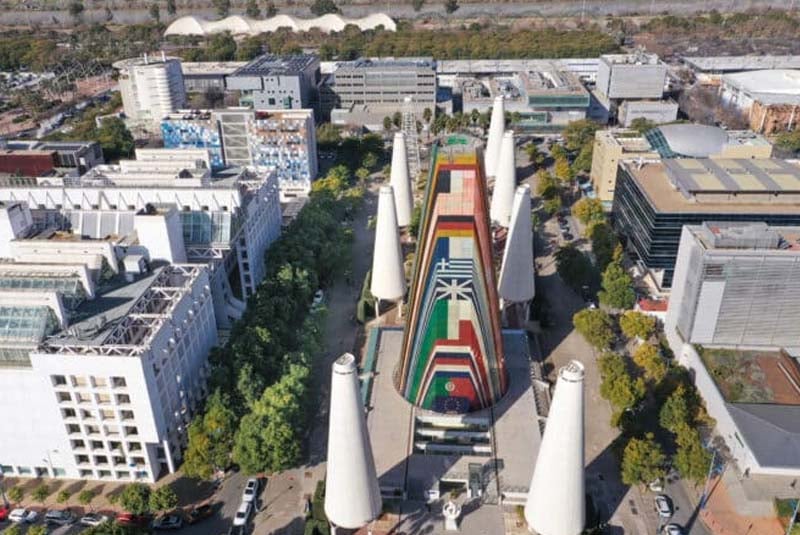
Sevilla TechPark, built on the site of the 1992 World Exposition, currently hosts 575 companies and generates employment for approximately 31,600 workers. The park recorded a business volume of €5.5 billion in 2025, representing roughly 9.8% of Seville province’s GDP and making it the leading technology park in the Andalusian network by revenue.
Six Innovation Priorities Shaped By Market Consultation
The regional government structured the procurement around six technology domains following a preliminary market consultation that received 74 proposals from 80 organisations. The majority of respondents were small and medium-sized enterprises based in Andalusia, though submissions also came from other Spanish regions and France.
The first priority addresses shared self-consumption and distributed energy resources, including a Building-to-Grid pilot that would enable structures to function as active participants in energy management rather than passive consumers. Building-to-Grid technology allows facilities equipped with sensors, smart meters, and storage systems to respond dynamically to grid conditions, potentially shifting loads during peak demand or returning stored energy when needed.
The second and third lines focus on intelligent public lighting with integrated access control systems, and an autonomous electric transport pilot. The fourth priority establishes a mobile robotics programme for urban cleaning, while the fifth creates an automated last-mile logistics system for goods delivery across the technology park.
The sixth component targets digital infrastructure development, incorporating a data platform, an event and emergency management system, and a digital twin of the entire precinct. Digital twins provide virtual replicas of physical assets that can support operational planning, predictive maintenance, and emergency response coordination.
FEDER Funding Underpins Regional Innovation Strategy
The investment draws on the FEDER Andalucía 2021-2027 programme, through which the European Regional Development Fund supports regional competitiveness, digitalisation, and green transition objectives. Public Procurement of Innovation enables administrations to commission solutions not yet commercially available, sharing development risk with private sector partners and research institutions.
Andalusia operates more than 70 similar innovation procurement initiatives across health, environment, agri-food, mobility, and construction sectors. The approach allows public entities to articulate functional requirements while inviting market participants to propose technological solutions, rather than specifying predetermined products or services.
Building On Existing Energy And Mobility Infrastructure
The eCitySevilla initiative has already delivered measurable results in energy transition and mobility infrastructure. Approximately 75% of electricity consumed by companies within the park now derives from renewable sources. Installed photovoltaic capacity reached 2.1 megawatt-peak, with an additional 2 megawatt-peak under development. The park’s electrical distribution network has been fully digitalised, and a digital twin of the distribution system is operational.
Mobility infrastructure includes 67 electric vehicle charging points offering 99 charging outlets, with 15 new units added in the most recent reporting period. Torre Sevilla, the 40-storey tower at the park’s entrance, houses one of Andalusia’s largest electric vehicle charging hubs. The park has also established the region’s first local energy community, located in Edificio Cartuja.
Spain is pursuing multiple complementary programmes to accelerate municipal digital transformation. For broader context on Spanish smart city initiatives, Kurrant previously reported on Spain Allocating €89 Million To Accelerate Municipal Digital Transformation, detailing the national framework for local digitisation funding.