Four waste collection trucks fitted with AI-powered cameras have been operating across the Bordeaux metropolitan area since February 2026, analysing commercial waste streams in real time for approximately 2,000 businesses. The deployment is part of a broader national programme by Veolia to roll out 40 intelligent collection vehicles across France, using optical recognition hardware supplied by Paris-based startup Lixo and AI software developed by the utility group itself.
How the System Identifies 30 Waste Categories in Real Time
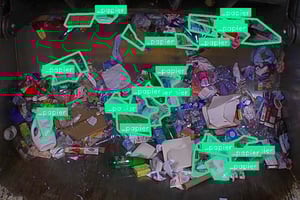
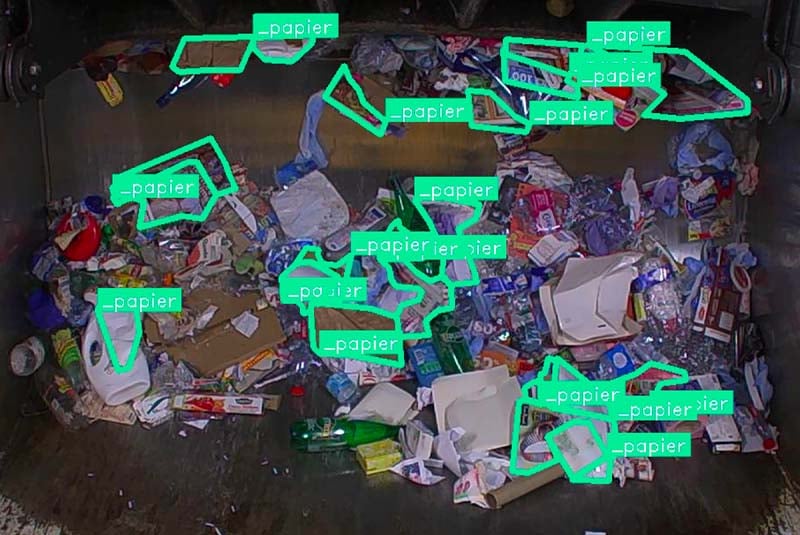
Each truck is equipped with cameras mounted inside the hopper that capture images of waste as it is tipped from commercial bins. Lixo’s optical recognition technology, combined with Veolia’s proprietary AI, classifies the material across more than 30 waste families, including wood, cardboard, plastics and metals. The system generates an individualised waste composition report for each business customer, detailing what is being disposed of correctly and where sorting failures occur.
Based on these diagnostics, Veolia offers tailored follow-up measures such as provision of more appropriate containers, redesigned sorting signage, employee training on waste separation, and adjustments to collection frequency. The objective is to improve source sorting, increase recycling rates and reduce overall waste treatment costs for commercial clients.
France’s Tightening Regulatory Framework Drives Demand
The deployment responds to growing compliance pressure on French businesses. Decree 2021-1199, issued under France’s 2020 Anti-Waste and Circular Economy Act (Loi AGEC), requires companies to demonstrate proper waste sorting before their non-hazardous waste can be accepted for landfill or incineration. Businesses must provide annual waste characterisation reports to disposal facility operators, a process that has traditionally relied on costly and infrequent manual sampling.
The AI-equipped trucks effectively automate this characterisation process, providing continuous, traceable data rather than periodic snapshots. The approach also aligns with the second phase of France’s extended producer responsibility (REP) framework, which took effect in 2026 and imposes additional sorting obligations on businesses.
National Scale: 40 Smart Trucks Serving 12,000 Clients
The Bordeaux deployment is not an isolated pilot. Veolia announced its national programme in October 2025, with initial rollouts in the Auvergne-Rhône-Alpes region, including Meyzieu near Lyon, as well as in Toulouse, Strasbourg, Metz, Reims and Montbéliard. The company had previously deployed four similar vehicles in the Auvergne-Rhône-Alpes region, marking its first national-scale application of the technology for commercial waste clients. Across the full programme, Veolia expects the 40 AI-equipped trucks to serve more than 12,000 professional clients nationwide.
Early results from regional deployments suggest the technology can improve sorting precision by roughly 20 percent compared to conventional methods, according to French media reports. That improvement translates into higher volumes of recyclable material recovered and lower residual waste sent to landfill or incineration.
Lixo’s Computer Vision Platform Powers the Detection
Lixo, founded in 2019, has built a specialised computer vision platform for waste characterisation. The company’s compact camera units, combined with integrated lighting systems, are installed inside collection trucks. The hardware is designed to withstand extreme operating conditions, including temperature swings from -10°C to 40°C and high-pressure cleaning. Lixo reports its recognition algorithms achieve approximately 95 percent accuracy in classifying common waste items.
Beyond the Veolia partnership, Lixo’s technology is already operational in more than 5,000 French communes for household waste analysis, used by operators including Suez. Municipal clients use the data to identify sorting errors at the neighbourhood or even individual collection-point level, enabling more targeted awareness campaigns. The application of the same technology to commercial waste streams, as seen in Bordeaux, represents a significant expansion of the platform’s scope.
AI Waste Analytics in the Broader European Context
The Bordeaux initiative sits within a wider European trend of applying computer vision and artificial intelligence to waste management. Several cities have begun experimenting with AI-enabled cameras on collection vehicles or at sorting facilities to improve material recovery and regulatory compliance. In France, the nearby city of Libourne recently adopted AI-powered waste detection through a partnership involving NGE CONNECT and Wintics, using existing surveillance infrastructure to identify illegal dumping in real time. Similarly, Amsterdam has trialled computer vision systems for urban cleanliness monitoring, while AI-powered sorting robots are gaining traction in material recovery facilities across the UK and United States.
Veolia’s approach focuses on collection-stage characterisation for commercial clients, rather than post-collection sorting at processing plants. By generating waste composition data at the point of pickup, the system creates a direct feedback loop between the waste producer and the collection operator.
Veolia’s Waste Operations in Southwest France
Veolia’s recycling and waste recovery division operates 42 sites across southwest France, specialising in collection, sorting and material recovery. The division employs 1,315 people in the region. At group level, Veolia employs 215,000 people worldwide and reported consolidated revenue of €44.7 billion in 2024. The AI waste characterisation programme falls under Veolia’s GreenUp strategic plan (2024-2027), which has committed €4 billion in investment toward decarbonisation, depollution and resource regeneration.
The company has also been consolidating its brand portfolio in Spain, retiring more than 100 local operating names to unify its market presence, a move that underscores its ambition to position itself as a single, globally recognisable platform for ecological transition services across Europe.