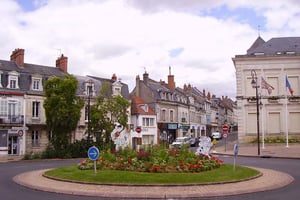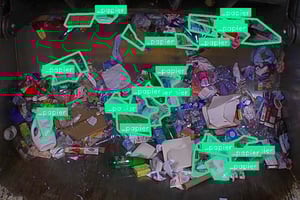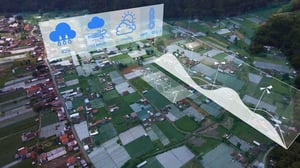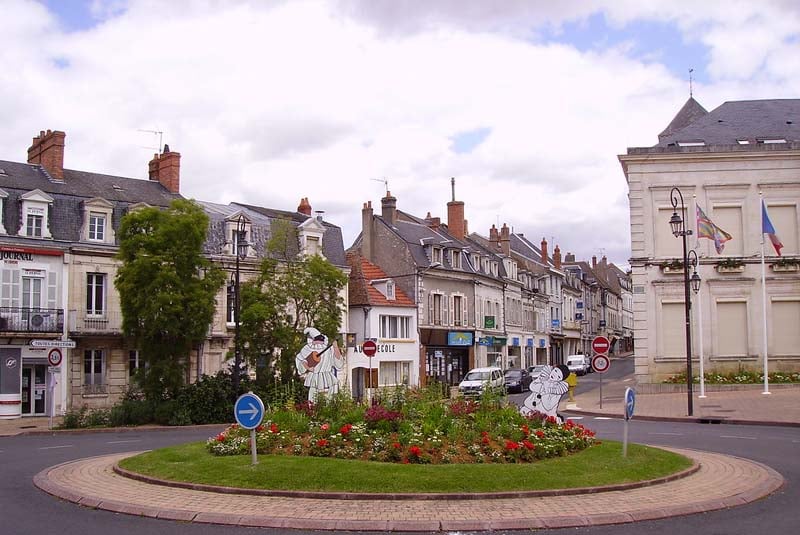
The commune of Cosne-Cours-sur-Loire in central France will be among the first localities covered by a new public low-power wide-area network (LPWAN) being rolled out by Nièvre Numérique, the department’s digital infrastructure authority. The LoRaWAN-based network is designed to support remote meter reading, connected street lighting, heating management, and broader IoT applications across the Nièvre department, home to approximately 200,000 residents.
A Third-Generation Network Built on Fibre Foundations
Nièvre Numérique, a syndicat mixte established in 2006, has spent recent years completing fibre optic rollout across the department, with an estimated public and private investment of EUR 200 million to EUR 250 million connecting roughly 155,000 premises. Having reached that milestone, the organisation is now pivoting toward what it describes as a third-generation, low-bandwidth network that complements the existing fibre infrastructure.
The deployment involves installing compact gateway devices on public buildings to relay data from IoT sensors. In Cosne-Cours-sur-Loire, the department’s second-largest municipality with approximately 9,400 inhabitants, gateways are being placed on the Raphaël-Giraux sports complex. These white enclosures, modest in size and visual impact, serve as relay points that connect sensors and connected devices to central data systems.
How LoRaWAN Fits the Rural IoT Challenge
LoRaWAN (Long Range Wide-Area Network) operates on unlicensed sub-gigahertz radio frequencies, specifically the 868 MHz band in Europe, enabling small data packets to travel long distances at minimal power consumption. The LoRa Alliance, the nonprofit body overseeing the standard, counts around 500 institutional, industrial, and operator members worldwide. The technology is particularly well suited to sparsely populated territories where deploying cellular-based IoT connectivity would be prohibitively expensive.
Sensors operating on LoRaWAN networks can achieve battery lives of up to ten years, transmitting periodic readings rather than continuous data streams. Typical data rates range from 0.3 to 50 kbit/s, sufficient for applications such as water consumption monitoring, temperature readings in public buildings, or streetlight status reporting. In rural departments like the Nièvre, where population density sits at roughly 30 inhabitants per square kilometre, the technology’s ability to cover large areas with relatively few gateways represents a significant cost advantage over alternatives.
Target Applications in Water, Heating, and Street Lighting
The initial use cases for the Nièvre network centre on three areas: water supply management through remote meter reading (télérelève), heating control in public buildings, and connected street lighting. These align closely with the operational challenges facing French municipalities that are simultaneously managing aging infrastructure and tightening budgets.
Remote water meter reading is emerging as one of the most widespread LoRaWAN applications across French local authorities. Departments including the Isère, Sarthe, and Vendée have launched similar programmes in recent years. In the Sarthe, the Sarthe Numérique authority invested EUR 2.5 million to deploy 210 LoRaWAN gateways manufactured by Breton firm Kerlink, creating department-wide coverage. The approach in the Nièvre follows a comparable model, where fibre network completion triggers investment in an IoT layer to support public service optimisation.
Across France, Rennes Métropole has been an early mover, deploying a private LoRa network spanning more than 40 municipalities to support applications ranging from water management to building energy monitoring. The Aachen region in Germany has pursued a similar cross-sectoral LoRaWAN strategy encompassing energy meter data collection and water readings.
A Growing Trend Among French Departments
The Nièvre deployment is part of a broader wave of publicly initiated LoRaWAN networks across France. According to a reference list maintained by Nièvre Numérique itself, comparable projects are active or planned in the Côte d’Or, Dordogne, Aude, Maine-et-Loire, and Val d’Oise, among others. The Île-de-France region is pursuing what has been described as one of Europe’s largest territorial IoT networks, with plans for approximately 3,000 LoRa gateways financed partly through the Contrat de Plan État-Région framework.
The trend reflects a strategic calculation by French digital infrastructure authorities: having invested heavily in fibre, the marginal cost of adding an IoT layer is relatively low, particularly when gateway installations can leverage existing public building infrastructure and backhaul through the fibre network already in place.
At the commercial operator level, Netmore Group acquired the LoRaWAN assets of Bouygues Telecom’s Objenious division, signalling continued commercial interest in French LoRaWAN infrastructure even as some global players, including Cisco, have exited the market.
What the Nièvre Deployment Signals for Small Municipalities
For a commune like Cosne-Cours-sur-Loire, the network represents access to digital infrastructure capabilities that would be difficult to finance independently. The IoT network is being deployed and managed at the departmental level by Nièvre Numérique, which has issued a public procurement contract covering the design, deployment, maintenance, and operation of the LoRaWAN network and associated connected devices. This centralised approach mirrors what other French syndicats mixtes have adopted, spreading costs across participating municipalities and offering a shared platform for multiple service applications.
The Nièvre’s approach also reflects the broader challenge facing rural French departments: with a steadily declining population and rising demands on public services, data-driven resource management is increasingly viewed as a necessity rather than a luxury.