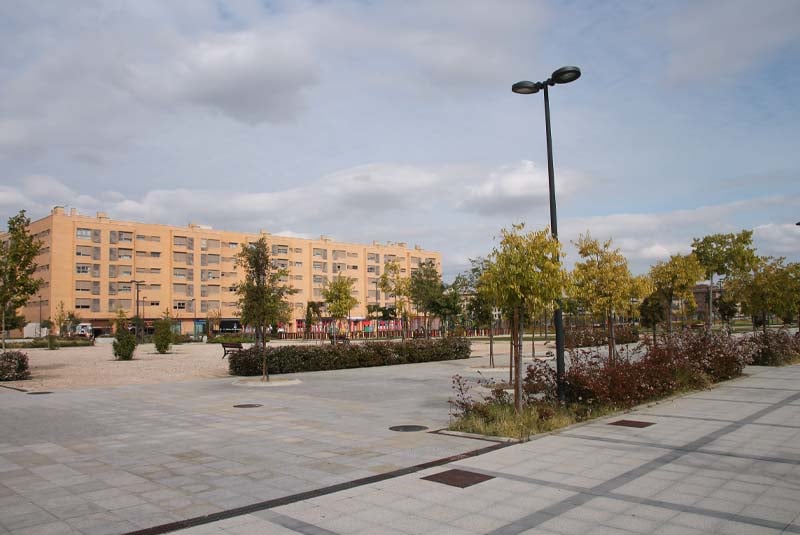
The Ayuntamiento de Getafe, a municipality of nearly 190,000 residents in the southern Madrid metropolitan area, has initiated a comprehensive street lighting renovation project targeting the Getafe Norte neighborhood. The initiative, managed by the municipality’s Maintenance and Lighting Department, will replace aging infrastructure with LED luminaires equipped with remote management capabilities, addressing both energy efficiency and public safety objectives.
Dual-Zone Implementation Covers Major Thoroughfares and Residential Areas
The project has been structured into two distinct operational zones. Technical specifications call for complete replacement of existing supports and luminaires with new LED fixtures. Infrastructure upgrades will include rewiring and modernization of 11 control centers distributed throughout the neighborhood to enable intelligent system operation. According to earlier municipal announcements from 2022, the project design and construction were initially budgeted at approximately €1.08 million, though final contract values for the current implementation phase have not been publicly disclosed.
QR-Based Asset Identification Streamlines Maintenance Operations
A distinguishing feature of the deployment involves the integration of intelligent labeling through QR codes embedded on each lighting fixture. This approach creates a direct link between physical assets and digital records, allowing maintenance personnel to access component specifications, programming parameters, and manufacturing dates through standard mobile devices. The system enables automated inventory management and accelerates diagnostic workflows when addressing maintenance requirements.
QR-based asset tracking has gained traction across European municipal infrastructure projects, enabling technicians to retrieve maintenance histories, service records, and technical documentation without manual searches through centralized databases.
Pedestrian Safety and Parking Visibility Enhancements Under Consideration
The municipal tender includes provisions for additional technical improvements that bidding contractors may propose. These optional enhancements focus specifically on improving nocturnal visibility at designated pedestrian crossings and illuminating parking areas along Teresa de Calcuta Street. Such additions would address traffic safety concerns while maximizing the value derived from the infrastructure investment.
Project Aligns With Regional LED Adoption Trends Across Spanish Municipalities
The Getafe Norte initiative reflects broader patterns of LED street lighting adoption across Spain. According to the Instituto para la Diversificación y Ahorro de la Energía (IDAE), LED conversions in Spanish municipalities have consistently delivered energy savings ranging from 65% to 80% compared to conventional discharge lamp installations. Spain’s street lighting network encompasses approximately 8.85 million points of light consuming an estimated 5,296 GWh annually, representing a significant target for efficiency improvements.
Comparable projects in nearby municipalities demonstrate the scalability of this approach. The city of Guadalajara deployed 13,500 connected LED fixtures with remote management capabilities, achieving 68% energy consumption reductions according to project documentation. Valencia has retrofitted approximately 90% of its street lighting with LED technology, incorporating photocell controllers and presence detection sensors as part of broader smart city integration efforts.
Madrid Metropolitan Municipalities Prioritize Lighting Infrastructure Upgrades
Getafe Norte, developed during the late 1990s, represents one of the municipality’s more recent residential developments. The neighborhood’s existing lighting infrastructure predates current efficiency standards established under Spain’s Royal Decree 1890/2008 governing street lighting energy efficiency. The regulatory framework mandates minimum luminous efficacy of 65 lumens per watt for new installations and requires energy classifications of A or B for renovated systems.
The Community of Madrid, home to over seven million residents, has seen municipalities across the metropolitan area undertake similar modernization programs. These initiatives typically combine LED technology with remote management platforms that enable remote dimming, fault detection, and consumption monitoring from centralized control rooms.