Two small coastal municipalities in northeast Florida are using continuous water quality monitoring to meet a state-mandated deadline for eliminating non-beneficial wastewater discharge, while simultaneously deploying treated effluent as a tool to counteract saltwater intrusion in local waterways.
Smart North Florida, a non-profit organisation focused on regional collaboration and smart technology deployment across Clay, Duval, Nassau and St. Johns counties, has partnered with the cities of Neptune Beach and Atlantic Beach to install real-time salinity monitoring equipment at strategic upstream locations. The deployment is designed to guide the controlled discharge of highly treated wastewater into creeks and drainage ditches, creating a freshwater barrier that helps prevent saltwater from migrating further inland.
A Legislative Deadline Driving Innovation
The project is a direct response to Florida Senate Bill 64, signed into law in June 2021, which requires domestic wastewater utilities across the state to eliminate all non-beneficial surface water discharge by 1 January 2032. The legislation mandates that utilities either cease discharging into surface waters or demonstrate that at least 90% of their annual average daily flow is being reused beneficially.
For smaller municipalities like Neptune Beach and Atlantic Beach, compliance presents a significant financial and technical challenge. A 2024 report by local media estimated that upgrading Neptune Beach’s ageing wastewater infrastructure alone could cost approximately $30 million. Rather than treating the SB 64 mandate purely as a compliance burden, the Smart North Florida initiative reframes treated wastewater as an environmental asset, using it to bolster freshwater levels in areas vulnerable to rising salinity.
How the Monitoring System Works
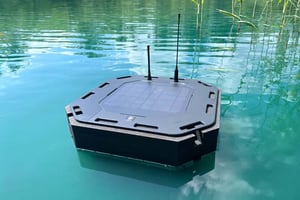
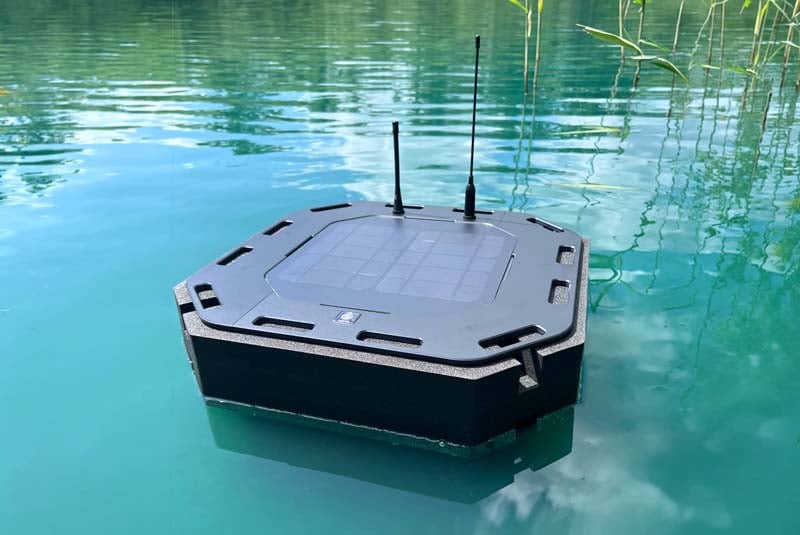
At the core of the deployment is a real-time salinity monitoring unit from WATR, a UK-based environmental monitoring technology company founded in 2017 and headquartered in Norwich, Norfolk. The hardware continuously tracks water conditions at key upstream points and transmits data to a cloud-based dashboard, where the Smart North Florida environmental team can view live readings, historical trends and automated alerts.
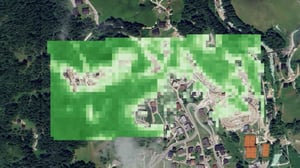
WATR’s platform is sensor-agnostic and supports a wide range of water quality parameters including salinity, conductivity, dissolved oxygen, pH, turbidity, nitrate and temperature. The system uses multiple telemetry protocols, including GSM, LoRa and satellite connectivity, and can integrate with third-party data systems via API. Data collected from the monitors allows the team to identify optimal locations for treated wastewater discharge while minimising ecological disruption and maintaining compliance with regulatory thresholds.
The deployment marks WATR’s first installation and first municipal client in the United States. The company’s technology is already in use across the UK water sector and in countries including Germany, Portugal, Croatia, France, Saudi Arabia and Australia. In August 2025, WATR secured growth capital from London-based investor 24Haymarket to accelerate its international expansion and invest in AI-driven predictive analytics.
Why Saltwater Intrusion Matters in Northeast Florida
Florida’s coastal communities face growing pressure from saltwater intrusion, a phenomenon driven by rising sea levels, reduced freshwater recharge and over-extraction from the state’s aquifer systems. The Floridan Aquifer supplies approximately 64% of the state’s freshwater, and cities like Jacksonville, which neighbours Neptune Beach and Atlantic Beach, rely on underground sources for roughly 90% of their drinking water.
While much of the public attention has focused on South Florida, where monitoring data shows the saltwater interface advancing inland by several miles in some counties, northeast Florida is not immune. The approach taken by Smart North Florida, strategically discharging treated effluent to maintain freshwater pressure in creeks and ditches, represents an emerging model for using wastewater as a tool for climate adaptation rather than simply a compliance obligation.
Florida’s IoT-driven water management efforts have been expanding across the state, as municipalities grapple with ageing infrastructure and increasing environmental pressures. Neptune Beach and Atlantic Beach join a growing list of smaller Florida communities exploring technology-enabled approaches to water challenges.
A Scalable Precedent for U.S. Municipalities
The Smart North Florida project positions itself as a replicable model for other U.S. municipalities navigating SB 64 compliance. By combining regulatory adherence with proactive ecological management, the initiative demonstrates how real-time data can help cities make evidence-based decisions about wastewater discharge locations, timing and volumes.
Smart North Florida, which grew out of the North Florida Transportation Planning Organization’s intelligent transportation systems programme, has been expanding its focus areas to include broadband, smart infrastructure and health equity. The wastewater monitoring project represents one of its most concrete environmental technology deployments to date.
For WATR, the U.S. entry point carries strategic significance. The American municipal water market is vast and fragmented, with thousands of small to mid-sized utilities facing similar compliance pressures under both state and federal regulations. The company’s Data-as-a-Service model, which allows municipalities to pay a monthly subscription rather than purchasing hardware outright, could lower adoption barriers for budget-constrained local governments.