 in Barcelona
 3 to 5 Nov 2026
American homebuyers are flocking to Florida throughout the COVID -19 pandemic Florida has seen more population growth than almost every other state and that's a challenge for the state's infrastructure this morning a torrent of wastewater flowing from a decades -old pond what we're trying to prevent and respond to if need be a real catastrophic flood situation already Florida has experienced several large sewage spills and experts say that will likely continue. Infrastructure in some parts of the state is over 50 years old and the population boom has put wastewater treatment plants closer to capacity. Experts say it could cost $22 billion over the next decade to continue to provide safe drinking water. All this combined with significant changes from rising sea levels have created big problems in the pipes. Pressures are starting to get you know, higher than we like to see in our pipes. David Noel is an engineer with the Orange County Utilities Department in Florida. His utility serves Orlando and the surrounding area. Orlando is the second fastest growing city in the United States when comparing the 30 largest cities countrywide. The area adds 1,000 new residents per week, and many find a home in golf course communities. The Orange County Utility uses reclaimed water to irrigate those golf courses, resorts and residential gardens. We didn't have capability of having access real time. So problems that we had, we couldn't address them quickly. The utility face scenarios like this one. We can see that this pressure gauge is really reading really low. Is that the pump that's down or is that just a demand? It's a type of incident that traditionally took weeks to solve, but that's changed with IOT. The utility invested in IECA's wavelet. solution. It starts with a sensor that monitors water levels and identifies where reclaimed water tanks are under pressure. We do hard infrastructure monitoring or hard infrastructure IOT because we can be utilized about level and flow and vibration and temperature and other parameters from the network that together bring the digital space of IOT into the day to day activity of the utility. communicates its data using a cellular network, which then gets displayed on Ayaka's web application platform. Our technology utilizes redundant cellular mechanisms. So we use in the U.S., for example, Verizon and T-Mobile in the same solution. And we found this is a very, very effective solution in comparison to set up either your own personal network, private network, or utilize short range radios, which the setup is very complicated. The Orange County utility uses the data to tell how how to adjust their water usage depending upon demand. It will also identify where additional reclaimed water tanks are needed. So we do not have our IECA integrated with our SCADA system. So we're using two different systems. So this actually provides a redundancy to verify our other systems, but we also use it more for our development team and for our work in the hydraulic modeling group. So this helps us keep. track of what's going on in our systems having this has made it so much easier for us to be able to see it quickly and to respond to clients now other cities use a solution to prevent pollution and costly sewer overflow and for identifying the presence of corrosive gases before they damage the infrastructure it's those kinds of factors that make wastewater treatment more challenging to address and other problems faced by a water utility in the wastewater systems you typically install underground in the manuals in the collection system so you have 100 humidity and you have very corrosive gases h2s gases all over the place so from the robustness of the solution you need a completely different design from water tightness to corrosive resistant materials the second aspect is certification in many many utilities or many regions waste water network is considered as other locations so you need explosive proof instrument So, the communication device, the sensor, everything needs to be explosive proof. From the hardware perspective, it makes everything much more complicated, certification -wise and building -wise. From the technicalities, it's pretty much the same. The main difference in the collection network is you need to have a very robust solution. And also, installation expertise, because confined space entry, it's called. When you enter the collection site network, you need to have something called confined space entry. which is a very dangerous process. So in the wastewater networks, the IoT solution to be probably a 10 times more reliable and 10 times more long-term deployment mechanisms than in other type of infrastructure. But despite those challenges, AECA finds that technology for wastewater treatment is growing at a faster rate than for other use cases within the water distribution network. And so environmental is pushing it forward. Regulatory compliance is pushing it forward. And also, I believe that people in the wastewater, because dealing with the assets is more complicated, as I said, confined space, safety issues, etc., so they are more open to digital solutions that save them fieldwork. So it's a growing business, but it's not the, I wouldn't say it's like the common thing that you will find in utilities. What they're currently doing is manual labor, meaning they're traveling between sites, they're doing visual inspections, they're measuring things manually, meaning they put, you know, like... They take rods into like manholes and they take manual pressure readings. Everything is done manually like they done 10, 20, 50 years ago, but at bigger scales. And this is the reason actually they are literally lost now because they are overwhelmed by all the manual work. That means to encourage more adoption of IoT, vendors have to make it even easier for cities to adopt the technology. We provide them the hardware, they use it until it's obsolete. We collect the hardware back, recycle it, reuse what is. possible, and if not, dispose it properly to electronic recycling centers, and then provide them with new updated version. From our feedback, they like it, because it removes the headache of disposal of electronic waste, so we collect the system, and the second thing, we also help our customers with disposal of batteries. All of our system is battery powered, so you use lithium batteries, and our customers typically doesn't, they're not well practiced in battery recycling, so we also provide you. recycling services if they ship us back the batteries or we provide them with shipping instruction so we recycle the lithium batteries at other location sites the world currently produces more than 45 million tons of electronic waste each year electronic devices contain toxic components which can be harmful to the environment plus they often contain personal and proprietary data all this is why vendors like birds a company specializing in environmental iot devices, say the market must take a closer look at recycling measures and sustainability. BIRDS is a subsidiary of the French utility Veolia, which also have seen among IECA's clients. This is really a topic which is discussed more and more during contractualization, during public tenders and also about standardization program, which requires to have more eco-friendly products. design so it is starting it's just the beginning for more insights from that interview with bruno stick with current insights as we continue to explore how sustainable iot truly is and if you have a question about a topic we explored in this video be sure to hit the button below
Florida Uses IoT to Tackle Wastewater Challenges
OrlandoWastewater network monitoringWater
In this video
-
 Ariel Stern
CEO, Ayyeka Technologies
-
 David Nowell
Engineer, Orange County Utilities Department, Florida
-
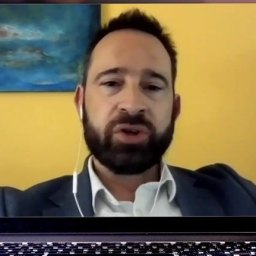 Bruno Hamamlian
Director International and Strategic Marketing, Birdz (Veolia)
About this video
This video examines the burgeoning infrastructure challenges in Florida, particularly focusing on Orlando's wastewater system amidst the state's rapid population growth. The City of Orlando, recognized as one of the fastest-growing cities in the U.S., is at the forefront of using Internet of Things (IoT) technology to enhance and future-proof its infrastructure.
A key voice in the video is Ariel Stern, CEO of Ayyeka, who elucidates why utilities are increasingly adopting IoT for wastewater management compared to other segments of the water distribution network. Stern's expertise offers viewers an understanding of the unique benefits that IoT brings to wastewater systems, such as improved efficiency, better resource management, and enhanced capability to handle the demands of a growing population.
David Nowell, an Engineer at Orange County Utilities Department in Florida, provides a practical perspective on how Orlando is implementing IoT solutions. Nowell discusses the specific challenges faced by the city's wastewater system and how IoT technology is being leveraged to address these issues. He highlights the real-world impacts of IoT integration, including advanced monitoring, predictive maintenance, and improved environmental compliance.
Bruna Hamamlian, Director of International and Strategic Marketing at Birdz, contributes an international viewpoint to the discussion.
The video also explores the collaborative efforts between municipal authorities, technology companies, and other stakeholders in ensuring the successful deployment of IoT in Orlando’s infrastructure. This collaborative approach serves as a model for other cities facing similar challenges. It is recommended for professionals and students in urban planning, environmental engineering, and smart city development. It offers valuable insights into the integration of IoT technology in urban infrastructure, particularly in wastewater management. Policymakers and city administrators looking to understand the benefits and implementation strategies of IoT in urban settings will find this video highly informative.
Read the transcript machine-generated
More in Water
See all 6:49
Data Sharing Enhances AMI Rollout for Cities, Utilities, Customers
 7:31
Severn Trent’s Water AMI May Lead to More Connected Solutions
 6:20
Using GeoAI to Calculate Wastewater Taxes in Cologne
 8:18
A Look at a Digitally Driven Spanish Water Utility
 6:40
Why are UK water utilities switching to AMI Meters?
 5:31
Tel Aviv Combats Two Water Challenges with One Solution
Latest news in water
All news- Ameresco Completes $5.9M Water Metering Upgrade Covering 8,000 Meters In Mustang, Oklahoma29 Oct 2026
- Houston City Council Raises Sensus Water Meter Contract Ceiling To $43.5M27 Oct 2026
- Riba-roja del Túria Pilots Four Grades Of Reclaimed Water Under €10M CircSyst Project27 Oct 2026
- Saanich Starts Five-Year Upgrade Of Water Meter Reading Equipment At 30,000 Properties25 Oct 2026
Kurrant advisory
Planning a water project? Talk to Kurrant.
Behind these interviews is Kurrant's advisory team, working with utilities, cities and the companies that serve them.
- Strategy AdvisoryKurrant is actively involved in resolving the challenges that cities, utilities and industry players are facing.
- M&A AdvisorySmart city and utility expertise for successful deals, turning insights into strategic gains.
- Engineering & ProcurementBetter engineering and procurement decisions, by identifying and developing digital and IoT solutions across use cases.
Or write to us: contact@kurrant.com
Send us a message