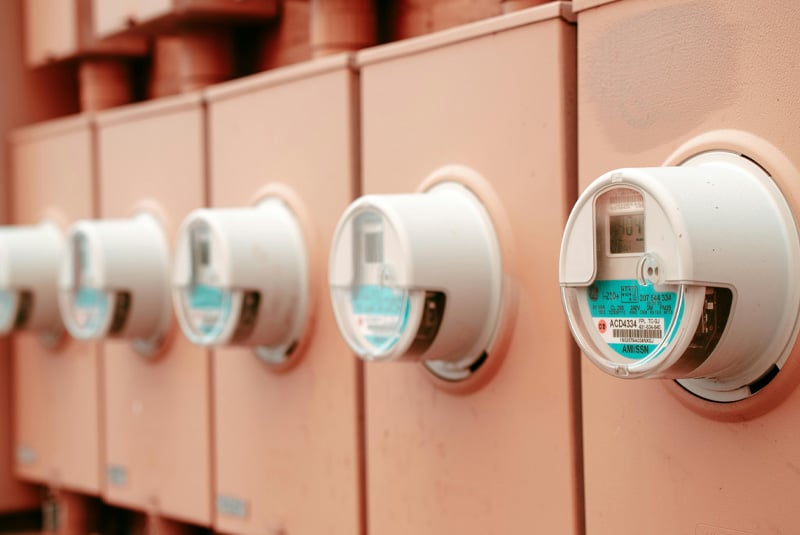
Britain’s energy regulator Ofgem has confirmed that three new Guaranteed Standards of Performance for smart meters will take effect from 23 February 2026, mandating automatic £40 payments to households and small businesses when energy suppliers fail to meet defined service benchmarks for installations and repairs.
Automatic Penalties for Installation Delays and Unresolved Faults
Under the updated framework, energy suppliers must now issue a £40 compensation payment in three specific scenarios. Customers who wait longer than six weeks for a smart meter installation appointment will be entitled to the payment automatically. The same applies when a scheduled installation fails due to circumstances within the supplier’s control, or when a supplier does not deliver a resolution plan within five working days of a customer reporting a fault.
The standards extend Ofgem’s existing Guaranteed Standards of Performance, which already mandate compensation for issues such as missed appointments and delayed supplier switches, to cover smart metering for the first time. The £40 payment level was itself adjusted in January 2025 to reflect inflation, up from the previous threshold.
Compliance Pressure Mounts After 900,000 Meter Repairs
The regulatory tightening comes after sustained enforcement activity by Ofgem over the past two years. Since 2024, the regulator’s compliance engagement programme has resulted in more than 900,000 previously non-functioning smart meters being repaired or replaced, a figure that has grown considerably from the 600,000 reported in August 2025 when the statutory consultation was first published.
Ofgem opened compliance cases against six energy suppliers in 2023 for failing to meet installation targets and for operating smart meters outside of smart mode. More recently, a further case was opened against three additional suppliers related to installation obligations. The regulator has signalled that automatic compensation is intended to create a financial incentive for suppliers to resolve operational issues proactively rather than absorb recurring penalties.
A Fourth Standard Still in Development
While three standards are now live, a fourth proposed rule, GSOP 4, covering compensation when smart meters remain out of smart mode for more than 90 days is still under review. Ofgem has indicated it intends to finalise this standard later in 2026, subject to resolving outstanding questions around technical accountability and the interplay between licence obligations and compensation mechanisms.
The delay reflects the complexity involved. Smart meters can operate in traditional (non-smart) mode for a range of reasons, some of which fall outside a supplier’s direct control, including connectivity issues managed by the Data Communications Company (DCC), the entity responsible for the dedicated communications network underpinning the UK’s metering infrastructure. Ofgem has acknowledged that ongoing technology upgrades, including the transition from 2G/3G to 4G communication hubs, need time to mature before the fourth standard can be equitably enforced.
Rollout Progress: 70% Penetration but Uneven Performance
According to the latest government statistics published by the Department for Energy Security and Net Zero (DESNZ), approximately 70% of all domestic meters in Great Britain were smart or advanced meters by the end of Q3 2025, with over 90% of those operating correctly in smart mode.
However, the national figure masks significant regional disparities. England leads with penetration around 70%, while Wales sits closer to 67% and Scotland trails at roughly 57%, partly due to connectivity challenges in rural and remote areas. Among individual suppliers, performance has also been inconsistent. According to Ofgem’s state of the market assessment, large suppliers reached on average 65% of their targeted smart meter numbers, with E.ON achieving 89% of its target while OVO Energy managed just 51%.
Smart metering complaints have also risen. Ofgem’s impact assessment noted that smart meters became the leading cause of consumer complaints at 30% of all issues raised with suppliers — overtaking billing and other previously dominant categories.
What Comes Next: Review Cycle and Parallel Government Action
Ofgem has committed to reviewing the effectiveness of the three new standards in early 2027 to assess whether they are delivering improved consumer outcomes. The first quarterly supplier performance report under the new regime is expected in Q2 2026, which will provide the first public data on compliance rates and compensation volumes.
In parallel, the UK government has separately consulted on introducing a statutory requirement for suppliers to fix non-functioning smart meters within a maximum of 90 days. This would complement Ofgem’s regulatory standards with a direct legal obligation, closing any gap between voluntary performance improvement and enforceable service levels.
The combined effect of regulatory standards, compliance enforcement, and government policy alignment represents the most concerted intervention in smart meter service quality since the rollout programme began. Whether it proves sufficient to address persistent operational challenges and uneven supplier performance will become clearer as the first compliance data emerges later this year.