French water services operator Saur has been awarded a performance-based operations and maintenance contract to manage the complete wastewater infrastructure serving Doha and Qatar’s South Zone, delivering essential services to more than one million residents in the Gulf state.
The contract, valued at QAR 1.67 billion (approximately $459 million), was awarded to a joint venture between Saur SAS and Power Waste Contracting and Engineering Services, operating under the designation SMAP WATER. Qatar’s Public Works Authority (Ashghal), the government entity responsible for infrastructure development across the country, issued the award as part of a broader framework that divided the nation’s drainage network operations into three geographic catchment zones.
Scope Extends Across Capital’s Critical Sanitation Assets
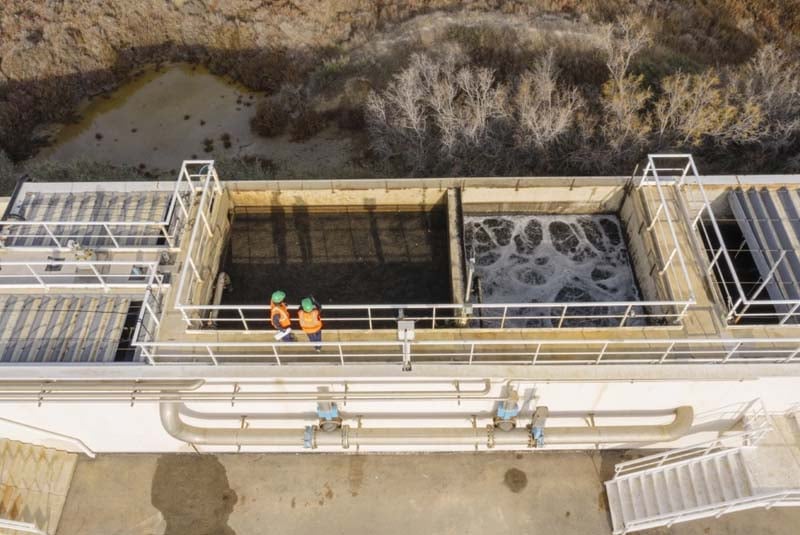
The agreement encompasses comprehensive management of wastewater collection, treatment, and performance optimization across all Ashghal-operated drainage assets within the designated catchment. This includes pumping stations, sewage treatment facilities, and associated networks for sewage, surface water, groundwater, and treated water distribution.
Saur has indicated it will deploy advanced operational methodologies as part of the contract delivery, including predictive maintenance systems and digital network management tools. These technologies are designed to enhance infrastructure reliability while supporting Qatar’s ongoing efforts to modernize its utility systems. The contract structure ties performance outcomes to operational benchmarks, placing responsibility for service quality directly on the operator.
Strategic Expansion Deepens Gulf Presence
The Qatar award represents a significant expansion of Saur’s footprint in the Middle East, a region where the company has maintained operations for over 15 years. The French firm has established substantial experience managing large-scale water and wastewater systems across Saudi Arabia, where it currently operates under contracts covering the North West and Eastern clusters for the National Water Company, serving approximately 8.7 million inhabitants across cities including Medina, Tabuk, Dammam, Al Khobar, and Jubail.
Saur’s regional track record includes previous work managing water supply and wastewater treatment services for Mecca and Taif between 2010 and 2016, handling essential services for millions of pilgrims during the annual Hajj pilgrimage. The company also maintains a long-standing partnership with Marafiq, the leading Saudi private-sector water and electricity services provider, operating industrial water facilities in Jubail, Yanbu, and Ras Al-Khair.
Contract Aligns With National Infrastructure Modernization Goals
Qatar has embarked on an ambitious infrastructure development program under its National Vision 2030 framework, with water and wastewater systems receiving significant investment attention. Ashghal recently unveiled a five-year infrastructure plan valued at QAR 81 billion ($22.2 billion) for the 2025-2029 period, described as the largest in the authority’s history.
The broader framework that produced the Saur award distributed operations contracts across three catchment zones with a combined value of QAR 4.09 billion ($1.12 billion). The North Catchment Zone was awarded to Aguas De Valencia Joint Venture at QAR 1.4 billion, while the West Catchment Zone went to a MACE Qatar-SUEZ International consortium at QAR 1.02 billion.
Qatar has achieved notable progress in wastewater treatment, with government data indicating the country treats approximately 99.7% of its collected wastewater. The treated effluent is increasingly reused for irrigation of green spaces and agricultural applications, with over 20.7 million cubic meters utilized for these purposes in a single month during 2024.
Performance Requirements Reflect Regional Quality Standards
The performance-based structure of the contract reflects a broader trend in Gulf Cooperation Council countries toward outcome-driven utility management. Such arrangements place operational risk on contractors while incentivizing efficiency improvements and service quality maintenance.