The Diputación Provincial de Soria has formally awarded a €3.22 million contract to Vodafone España for the supply, installation, and operation of smart water meters and NB-IoT telecommunications infrastructure across more than 121 rural municipalities in the province. The contract marks one of the most substantial rural water digitalisation deployments to date under Spain’s national recovery programme.
A Province-Wide Push for Rural Water Intelligence
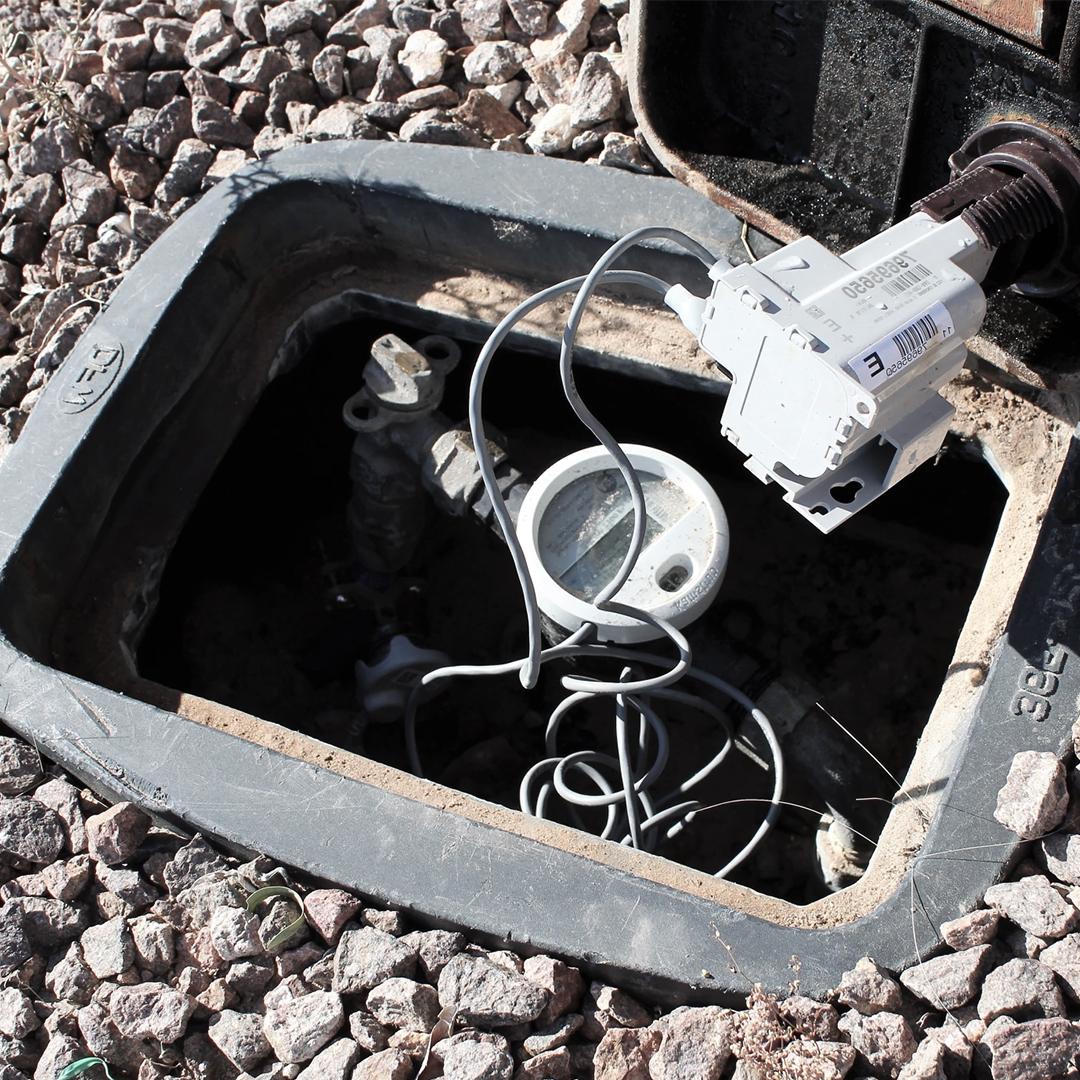
Soria, one of Spain’s most sparsely populated provinces, faces persistent challenges in managing distributed water infrastructure across hundreds of small settlements. The contract awarded to Vodafone España covers the supply and installation of data loggers, water meters with Narrowband Internet of Things (NB-IoT) communication in calibres ranging from 15 to 40mm, a low-power communications network, and automatic remote-reading services.
The scope goes beyond hardware: Vodafone is also required to develop and deliver the Smart Rural software platform, which will consolidate consumption data and support operational decision-making for local councils and water managers. Under the contract terms, all equipment installation and software development must be completed before 30 May 2026, with data collection and management services continuing for five years thereafter.
How the Contract Was Awarded
Three bids were submitted in the competitive tender process, which was run under an open and urgent procedure given the Ministry’s deadline of 1 June 2026 for execution of Next Generation EU-funded actions. Vodafone España was selected as the most economically advantageous offer following a technical review that validated the company’s bid. That validation required an additional step: Vodafone was asked to justify its pricing with a technical report before the Junta de Gobierno could grant final approval.
The awarded value of €3,220,463.16 represents a significant reduction from the original tender budget base of €5,947,300 (VAT included), indicating competitive pricing in the bid.
Part of a Broader SOAR Programme
This contract does not stand alone. It forms the core component of a wider programme called SOAR (SOcial Agua Rural), which the Diputación de Soria has been executing in phases. Earlier phases covered technical assistance and sensor infrastructure: as Kurrant previously reported, a contract worth €121,090 was awarded in late 2025 for the procurement of approximately 422 level sensors, including deep-well probes and reservoir monitors, across the same provincial territory. Together, the completed and pending deployments under SOAR represent a total programme value exceeding €10.2 million, with a state subsidy of more than €6.9 million.
The metering contract now awarded to Vodafone is the programme’s most operationally significant piece, connecting end-user consumption points across more than 100 municipalities to a centralised monitoring layer for the first time.
Why NB-IoT Fits the Soria Context
The Diputación’s specification of NB-IoT for this deployment reflects practical considerations specific to rural water infrastructure. Operating on licensed spectrum with strong underground penetration, NB-IoT is well-suited to buried meter installations in dispersed settlements where power supply to remote sensors is limited and meter density is low. Critically, Vodafone España’s existing NB-IoT network already covers all 51 of Spain’s provincial capitals and operates more than 16,782 sites, meaning the Soria deployment can leverage existing infrastructure rather than requiring a dedicated network build-out.
Vodafone’s growing position in water metering is not new. Kurrant has reported on the company’s broader ambitions in this space, including a partnership with Suez targeting the installation of over two million NB-IoT water meters across Europe by 2030, with Spain identified as one of the key rollout markets.
Funded Under Spain’s Recovery Framework
The entire investment is financed through the PERTE de Digitalización del Ciclo del Agua, a strategic programme embedded in Spain’s Plan de Recuperación, Transformación y Resiliencia and backed by European Next Generation EU funds. The PERTE was approved by the Council of Ministers in March 2022, with a total planned mobilisation of approximately €3.06 billion in public and private investment in water digitalisation. To date, more than €550 million has been distributed across three grant rounds targeting urban water cycle efficiency, with provincial councils and public water utilities among the primary beneficiaries.
Soria’s provincial council has been consistent in leveraging this funding. An earlier Kurrant article documented how the city of Soria itself received €1.5 million in European funds for urban water cycle digitalisation, covering 15 distinct actions from reservoir intake to sewage network management.
What the System Is Expected to Deliver
The operational case for the deployment centres on early leak detection and resource efficiency. Rural water networks in Castilla y Leon, like those in much of inland Spain, suffer from ageing infrastructure and significant non-revenue water losses. With near-real-time consumption data flowing through the NB-IoT network, local operators gain the ability to identify anomalies in demand patterns that can indicate leaks or meter failures before they escalate. Automatic remote reading also reduces the cost of manual meter inspection across dispersed rural settlements, which is a recurring operational burden for small councils managing water services with limited staff capacity.