Transport for London has unveiled a comprehensive five-year roadworks and traffic management strategy aimed at tackling congestion across one of the world’s slowest capital cities for vehicular travel. The initiative, branded “London on the move,” represents the authority’s first city-wide coordinated plan for managing the capital’s 6,400 automated traffic signal junctions and pedestrian crossings.
AI-Powered Signal Systems Target 14% Delay Reduction
Central to the strategy is the enhancement of the FUSION traffic control system, developed by Yunex Traffic (formerly Siemens ITS) in collaboration with TfL and the University of Southampton. The adaptive control platform replaces the decades-old SCOOT system and uses data from connected vehicles, buses, and multiple transport modes to optimize signal timings across intersections. TfL projects that upgrades to FUSION’s data processing capabilities could reduce traffic delays by up to 14% and generate approximately £1 billion in economic benefits through shortened journey times.
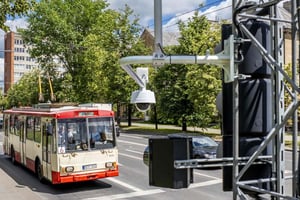
The authority is also expanding deployment of VivaCity AI-powered sensors across the road network. These cameras use computer vision technology to distinguish between various road users including pedestrians, cyclists, wheelchair users, taxis, and heavy goods vehicles. TfL is negotiating a data-sharing agreement with London’s 32 boroughs that would provide analytical insights from more than 1,000 cameras to inform decisions on pedestrian crossing timings and road safety interventions.
Lane Rental Expansion Brings Borough Roads Under Charging Scheme
The strategy includes broadening TfL’s Lane Rental scheme from red routes to borough-managed roads. The program, operational since 2012, charges utility companies daily fees of up to £2,500 for excavating busy roads during peak traffic periods. Since its introduction, the scheme has driven a 65% increase in coordinated utility works at shared sites and a 30% rise in planned night-time roadworks.
Four London boroughs—Camden, Enfield, Lambeth, and Merton—have already secured approval from the Department for Transport for their own lane rental schemes, with 22 additional boroughs progressing toward applications. The UK government is in the process of devolving approval authority to the Mayor of London, which would accelerate scheme rollouts and ensure consistency across the metropolitan area.
More than £25 million in Lane Rental funding has been allocated to 79 innovation projects since 2012, including robotic pipe repair technology, augmented reality mapping of underground infrastructure, and AI-powered disruption detection systems that monitor social media for real-time traffic incident reports.
Bus Priority Technology Targets All 3,500 Signalized Intersections
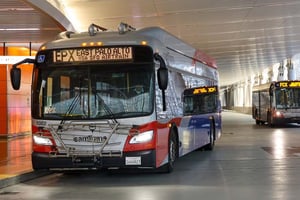
The plan commits to accelerating bus priority measures across London’s signal-controlled network. Currently, 2,080 traffic signals are equipped with bus priority technology that adjusts timing to reduce delays for public transport vehicles. TfL aims to extend this capability to all 3,500 signals that buses pass through by 2030.
Supporting this expansion is the BusSense program, a partnership with boroughs that coordinates roadworks scheduling to minimize impacts on bus routes. Early deployments have demonstrated a 3.5% improvement in bus journey times, and TfL plans to establish BusSense partnerships with all London boroughs by autumn 2026.
For the first time, TfL will conduct comprehensive signal timing reviews across entire bus routes rather than isolated intersection assessments. This network-wide approach aims to optimize green wave progression for buses traveling through multiple consecutive signals.
Road Safety Initiatives Build On Record Improvements
The strategy aligns with TfL’s forthcoming Vision Zero Action Plan 2, targeting the elimination of deaths and serious injuries on London’s roads. Since 2019, fatalities and serious injuries have reached their lowest recorded levels outside pandemic-affected years, while cycling journeys have increased by 43%.
TfL’s Direct Vision Standard scheme, which mandates minimum visibility requirements for heavy goods vehicles over 12 tonnes operating in Greater London, continues strengthening. From October 2024, all such vehicles must achieve at least a three-star rating or install a Progressive Safe System of safety equipment. In 2023, the authority reported a 62% reduction in vulnerable road user fatalities involving HGVs compared to the 2017-2019 baseline.
The plan also incorporates trials of near-miss detection cameras and collaboration with boroughs on infrastructure improvements at dangerous junctions. TfL has completed safety modifications at 46 junctions through its Safer Junctions program.
£87 Million Allocated For Walking And Cycling Infrastructure
Subject to future funding, TfL has committed £87 million for borough-led investment in active travel infrastructure during the current year. Over three years, this could deliver additional 20mph speed zones, protected cycle routes totaling 95 kilometers, and junction redesigns that reduce conflict between motor vehicles and vulnerable road users.
London’s strategic cycle network now spans more than 431 kilometers, quadrupling since 2016. Approximately 29% of Londoners currently live within 400 meters of this network, a figure the authority aims to increase through continued cycleway expansion.
Context: London’s Congestion Challenges
The strategy arrives as London faces persistent congestion rankings. The 2024 INRIX Global Traffic Scorecard placed London fifth globally for congestion, with drivers losing an average of 101 hours annually to traffic delays—a 2% increase from 2023. The TomTom Traffic Index ranked London as the slowest capital city worldwide, with average journey times of 3 minutes 38 seconds per kilometer in central areas.
London’s congestion costs the UK economy an estimated £7.7 billion annually according to INRIX analysis, with the capital accounting for approximately 50% of all UK traffic delay costs.
TfL’s 2030 vision positions sustainable transport prioritization and congestion reduction as central to achieving the Mayor’s target of 80% of journeys made by walking, cycling, or public transport.
The London on the move document is available here: https://content.tfl.gov.uk/londononthemove.pdf