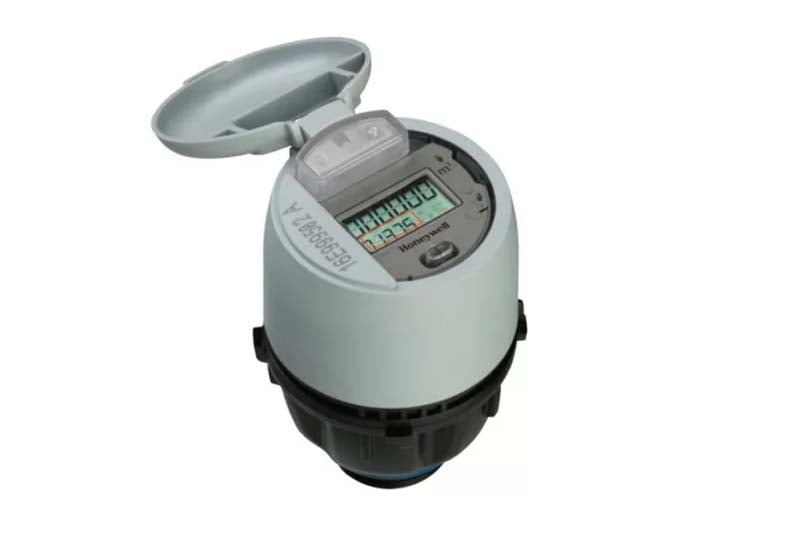
Wessex Water, the regional water and wastewater utility serving roughly 2.8 million people in the south-west of England, has signed a long-term agreement with Honeywell (via its unit Elster Water Metering) to supply smart water meters and supporting communications technology.
Under the contract, which may extend up to 15 years, Honeywell will provide hybrid smart meters and associated infrastructure. The initiative supports Wessex Water’s ambitious goal of equipping every home in its supply region with a smart meter by 2035.
Why This Matters
The rollout is central to Wessex Water’s demand-management and environmental strategy. Smart meters deliver daily (or near real-time) consumption data, a major upgrade from the traditional meters, which are read only every six months. This enhanced data granularity enables faster detection of leaks, more accurate flow monitoring, and better insights into usage patterns.
For customers, the shift means improved transparency into their water use and potential savings on bills. For the utility and the environment, it supports leak reduction and helps reduce pressure on sensitive water sources, particularly in ecologically fragile areas such as chalk-stream catchments.
Technical Details: The Role of Honeywell’s Meters
As described by Honeywell, the meters deployed are the “V200 and V210” hybrid smart-meter models. These integrate metering, automated meter reading (AMR), and communication via 868 MHz RF M-Bus (EN13757-4 / OMS standard).
Key features include:
-
Frequent data logging and remote reading without manual intervention.
-
Pulse-output support for external data logging, improving non-revenue water (NRW) measurement (i.e., water lost due to leaks or theft before reaching customers).
-
Near-field communication (NFC) support for smartphone-based reading and diagnostics.
These features should provide Wessex Water with the real-time visibility and analysis needed to tackle NRW and network inefficiencies more effectively than traditional manual-read meters allow.
Strategic Context: Supply Pressure, Leakage, and Environmental Risk
Wessex Water’s broader planning documentation underscores why smart metering is now a priority. The utility forecasts a supply-demand imbalance around 2035, driven by factors including regulatory abstraction licence reductions (particularly around environmentally sensitive chalk catchments), population growth, and climate change.
To address this, the company’s “Demand Management Strategy”, submitted as part of its PR24 business plan, combines smart metering, customer water-efficiency programmes, and enhanced leakage-reduction measures. Smart metering underpins the strategy, enabling timely detection of leaks, support for customer water savings, and reducing the need for new supply-side infrastructure.
As part of that strategy, Wessex Water aims for:
-
40 % smart-meter penetration by 2030 — including households and non-households.
-
95 % coverage by 2035.
-
A target leakage reduction of 3.5 Ml/day during the 2025–2030 period (called “AMP8”).
This demand-side approach aims to offset pressure on water supplies and reduce abstraction from environmentally sensitive sources, including rare chalk streams — globally scarce habitats concentrated in Wessex Water’s region.
Implications and Challenges Ahead
The project promises multiple benefits: more accurate billing, customer awareness and control over water use, faster leak detection, and reduced environmental impact. For Wessex Water, successful implementation could lessen the need for expensive supply-side projects and deliver long-term resilience against drought and regulatory constraints.
Nevertheless, achieving coverage of nearly all properties by 2035 is an ambitious logistical and operational challenge. It will also require sustained customer engagement, especially in areas where households must consent to meter installation or where supply-pipe upgrades are needed.
Moreover, while smart meters improve leak detection, significant reductions in leakage also depend on broader investments in network maintenance, pressure management, and replacement of aging infrastructure.