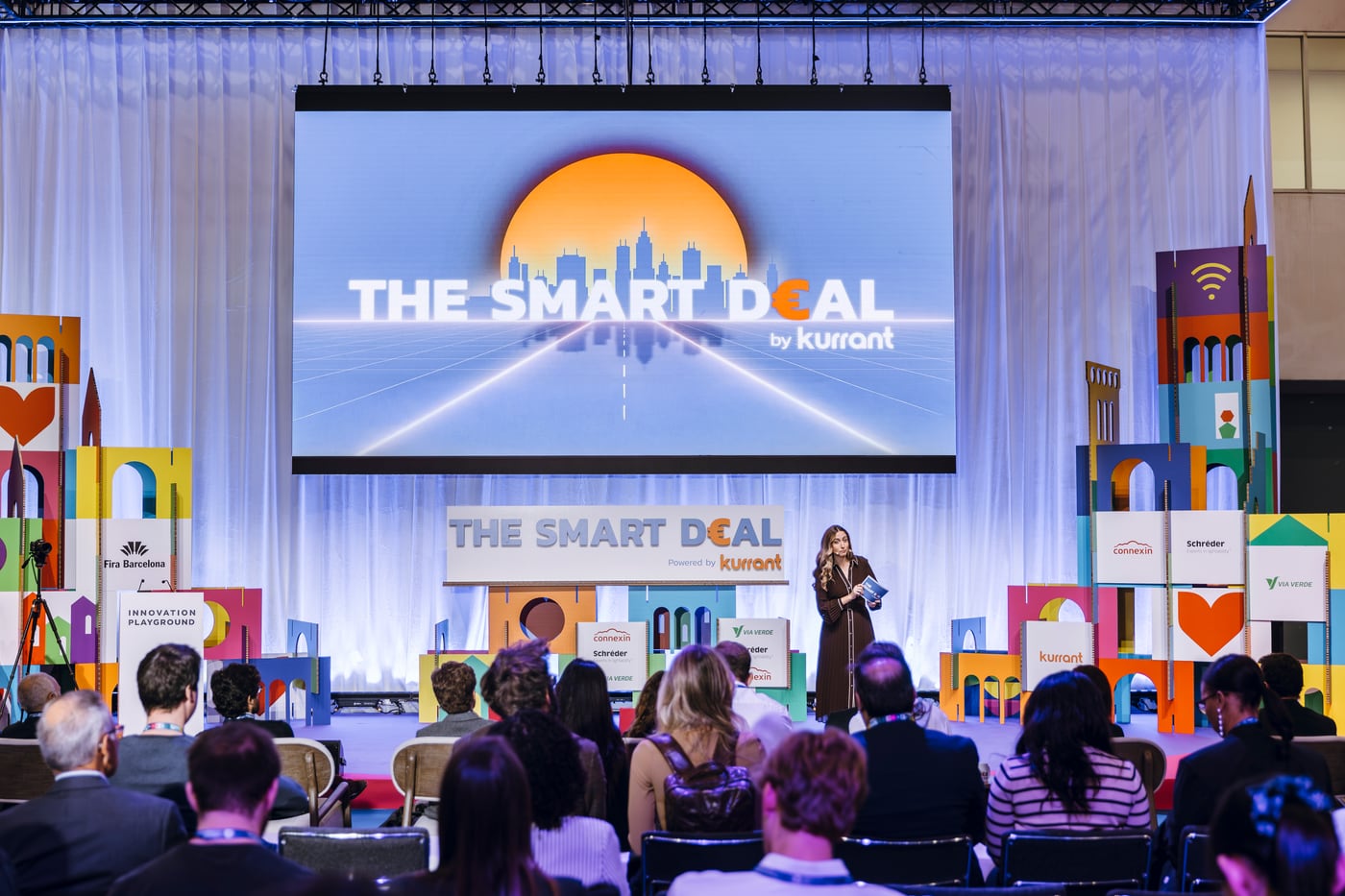
As we bid farewell to 2024, we look back at what has marked the smart city and utility industry in the last year. If I had to pick a word to describe this year, I would have to go with unsurprising. We have seen many trends we saw in 2023 taking center stage one more year. For example, flood monitoring has been the focus of many conversations. The flooding in the Spanish city of Valencia that led to the deaths of over 220 people, have put flood monitoring solutions in the spotlight once again. We saw some projects using this technology, but it hasn't yet taken off as much as we were expecting it to, or as much as it's needed, with recent climate events suggesting more and more areas will need to be flood ready regarding infrastructure and alert systems. For a second year in a row, we've also seen another flop for autonomous vehicles in the US, robotaxis more specifically, with General Motors shutting its Cruise unit, the company was involved in accidents which led to a major crisis and subsequently the closure of this $10 billion unit. Communication wise, not a bad year. We've seen cities and telcos focusing on small cells. We explored their deployments through open access agreements and integrated in smart luminaires. These deployments are in line with the advancements of 5G and can open the door to many technologies, AVs included. And it's not just cellular connectivity. We've also seen movement in LoRaWAN with Netmore Group acquiring Everynet as well as Senet in 2024. Regarding technology, we haven't seen any new shocking technologies or solutions being brought to the market. The industry feels like it has sort of come to a stable maturity. What I’ve seen is a lot of pragmatism. In the last few years, we have seen a lot of or a good mix between very large smart city revamping projects and plenty of IoT based gadgets. But lately we’ve experienced a good expansion of projects which are easier to replicate, showing that what brings value, what solves real pains in one city is also applicable to the next. Let me give you two examples. The first one is about reducing energy invoices in public buildings by identifying energy waste situations through the analysis of indoor temperature, heating and ventilation system behaviours, energy consumption and weather forecast for instance. In this case data collection and AI algorithms may reduce energy invoices by up to 30%. This is what I call pragmatism. This pragmatism may also be taking place due to companies and cities struggling to keep up. On one hand, we have experienced a lot of political instability. On the other, the demand is to do more with less, so improving efficiency and services with less money. This year, for example, we haven't seen any transversal large scale smart city projects like we've seen in the past with Dijon or Angers, which again confirms that the trend is: the market is driven by vertical deployments. Overall, I think it's fair to say that the year has been really quiet. We had the well-known use cases like individual like point control, waste collection optimization, which have experienced the typical 20 to 25% growth rates, which led us to think that they're kind of following the adoption curve. We've had digital pay-as-you-throw, which experienced a nice traction as well, especially at the beginning of the year in France. The switch from AMR to AMI, as we've seen in New York, but also in small countries like Croatia, for example, where it's really starting to take off. But as for the rest, honestly, it's been really, really quiet and one explanation might be that as we know, those IoT smart city deployments, they're really tied to the infrastructure deployments to concessions, the waste collection contracts. And if you look at those players’ core business, so waste collection companies, LED and luminaire vendors, water utilities. They've all had a tough year with lower revenue than expected and tight margins. So interestingly, that led them to explore AI and specifically genAI. Not so much for the external digital use case, but also for the internal use cases. So how do I optimize my knowledge better? How do we optimize our sales process and make it more efficient? This year, again, AI has been key across all industries. The EU even launched the AI Act with the aim of building trust around this technology. This new law is set to bring AI standardization to the region and protect citizens as well as creators. However, there is the question of could this regulation lead to confusion and then creations becoming more expensive, thus hindering the development and deployment of AI in the region? Another aspect of AI this year is that it kind of became a given. Clients and investors are no longer wowed by its use, but rather expect it. The startups that are standing out are offering differentiating solutions, whether with unique advanced algorithms and processing capabilities, or by addressing entirely new or highly specific use cases. And speaking of investments, another trend we've seen again is that of investors looking for software rather than hardware. Although some venture capitals like Bloomhaus prefer it when a startup has both in their portfolio, most of them go for the software companies, which can deploy their solutions in just hours. Hardware is still not getting much love from VCs. For many investors, the go to opportunities are still in software solutions, especially those that can diversify across verticals and tap into the private sector alongside B2G. Software solutions offer higher margins, are easier to replicate, driving higher valuations and potential exits. It's clear that startups contributing to the digitalization of cities and the smart city ecosystem as a whole are gaining traction. We saw it firsthand at Smart City Expo, where we organized the Smart Deal and witnessed numerous stages for startup pitches, which is pretty encouraging. However, this sector remains very niche and underrepresented within the broader venture and investment ecosystem, and we clearly saw this when attending Slush, one of the biggest investment and startup events in the world. North America and Western Europe continue to dominate in terms of large fundraisers and high valuations driven by VC and private equity investment, which is creating a challenge for industrial players to keep up. However, we're noticing a rise in highly promising startups coming from Eastern Europe where fundraising is scarcer and this presents a great opportunity for industrials to engage. What 2024 has taught us is that 2025 will be the time to invest smartly, leaving behind the hype and focusing on the use case and the ROI that it brings to the city, utility or client in general. Understanding that these actors must reach more goals each year with the same budget, or in some cases even less so, understanding their pains and adapting to them will be more important than creating a very interesting yet non-scalable solution. It's about pragmatism. It will also be important to understand that AI is no longer new. Being amazed by AI is so 2023. Cities and utilities will be looking at its usefulness for their services, but also internally. It will also be important to expand horizons and look beyond Western Europe and the US, and rather look at growing markets like that of Eastern Europe, where we've seen many startups popping up.
2024 Year in Review
As we approach the close of 2024, it is an ideal time to reflect on the significant developments that have shaped the smart city industry over the past year. Emma Lozano Doogan is joined by Kurrant’s Christophe Orceau (CTO and Partner), Pierre Dubisson (GTM Business Strategy Manager), and Joe Zarifeh (M&A Director) to delve into these trends.
View transcript auto-generated







📰 Latest News

🎬 Kurrant Originals
🎥 Recent Event Coverage

Featured Case Studies
Real client work behind the news. Strategy, M&A and engineering projects we've delivered for cities and utilities.


Stay in the Loop
Get smart cities and utilities insights delivered your way. Choose your channel
Join our WhatsApp Channel