 in Barcelona
 3 to 5 Nov 2026
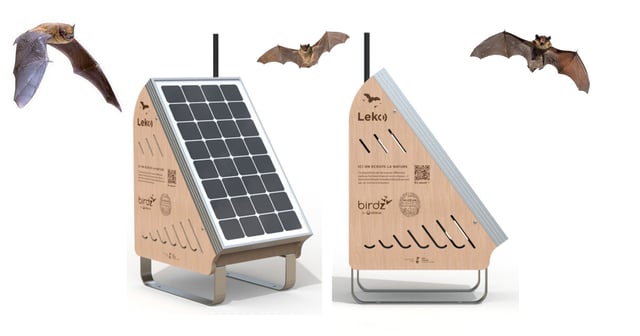
The urban world and the natural world. We tend to think of these two worlds as opposites. But increasingly, nature is not just surviving in cities, it’s becoming a key element of them. From pigeons and foxes to fish and insects, wildlife has made a home of urban environments. And as cities and utilities better understand the role these creatures play, they’re beginning to rely on them not just as part of the ecosystem, but as sources of data to improve life for humans and green areas. Let’s explore three examples across water, land and air, of how nature is being used to understand city and utility issues. Nature can act as a powerful indicator of environmental change. Animal behaviour can reveal issues that traditional systems might miss. This is the idea behind Bordeaux-based startup MolluSCAN-eye, which focuses on real time water quality monitoring, a critical issue, with floods, sewage discharge and industrial pollution putting increasing pressure on waterways. Bivalve molluscs, being mussels, oysters and they are the biosensors. And so it's these animals plus electronics and statistics and the combination of all this is the MolluSCAN-eye solution that through the behavior, the health of the animals, we can detect and assess the water quality and pollution. MolluSCAN collect local molluscs from the area they're going to monitor. Sensors are attached to the shells and then the animals are returned to their habitat, where they filter water, whether it’s salt or fresh water, to breathe and eat, as they normally would. As conditions change, so does their behaviour. The sensors pick up on those behaviour changes, which are analysed to detect possible pollution events. Unlike traditional sensors, which are designed and set to detect predefined substances, molluscs respond to any disturbance in their environment, providing an early warning signal, even when the exact pollutant is unknown. The data is transmitted via cellular networks to a monitoring platform, where operators can track indicators and receive alerts of water conditions. According to MolluSCAN, molluscs remain in place years without maintenance, as they clean themselves. Traditional sensors need to be cleaned often to remove build up and allow proper sensing. And back on land, nature is also being used to monitor environmental health, this time through sound. Veolia Connected Solutions developed LEKO, a solar powered bioacoustics sensor that identifies 100 species of animals, mainly bats, birds and grasshoppers. By analysing which species are present, and the number of encounters, the system helps assess the condition of an ecosystem, whether in urban or agricultural environments. The main objective of the solution is to quanlify the health of the ecosystem on the sites, to diagnose the ecological damage, on the biodiversity, and also to analyze the impact of the activity on the sites. or the impact of the territorial development project. The tool records animal sounds mainly at night, processes them on site and sends the spectrogram via cellular to the server, where it’s turned into usable data that users can see and monitor. Certain species of bats are characteristic of specific habitats. Their presence, their abundance, their behavior, gives us clues of the ecosystem health. This kind of data can inform urban planning decisions, in works or streetlighting, for example. In some European countries, including Germany, cities have already begun adapting street lighting reducing intensity or shifting to warmer tones to limit disruption to wildlife. Urban biodiversity isn’t just about protecting nature, it’s about maintaining the systems that keep cities liveable, from regulating temperature to controlling pests and supporting public health. And now, to the sky, to find Serbian startup SignalWings, which is working on a different approach to monitoring IoT networks, using the most common birds in cities: Pigeons. The startup equips trained pigeons with a light sensor inside a backpack. The birds fly over the networks and collect data on radio signals, helping map the performance of IoT networks and identify interference or connectivity issues. Today, such monitoring is typically carried out either manually by technicians moving through an area or using drones. Our idea is to tackle this with nature because nature is all around us. If you want to cover an area quickly, you can simply fly. And, what better way to do it than to fly with the animals that are already there? The concept comes at a time when drone use is becoming more tightly regulated, particularly in Europe, where urban deployments often require specific authorisations and must comply with strict safety and privacy rules. At the same time, technologies that rely on acoustic monitoring, are also facing increasing scrutiny over privacy. In France, for example, audio recording in public spaces is heavily restricted, limiting how such systems can be deployed. Cities are beginning to look at nature not just as something to protect, but as something to work with. As urban technologies become more regulated and more complex, these hybrid approaches, combining biology and digital systems, may offer an alternative way of understanding city and utility issues.
Nature as a Sensor: Rethinking Smart Cities, Utilities
The urban world and the natural world. We tend to think of these two worlds as opposites. But as cities and utilities better understand the role of wildlife in their ecosystems, they’re beginning to use animals as sources of data to improve life for humans and in green areas. In this video we talk to Ludovic Quinault, CEO and Co-founder of MolluSCAN, Flora Carbonel, Biodiversity Manager at Veolia Connected Solutions, and Stefan Bjelakovic, CTO at SignalWings, to discuss three examples across water, land and air, of how nature is being used as a sensor to understand city and utility issues.
View transcript auto-generated








Similar Picks

📰 Latest News
🎬 Kurrant Originals
🎥 Recent Event Coverage



Featured Case Studies
Real client work behind the news. Strategy, M&A and engineering projects we've delivered for cities and utilities.
Stay in the Loop
Get smart cities and utilities insights delivered your way. Choose your channel
Join our WhatsApp Channel