 in Barcelona
 3 to 5 Nov 2026
Many smart city projects start with street lighting and there is a general belief that because of its ubiquitous configuration, high poles, energy grid and canopy connectivity, smart street lighting is a great enabler for other smart city applications. In recent years we've seen many traditional players like Schroeder or Signify turning to Smart Solutions. and incorporating them into their products. SmartPoles, which integrate a range of sensors and devices in a streetlight post, are among the latest innovations and maybe the most visible smart city enablers. We wonder, however, about the viability of such solutions and their scalability. SmartPoles can host a variety of technology. The posts can include loudspeakers, cameras, air quality sensors, parking sensors, EVs, chargers however having so much technology in the lights dramatically increases the price of these solutions a regular luminaire has a price of between 100 and 600 euros and are often fitted on existent poles while smart pole prices range between 5 and 10 ,000 euros per pole and require cities to first dismantle the existing pole which adds to the cost and going up to multiple 5,000. There are very specific use cases, and many of them. I would say traffic analytics and weather sensors. And maybe also surveillance. It's actually three things. It's safety and traffic analytics. In some regions, we're testing the small cells. So there's a 5G antenna built in to cover the small cell. And since it's integrated into the spotter, it's not so... as a small cell it's also serving as a smart city pole for traffic analytics, majestic counting whatever your need is. Scalability is always a question in this types of solutions as cities have thousands of street lights so smart poles are not a solution scalable to an entire city due to the cost but also necessity to monitor air quality for example it is unnecessary to have a sensor on each street light you'd like to see if you want to see if you want to see if you want to only need it on specific posts if you look it from the point of city view if i need a thousand city lights it might be an option to use it might be a better option to use a city light supplier but if you want to have a smart city pole on the junctions controlling the traffic and then also some some lights then of course we are the better option it's a smarter option for polls definitely smart polls are not scalable they're too expensive to reach the thousands and they are only needed in specific areas where you want to gather a specific data. So they are not a solution that a city will need for its entire territory but rather a product that can come in handy if they want to find out about foot traffic in a park for example. Dynamic lighting is also one of the reasons why cities deploy sensors on their streetlights to collect and process a range of urban data like traffic, weather conditions, emissions, people flow, air quality and adjust outdoor lighting levels accordingly. In this case smart poles are not necessary as the limited number of sensors required can be retrofitted on existing posts. Urban Lighting Innovations has developed a project in the German city of Bad Hersfeld in which they replaced only 160 luminaires in the city. Reduce the luminaires when the streets are wet, because everybody knows if it is wet, driving your car and it's where and it's rainy day and the street lightings are on some kind of blinding sometimes in some situations this is because of the reflections you get from the water on the street so you will not need that much light we are doing that with a laser for example we get the road condition with a laser and what we found out in Bad Hersfeld is if it's wet out there in Bad Hersfeld we can review the luminaire power up to 50 % no matter how much traffic there is so you have the case beyond lighting which is the laser right and based on that data we are controlling the luminaires controlling luminaires by real demand means also to operate with systems beyond lighting because if you start to control luminaires by real demand you have to know what's the demand and the demand is dynamic you cannot put on static programs and thinking that you are controlling by demand so by demand means are there persons or not smart poles have specific use cases and their high price means their number will always be limited the interest of cities and dynamic lighting means that at the end of the day what decision makers want from smart street is to have a proper use of the resources. Don't forget to subscribe for more investigations like this. I'm Emma Lozano-Dugan for Current Insights.
Are Smart Poles Scalable to Entire Cities?
In this video
-
 Pedro Ruão
Founder, CEO, Omniflow
-
 Akif Ekin
CEO, Founder, Ekin Smart City Solutions
-
 Matthias Weis
CEO, Urban Lighting Innovations
About this video
In this insightful episode, we delve into the evolving landscape of smart city infrastructure, focusing on a component that is often overlooked yet crucial: smart streetlighting with Pedro Ruao of Omniflow, Akif Ekin of Ekin Smart City Solutions and Matthias Weis of Urban Lighting Innovations. Streetlighting, traditionally a staple of urban development, is now at the forefront of smart city innovations. Our exploration begins with an understanding of why streetlighting is considered a foundational element for smart city applications. Its widespread presence, coupled with features like high poles and energy grid connectivity, positions streetlighting as an ideal platform for integrating advanced smart city technologies.
We'll examine the transition of industry giants such as Schreder and Signify from conventional lighting solutions to the realm of smart technology. Their efforts in developing 'Smart Poles'—streetlight posts integrated with a myriad of sensors and devices—represent a significant shift in urban infrastructure. These smart poles are not just lighting solutions; they are multifunctional platforms that can support a range of smart city applications.
However, the adoption of such technologies is not without challenges. A key issue we address in this episode is the scalability of smart poles. Can these advanced systems be deployed on a mass scale in urban environments? We bring together industry experts to discuss the practical aspects of implementing these technologies across cities.
Another crucial aspect we explore is the choice between smart poles and smart luminaires. Each offers unique benefits and poses distinct challenges. Our discussion with industry professionals sheds light on the factors that influence this decision, including considerations of functionality, cost, and integration with existing city infrastructure.
Tune in for an engaging conversation that navigates the complexities and possibilities of smart streetlighting in the context of smart city development. This episode promises to offer valuable insights for city planners, industry professionals, and anyone interested in the future of urban living.
Read the transcript machine-generated
More in Street Lighting
See all 7:10
How New Orleans Plans for Resilient, Smart Future
 7:48
Unveiling Dallas’ First Official Smart Community
 6:45
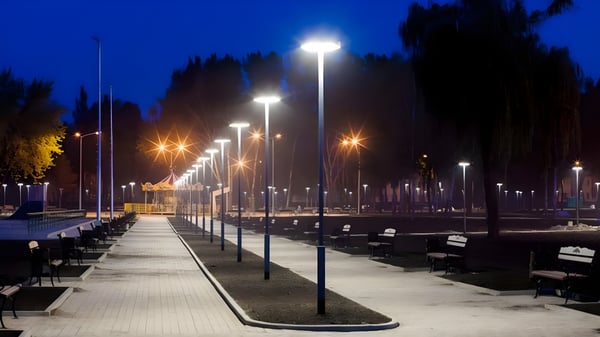
Optimizing Street Lighting with Telco Network Data
 7:03
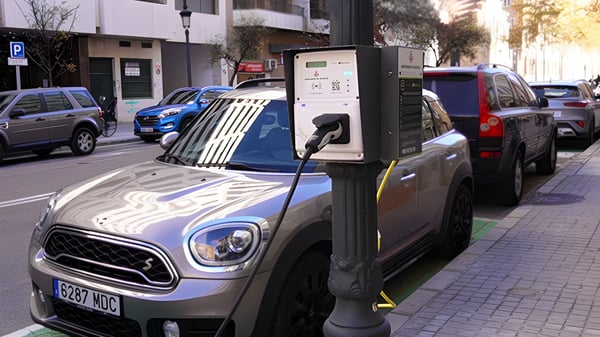
Valencia Targets Energy Efficiency & Light Pollution Reduction
 11:19
Las Condes’ Journey to Becoming a Smart City
 8:05
A Look at Philadelphia’s Advanced Lighting Fixtures
Latest news in street lighting
All news- Monza Completes 12,688-Point LED Streetlight Replacement And Adds QR Fault Reporting25 Oct 2026
- Friuli Venezia Giulia Council Backs Adaptive Streetlight Study After €156.6M Udine Crash Toll22 Oct 2026
- Regione Basilicata Opens €18.8M Public Lighting Call For Comuni And Two Provinces22 Oct 2026
- Tronsanges Becomes Test Commune For LoRaWAN Street Lighting Controls In France’s Nièvre Department14 Oct 2026
Kurrant advisory
Planning a street lighting project? Talk to Kurrant.
Behind these interviews is Kurrant's advisory team, working with utilities, cities and the companies that serve them.
- Strategy AdvisoryKurrant is actively involved in resolving the challenges that cities, utilities and industry players are facing.
- M&A AdvisorySmart city and utility expertise for successful deals, turning insights into strategic gains.
- Engineering & ProcurementBetter engineering and procurement decisions, by identifying and developing digital and IoT solutions across use cases.
Or write to us: contact@kurrant.com
Send us a message