Global data consumption is expected to almost triple by 2028. With the increasing need for 5G deployment, high demand and more areas like rural ones asking for coverage, offer is also required to be up to the challenge. To increase bandwidth and step up to 5G deployment needs and expectations, telcos can turn to small cells. Small cells can be deployed as they are or on smart poles or smart luminaires that can host smart city technology as well as the small cells. In Brazil, telecommunications company Ligga is tasked with improving bandwidth and accelerating 5G deployment in its territory. To do that, they signed during the Smart City Expo World Congress 2024 a Memorandum of Understanding to deploy a smart pole attachment, a smart luminaire by Omniflow to turn street lights into connectivity and even smart city hubs. We have a project to connect, initially one city in a PoC project, called Assai. Assai is a city in Parana state. And we will have, more or less, ten lighting, smart lighting in the center of the city, to connect the local businesses and the infrastructure of the government. Ligga is set to kick off the deployment of the smart attachment in a proof of concept on ten street lights in Assai, but the telco is expected to increase coverage in over 1200 small cities. The Omniflow attachment turns the lighting pole into a smart streetlight, with which Ligga will improve bandwidth by hosting a small cell in it. Clients can add to it cameras, small cells, air quality sensors, Wi-Fi... all powered through solar and wind. The way it's powered is one of the reasons why Ligga decided to go for this solution, instead of just choosing to deploy a small cell. Connecting rural areas is also very important because, in those regions we don't have energy power, on grid energy power. And this kind of equipment has solar power and solar power and wind power. So it's very good for us to have this kind of power alternative. To deploy a small cell inside our unit, it requires initial project. So you choose the small cell you want to use. You create the project, and you install the first. Then all of the other 3000 will be exactly the same. The starting price for the small version of Omniflow’s smart attachment is around 2,000 USD. The big version starts at 4,000. Ligga has chosen the big version to fit in the small cells, which they themselves will have to buy and install. Brazil's regulations for telcos have made it easier for Ligga to decide to go for this type of solution. In Europe, when a telco wants to attach anything to a streetlight, they need the permission of the city and they'll most likely have to pay a type of rent. In the US, for the permission, paperwork and payment, most of the time the telco will have to talk to the utility that owns the poles, but it's different in Brazil. In Brazil, we have an easier regulation about small cells. And this kind of equipment is considered a small cell in Brazil. So we don't need for example, a license for the regulatory agency. And the authorization of the municipalities is easier also. In the National Regulatory Agency, we have a fee to pay in case of some connectivity equipments. But in this case we don't have to pay anything because there's a small cell with low power so we don't have to pay. The regulation applies because the attachment will host a small cell, thus counting as a small cell itself. Even if they attached sensors, it's still considered a small cell, as it does not consume any power from the grid and utility thanks to the inbuilt wind and solar power feature. So they won't have any tariff issues. Regulationwise, it's difficult for them to build big infrastructure, but since the Brazilian National Telecommunications Agency relaxed regulations on small cell deployment, telcos can expand their mobile networks faster and cheaper. Although the initial goal is to enable better coverage with small cells, there is also an economic component to choosing this smart city solution over a simple small cell. This project can allow the telco to explore new streams of revenue with the deployment of sensors. They can either rent out the space inside the attachment for clients to add features onto, or they themselves can add sensors and monetize the data. We have two kinds of business model. The first one is for government, when we want to have some contracts with municipalities in Brazil, contracts linking it to smart city projects. The second one is, for example, to connect, schools, hospitals and other private infrastructure. We will have data for all the population that will be using this kind of equipment. And so we can use this data to improve or to create new business models. Ligga can attach sensors, gather data and partner with or sell data to a municipality, and even charge third parties to access the real time data. They can also rent out the space and allow a third party to attach sensors for a monthly fee. If they install traffic cameras, for example, they can sell the anonymous data to urban planners as well as private companies like carriers, bringing in a new source of revenue and ROI for this solution. In countries like the UK, where regulation on what goes on in streetlights is tighter, deploying small cells as they are makes sense, as it can be quicker and easier than deploying solutions with other intentions. Whereas in Brazil, where this type of solution doesn't require complicated bureaucracy, it is an incredible opportunity for telcos who can gain new clients from new business models.
Smart Luminaires Partner Up with Small Cells in Brazil
Telecommunications company Ligga is set to improve bandwidth and accelerate 5G deployment in its territory. To do just that, the Brazilian telco is launching a proof of concept with smart luminaires by Omniflow that will host small cells and also bring other business opportunities for the telco.
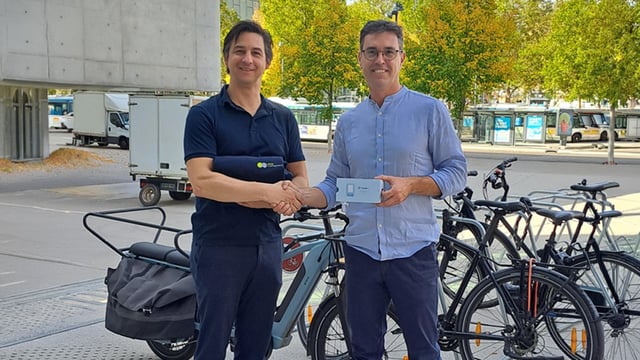
In this video we interview Vitor Menezes, Director of Regulatory and Institutional Affairs at Ligga, and Pedro Ruão, CEO of Omniflow, to discuss the project, why Ligga chose this smart attachment instead of just a regular small cell, and what other sources of revenue this project could bring to the telco.
View transcript auto-generated








Future-Proof Your Street Lighting
with Open Standards
At Kurrant, we advocate for interoperability in street lighting systems. It reduces costs and ensures your smart lighting infrastructure evolves with the best available technologies, regardless of manufacturer.




📰 Latest News
🎬 Kurrant Originals

🎥 Recent Event Coverage



Featured Case Studies
Real client work behind the news. Strategy, M&A and engineering projects we've delivered for cities and utilities.



Stay in the Loop
Get smart cities and utilities insights delivered your way. Choose your channel
Join our WhatsApp Channel