 in Barcelona
 3 to 5 Nov 2026
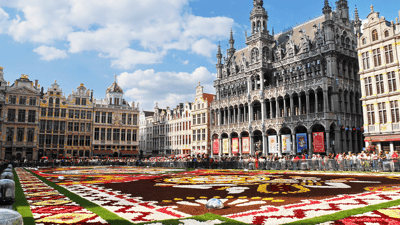
When we think of Brussels, we think of chocolates, waffles, Tintin and art, but also the European Union. The city is both the Belgian and EU capital, with 184 different nationalities living in the metropolis. That makes the city very international and cosmopolitan but it also poses a challenge. And so that is very challenging to us to have this managing of an international city and European capital, but in a small city, small borders. And that's very challenging and that's why we need to be efficient in our management of the city and efficient of our administration. To achieve that efficiency, city managers found a need to adapt to the new digital world and modernize their systems, leaning on a smart city strategy to do so. The first step was to move everyone to a new building so that all the departments were working together. The second was creating the strategy itself. For the first time, we have an overview and a complete transversal strategy. That was very important to launch it, and we launched in March 2023, with the stakeholders because we know that the smart city strategy has to be transversal, has to be with all the actors, public and private sector. And that's all very, very important. We have five building blocks. Those are really the areas that are needed and really necessary to build any ambitious smart city project in the city. So we have the strategy and governance data, digital skills, technological solutions, and the financing, of course. And so we have defined seven political areas for our smart city strategy. Those are seven domains that are also defined in other strategic plans of the city so that we can make sure that we have a good consistency between the different strategic plans of the administration. At the moment, the city has been focusing a lot on urban planning and digital services for residents. But from the seven political areas of the strategy, there is room for implementing smart, connected solutions in mobility, parking, road safety, water and energy consumption, general safety, public cleanliness and the monitoring of air quality, pollution, noise, floods, droughts and heat, something that will allow for a better understanding and management. Having a transversal strategy allows for collaboration. Brussels Smart City team has four people working exclusively on it, coordinating the projects, which then each department leads. Considering they’re starting their strategy, a better approach would have been to have a representative from each vertical at the Smart City team table to make sure that information is constantly being shared with each department and that experts in each vertical discuss projects and possible collaborations. In any case, the strategy is circling collaboration. Collaborations with public entities are already happening. Now it's more about creating those relationships with private ones and utilities. So we launch an annual call for projects, and their goal is to subsidize projects from private partners, from the fields and to help them develop, because we really want the smart city to be built with all its actors and by all its its actors. We are already working together with the region, who’s working also at the data architecture on the regional level so that we can put together all the regional data and open this data to all municipalities so that we can use also this data from utilities like Sibelga, Vivaqua, like the organization for the metro, and the trams and the busses that we can get their data also. The mobility data, the data about air pollution. So we are really working now at the building blocks to accept and to have this data. The city is putting data in the center of operations. They've understood that efficiency comes with true collaboration and true collaboration comes with data exchanges, accessibility and interoperability. Data is available and they're using it for projects like their future digital twin. But now it's about managing it properly and finding the right architecture, a task for which they've created a new data team. The data Coordinator is there of course, to make sure that we implement this data strategy and data governance throughout the organization and to support the different data roles in the organization. We have the data stewards, which are the people in the business responsible for the quality of different sets of data. So depending on the domain of the data of the thematic, we will have different persons. We have the data custodians, these are more technical roles and they can guarantee also about the quality of the data within the systems where they are being maintained and created We are still at the beginning, so we have a clearer view of what type of organization we want to have on data. But of course those roles and responsibilities, they still need to be implemented throughout the organization. The budget for the smart city strategy is still not known because, since each department is in charge of their own projects, their smart city projects are inside that budget. However, their IT Department, the backbone of the digital transformation, has an annual budget of €25 million. The base has been laid, but there is still a lot of work ahead as at the moment they've been focused on urban planning, like building a ten minute city rather than connected technology to improve services. We're seeing cities like Venice and Dijon creating smart control rooms, something Brussels is considering for the future and could do through collaboration and interoperability in the aforementioned areas where connected technology could be used. Considering the cost of choosing to go down the smart city path, the city will need to focus on return on investment. They are getting ROIs from some projects presently, their illegal parking monitoring scheme and in the future they will get it from a positive energy neighborhood they're planning. That's something we'll explore in a second video, along with their ideas for the future, like building a digital twin.
Brussels’ Smart City Strategy – Part 1
This video examines the evolution of Brussels into a smart city. Brussels, recognized for its diverse population and status as both the Belgian and EU capital, faces the unique challenge of managing a cosmopolitan city with limited geographical boundaries. Emphasizing the need for efficient city management, the video delves into Brussels' adoption of a smart city strategy, a crucial step towards modernization and digital transformation with Fabian Maingain Deputy Mayor of City of Brussels, Aude Robert Brussels Smart City Coordinator, Katlijn Perneel Brussels Digital Transformation Strategy Director and Sophie Lamblotte Data Coordinator at City of Brussels.
Central to this strategy is the relocation of city departments to a single building to foster collaboration, alongside the development of a comprehensive, transversal smart city strategy launched in March 2023. This strategy involves both public and private sectors and is built on five key pillars: strategy and governance, data, digital skills, technological solutions, and financing. These elements are instrumental in building any ambitious smart city project.
The video highlights seven political areas defined in the smart city strategy, ensuring consistency with other strategic plans of the city. Current focus areas include urban planning and digital services for residents. However, the strategy also encompasses broader aspects like mobility, parking, road safety, and environmental monitoring, all aimed at improving overall city management.
A significant aspect of Brussels' smart city initiative is data management. The formation of a dedicated data team, including data stewards and custodians, is highlighted as a pivotal move to ensure data quality and governance. This team's role is crucial in leveraging regional data for various city projects, such as air pollution monitoring and mobility planning.
This video is intended for those interested in urban development, digital transformation, and smart city strategies, particularly in the context of a major European city like Brussels. It offers insights into the practical aspects of implementing such strategies and the potential impact on city management and resident services.
View transcript auto-generated









📰 Latest News
🎬 Kurrant Originals
🎥 Recent Event Coverage

Featured Case Studies
Real client work behind the news. Strategy, M&A and engineering projects we've delivered for cities and utilities.

Stay in the Loop
Get smart cities and utilities insights delivered your way. Choose your channel
Join our WhatsApp Channel