 in Barcelona
 3 to 5 Nov 2026
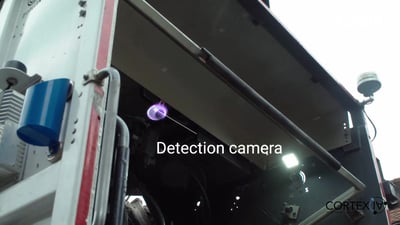
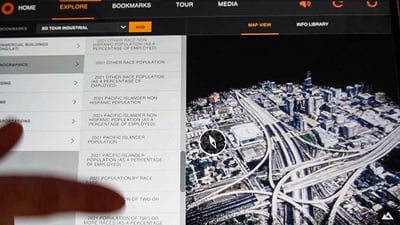
Brussels launched in 2023 their smart city strategy, a seven-area plan they set up to help them reach their sustainability goals and improve services for residents. The strategy has been focusing mostly on urban planning and digital services for residents, something we covered in the first video of this two-part series about the European capital’s smart city strategy. But the municipality is planning to deploy connected technology and extend the smart projects they already have. So we have some sensors that are used for pedestrian flow monitoring. So we already have some in the city. We plan to install some more in the coming months. That helps us monitor the activity in commercial areas. We also have air quality sensors that are really important, and will be more and more important in the coming years. We are also planning to install, sensors that will help us identify illegal waste dumps. To count people, they are using Wi-Fi sensors which detect the presence of smart devices, calculating the amount of people in an area. They are looking to expand the project with cameras and Lidar technology. However, like many cities do, they're experiencing setbacks due to the number of actors involved in the project and the regulation, which is interrupting the process. A technology they have invested in on a large scale is that of smart compactors. They deployed 100 smart waste compactors in the city center to reduce cost of operations and improve urban cleanliness, a project that is proving successful. Yet, anyone walking around Brussels can see the city faces an issue with waste management, so there's a lot of room for improvement and even smart solutions to face the problem, something they know and will try to tackle. After some complaints about the parking situation, the city turned to an enforcement project that is working at full capacity: Scan Cars. They are using four electric cars, each equipped with six vision AI cameras and a SIM card to drive around the capital, scanning license plates to find cars parked in pay areas that haven't paid the fee. We had a lot of complaints of citizens that there was not enough control in the streets, so we changed to scan cars because a scan car can control at least 10,000 cars a day. Even more. A pedestrian officer does about 600 to 700 a day. So you see the difference. When the control system identifies a possible rule breaker, the image is sent to the back office, where a desk force reviews it. If the rules have been broken, a ticket is issued. The investment is that we lease the cars. We lease the car with the system. That's far easier because, you can have a road accident or something, and we have, a third party. We pay about €10,000 for each car each month. The project has been so successful that the city has gone for a fifth car, which, according to the local government, will be enough to inspect the entire city. In the first nine months of 2023, they had already checked 4 million license plates and issued 400,000 fines, which, considering tickets are around €25, is already a big return on investment for the city. Since they started using the technology, the monthly incomes from the app and parking meters have also gone up, meaning more people are following the rules. There has been a hiccup with the project, though. There were reports of the system issuing tickets to people parked legally in the disabled spots as the vision AI didn't detect the badges on the cars. The back office with actual people checking the flagged vehicles is set to curb these issues. Another focus in the city’s strategy has been sustainability. To reduce their utility bills and save resources, as well as optimize building energy efficiency, they deployed smart metering and temperature monitors in 70 of their 400 public buildings. There are two main initiatives. First, monitoring of our energy consumption and photovoltaic production. Also the centralized technical management of the temperature of orders. So, the energy monitoring is used to monitor our water, gas, electricity meters, but also our photovoltaic production. It is mainly used to establish consumption estimates, consumption history, but also to detect anomalies or problems, such as breakdowns, for example. And so it allows us to react quickly. It also allows us to have instant feedback when, for example, we undertake renovation works or change of technical equipment, such as changing the boiler, for example. So we have a feedback from the field that is quite effective and which of course allows us to better manage our resources. The cost of the smart meters project was around €500,000. Still, considering that those buildings already represent 90% of the city's energy cost in their buildings, the bill will drastically be reduced. To further explore sustainability projects, a positive energy neighbourhood is set to be established in the northern district of Brussels, a project funded by the EU, but that is still in the initial phases. But one of the star tools of the smart city strategy that has been advancing in the past months is that of their digital twin. So the digital twin project is really a flagship project of the smart city strategy. First, because it is transversal. So we really want to develop a tool that will be useful for different departments of the city. So if we make such a big investment, it has to be useful for different departments. It is also a project that will need external financing, as I said. So the financing part of the smart city strategy is really present there. Also, the government parts, we will need to involve different external actors to be able to launch such a project, local actors or also international actors in European projects for instance. They have defined a first use case: a digital twin to curb urban heat islands. The idea is to map and simulate the effects and mitigation measures. It is a topic that many cities are looking to cover. Raleigh in the US and Seoul in South Korea have been using the solution for the same purpose. Since it's their first time dealing with digital twins, Brussels started a European-wide project dubbed Twin4Resilience in which they exchange ideas and experiences with other cities, developing the tool cities like Dublin, Rennes or Amsterdam. Brussels launched a strategy with their idea of a smart city. We saw that most of the projects are still in the investigation stages, but the city has invested in very specific projects that have brought quick results like the scan cars, smart meters and waste compactors. There is still a lot to do though. Becoming a smart city is a process, and the municipality’s looking to learn from these and future projects, investigating new use cases that will bring further benefits.
Brussels’ Smart City Strategy – Part 2
The city of Brussels launched in 2023 their smart city strategy, a vision of how they intend to use technology and data to improve services and operations. Although they've mostly been focused on urban planning and most of the smart city projects are still in the exploratory phases, some smart solutions they’ve deployed at full scale have already shown quick results.
In this second video of our two-part series about Brussels' smart city strategy, we interview Aude Robert, Brussels Smart City Coordinator, Alex Geraerdts, Director of Brussels City’s Parking Service, and Akim Jonniaux, PEB Public Building Certifier, to discuss their Scan Cars project that helps them control regulated parking in the city, the deployment of smart waste compactors and smart meter to save energy, as well as future projects like the digital twin they're developing to curb urban heat islands.
View transcript auto-generated









📰 Latest News
🎬 Kurrant Originals
🎥 Recent Event Coverage
Featured Case Studies
Real client work behind the news. Strategy, M&A and engineering projects we've delivered for cities and utilities.

Stay in the Loop
Get smart cities and utilities insights delivered your way. Choose your channel
Join our WhatsApp Channel