SEPTA and the Philadelphia Parking Authority (PPA) have begun equipping city trolleys with artificial intelligence cameras designed to detect and penalize illegal parking that disrupts light-rail operations. The rollout, which started on March 2, 2026, covers trolley lines T1 through T5 and the G1 route, making Philadelphia the first U.S. city to deploy this type of automated enforcement technology on trolley or light-rail vehicles.
A Dual-Camera System Built for Evidence Collection
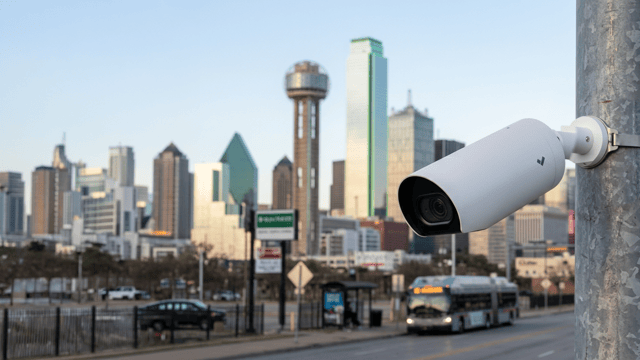
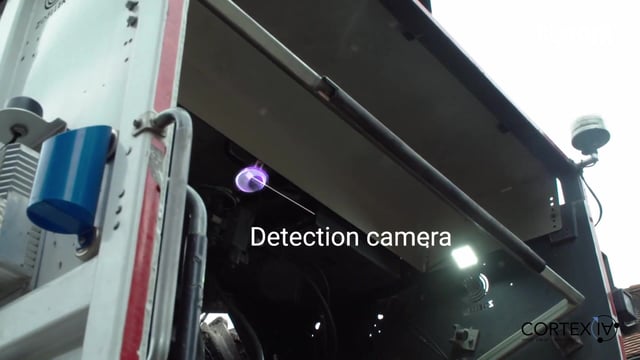
The enforcement setup on each trolley consists of two cameras working in tandem. The first camera uses computer vision to scan for vehicles parked unlawfully in trolley lanes or at designated stops. When it identifies a potential violation, it records the offending vehicle’s license plate along with the date, time, and location. That detection then activates a second, standard video camera, which captures footage of the infraction. Together, the two feeds produce what authorities describe as an enforcement package, which is transmitted to PPA officers for manual verification before any ticket is issued.
Privacy protections have been built into the system. The video camera only activates when the AI detects a violation, meaning it does not record continuously. Facial features of bystanders and license plates of surrounding vehicles are automatically blurred.
From Bus Pilot to Full Trolley Expansion
The trolley deployment builds on a multi-year enforcement effort that began in 2023, when SEPTA ran a pilot program on seven buses across two of its busiest routes. During that 70-day pilot, the system flagged more than 36,000 parking violations, underscoring the scale of the obstruction problem facing the city’s transit network. A 2023 Philadelphia City Council ordinance subsequently authorized SEPTA and the PPA to operate an automated bus camera enforcement program, and by mid-2025, AI cameras had been installed on 152 buses across the city.
SEPTA reported a 3% to 6% reduction in travel times on bus routes where the cameras were active, reinforcing the operational case for extending the technology to trolleys, where fixed-rail vehicles cannot maneuver around illegally parked cars.
Thirty Trolleys, $51 Fines, and April Enforcement
Cameras are being installed on 30 trolleys over the coming weeks, covering routes concentrated in West Philadelphia and along Girard Avenue. A 30-day warning period is in effect, during which detected violations will generate notices but no financial penalties. Full enforcement with $51 fines per violation is scheduled to begin on April 1, 2026.
The initiative is a three-way partnership between SEPTA, the PPA, and Philadelphia’s Office of Transportation, Infrastructure and Systems (OTIS), the city agency responsible for coordinating transportation policy and infrastructure investments.
Hayden AI Powers the Technology
The camera technology is provided by Hayden AI, a San Francisco-based company that has emerged as the dominant vendor in the U.S. automated transit enforcement market. Hayden AI’s platform uses vehicle-mounted, AI-powered cameras combined with edge computing to detect parking and traffic violations in real time. The company has deployed its systems in at least 10 major U.S. cities, including New York, Washington D.C., Chicago, Los Angeles, Oakland, Sacramento, and Santa Monica.
In March 2025, Hayden AI secured $90 million in growth equity financing led by TPG’s The Rise Fund, with support from Drawdown Fund and Autotech Ventures, to expand its vision AI platform. The company has also begun piloting its technology in Europe, with deployments in cities such as Barcelona, Gdańsk, Braga, and Tallinn.
Measured Impact Across U.S. Transit Networks
Philadelphia’s deployment fits within a broader national pattern of transit agencies turning to automated enforcement to address chronic parking violations. In New York, the Metropolitan Transportation Authority reported that routes equipped with Hayden AI cameras experienced a 20% decline in vehicle collisions, a 40% drop in bus stop parking violations within a single year, and bus speed increases of up to 36% on certain corridors. Over 90% of ticketed drivers in New York did not receive a second violation, suggesting the technology drives sustained behavioral change.
Chicago became the tenth major U.S. city to launch automated transit zone enforcement with Hayden AI in October 2025. In California, transit agencies in Alameda-Contra Costa and Los Angeles have similarly adopted the cameras to protect bus lanes and stops, while Sacramento equipped up to 100 buses with the enforcement systems in late 2024.
Why Trolleys Present a Unique Enforcement Case
Unlike buses, which can sometimes maneuver around a double-parked vehicle, trolleys are locked to fixed rails and have no option to divert. A single illegally parked car can halt service for an entire line, creating cascading delays that affect thousands of riders. This constraint has made trolley routes in West Philadelphia and along Girard Avenue particularly vulnerable to disruptions caused by double-parking and improper stopping.
The technology also addresses accessibility concerns. When vehicles block trolley or bus stops, operators cannot safely deploy wheelchair-access ramps to the curb, forcing passengers with mobility challenges into active traffic lanes to board or exit.
Broader Context: AI Enforcement and Urban Mobility
The proliferation of AI-powered transit enforcement reflects a wider trend among U.S. cities investing in dedicated transit infrastructure while simultaneously recognizing the need for scalable compliance tools. Cities that have spent significant resources redesigning street networks with dedicated bus and trolley lanes increasingly view automated enforcement as essential to protecting those investments.
Pittsburgh, another Pennsylvania city, has pursued a parallel approach using AI cameras from a different vendor, Automotus, for broader parking enforcement purposes. Meanwhile, the MTA in New York has expanded AI camera use beyond bus lanes into subway safety monitoring, signaling that transit agencies view computer vision as a versatile tool across multiple operational challenges.
Philadelphia’s trolley deployment will be closely watched as a potential model for other cities operating light-rail and streetcar systems, where fixed-rail constraints make illegal parking particularly disruptive.