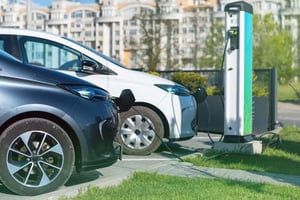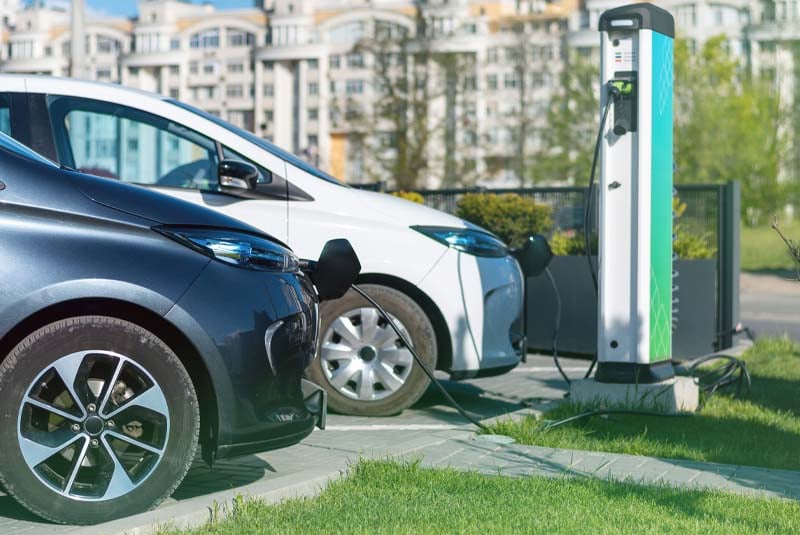
The Michigan Department of Transportation (MDOT) has received federal approval to deploy the remaining $51 million of its $106 million allocation under the National Electric Vehicle Infrastructure (NEVI) Formula Program, following certification that the state has completed its designated highway corridor buildout. The decision marks a shift in programme focus: from corridor compliance to statewide coverage, fleet access, and infrastructure quality.
From Corridor Completion to Strategic Expansion
The Federal Highway Administration (FHWA) approved Michigan’s Fiscal Year 2026 Electric Vehicle Infrastructure Deployment Plan alongside the state’s “fully built out” (FBO) certification, a designation that confirms Michigan has satisfied federal requirements to install fast chargers at defined intervals along alternative fuel corridors. Reaching this threshold is a prerequisite for states to access remaining NEVI formula funds on a discretionary basis, outside the original corridor-first structure.
With that certification secured, MDOT is now authorised to move the remaining funds into a third procurement round, one that will prioritise geographic gaps in the current network, improvements to charger reliability and user experience, equitable access, and medium-duty vehicle and fleet charging. State officials have also indicated alignment with economic development objectives, tourism infrastructure, and long-term grid planning as guiding criteria for site selection.
83 Stations in Deployment, More to Come
Following the first two procurement rounds, MDOT is actively working to deploy 83 NEVI charging stations across the state. Round 1 and Round 2 selections, announced in February 2024 and June 2025 respectively, produced a combined 82 newly awarded sites. The third round, currently in preparation, is intended to give every Michigan community an opportunity to apply for NEVI funding, a broadening of eligibility scope that reflects the programme’s evolution past its highway-centric origins.
MDOT confirmed coordination with FHWA, local governments, tribal nations, utilities, and private sector partners as part of the implementation process. The programme’s requirements include utility engagement at the site-assessment stage, with letters of support from utility providers required as part of funding applications. This grid-integration dimension is increasingly central to NEVI deployment planning, as charging stations at scale place material demand on local distribution infrastructure.
A Programme Recovering From Federal Disruption
Michigan’s latest approval comes after a period of significant uncertainty for the NEVI programme nationally. In February 2025, the FHWA rescinded its NEVI guidance documents and withdrew approvals for all state deployment plans, freezing new obligations pending a policy review initiated under the current federal administration. The move put between $885 million and $1.5 billion in allocated funding into limbo and disrupted ongoing contracts with charging developers across the country.
A coalition of states filed legal challenges, and in June 2025 a federal court issued a preliminary injunction requiring the release of funds to plaintiff states. By August 2025, the FHWA published updated interim guidance simplifying state planning requirements, removing certain prescriptive rules around station spacing, and granting states greater flexibility in where and how they deploy funds, including the ability to serve medium- and heavy-duty vehicles once corridor buildout is complete. Michigan’s FY 2026 plan approval and FBO certification represent the state’s successful navigation of that revised approval process.
Michigan’s 2030 Targets and the Infrastructure Gap
Michigan’s broader EV ambition centres on supporting two million electric vehicles on state roads by 2030, a goal that MDOT’s NEVI programme is intended to contribute to alongside other state initiatives including Charge Up Michigan and the Lake Michigan Circuit. The state currently reports approximately 2,102 public charging locations. Independent analysts have estimated that achieving the 2030 vehicle target would require roughly 10,000 DC fast chargers and 90,000 Level 2 chargers statewide, figures that underscore the distance between current provision and the scale of infrastructure required.
Nationally, progress under NEVI has been measured. As of late 2025, approximately 384 NEVI-funded charging ports had been completed across all states, from an initial programme envelope of $5 billion spanning fiscal years 2022 to 2026. The pace reflects both the regulatory disruption of 2025 and the structural complexity of coordinating utility upgrades, permitting, and procurement across diverse jurisdictions.
The EV charging infrastructure sector has faced turbulence globally as well. The liquidation of EVBox in late 2024, following €800 million in losses at parent company Engie, illustrated the commercial risks facing charging hardware providers even as public investment scales up. In contrast, European markets have seen fresh capital formation: Waat secured €100 million in late 2025 to expand private-setting charging across France, Switzerland and Belgium, while Elinvest launched with a €40 million mandate to support French local authorities in public network deployment.
Fleet and Grid Integration as the Next Frontier
One of the substantive changes introduced in the August 2025 NEVI guidance is the explicit authorisation for states to direct funds toward medium- and heavy-duty charging infrastructure after completing corridor requirements. Michigan’s third round will incorporate this flexibility, reflecting a wider industry recognition that public charging networks must serve commercial and fleet operators, not only passenger vehicles, if EV adoption targets are to be met at scale.
The grid planning component is equally significant. Michigan’s NEVI programme requires coordination with investor-owned utilities, several of which operate rebate programmes eligible as matching funds for NEVI projects. Aligning station deployment with utility capacity and upgrade timelines reduces the risk of stranded assets and ensures that charging infrastructure can operate reliably at full power levels from day one.