The municipality of Oradea in western Romania has signed a contract to fully modernise the public lighting system across a key central corridor, replacing ageing overhead cables and concrete poles with a smart, underground LED network designed to support future urban technology deployments.
Underground Network Replaces Decades-Old Aerial Infrastructure
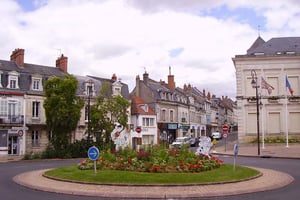
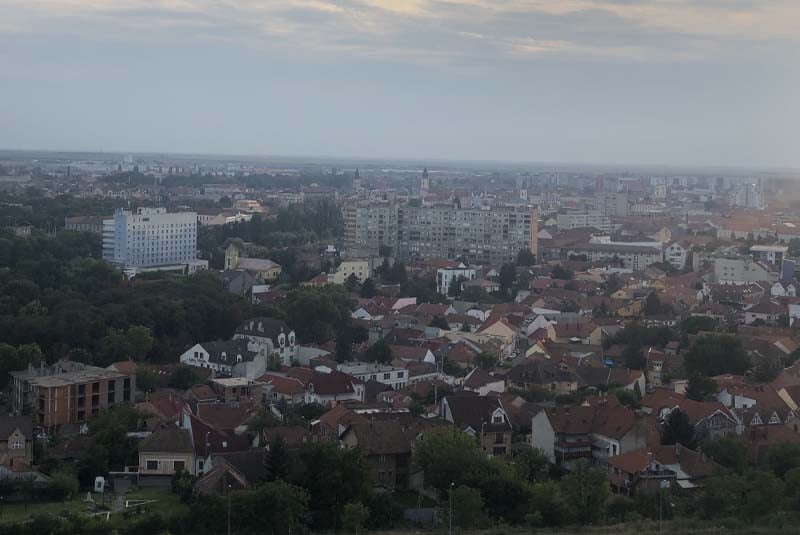
Oradea City Hall formalised the agreement on 24 March 2026 with Bucharest-based electrical contractor Elbi Energy Projects, the project division of the ELBI Group. The contract, valued at approximately 4.83 million RON (around €950,000) excluding VAT, covers the streets linking Piața 1 Decembrie, Mihai Viteazul, Aleea Emanuil Gojdu and Spiru Haret, one of the city’s most heavily trafficked central corridors.
The scope of works involves dismantling the entire existing aerial electrical network, including concrete poles and legacy overhead conductors, and constructing a fully subterranean electrical infrastructure in its place. The new underground system will incorporate roughly 3,900 metres of low-voltage cable and more than 5,500 metres of protective conduit, laid at a standard depth of 1.2 metres. Distribution cabinets and inspection chambers built to modern technical standards will also be installed along the route.
Zone-Specific LED Fixtures and Adaptive Pedestrian Crossings
Rather than applying a uniform lighting approach, the project tailors pole heights and LED wattage levels to the function of each urban zone. The deployment includes 73 new poles across six height categories: 4-metre poles for pedestrian areas, 8-metre poles at pedestrian crossings, and 9 to 12-metre poles for secondary and primary arterial roads. Two multifunctional poles, described in project documents as “Shuffle” type, will be positioned near the tram station to combine lighting with communications and surveillance capabilities. The Shuffle is a modular smart column manufactured by Belgian lighting group Schreder. While the municipal contract does not explicitly name the luminaire supplier, ELBI Group lists Schreder among its strategic distribution partners in Romania, making the Belgian manufacturer the likely hardware provider for this component of the project.
All luminaires will use high-efficiency LED technology, with wattage ranging from 39W for pedestrian zones to 137W for major thoroughfares such as Piața 1 Decembrie. This differentiated approach is intended to deliver adequate illumination levels while minimising energy consumption.
A particularly notable feature involves adaptive lighting at pedestrian crossings, where motion sensors will automatically increase light intensity when walkers are detected. The system is calibrated to respond within one to two seconds and to activate only for the crossing zone itself, avoiding unnecessary triggers from adjacent areas.
Intelligent Remote Management Across the Entire Network
Every luminaire in the project will be connected to a centralised remote management platform enabling real-time monitoring, time-based dimming schedules and the ability to control fixtures individually or in groups. This type of point-to-point intelligent control has become a standard expectation in European municipal lighting upgrades.
The remote management layer is expected to allow Oradea’s operators to optimise energy usage by dimming or switching off fixtures during low-traffic hours, a practice that typically yields additional energy savings of 20 to 30 percent beyond the baseline LED conversion.
Smart City-Ready Poles With Built-In Power Outlets
Beyond the immediate lighting upgrade, the project is explicitly designed to function as a smart city backbone. Each pole will be fitted with dedicated power outlets capable of supplying additional equipment such as video surveillance cameras, environmental sensors or Wi-Fi access points. The two Shuffle poles near the tram station will integrate lighting, communications and monitoring functions into a single structure.
Part of a Wider Municipal Lighting Overhaul
The central district contract sits within a much larger lighting modernisation programme that Oradea has been pursuing since 2021, when the Agenția de Dezvoltare Locală Oradea (ADLO) took over management of the city’s public lighting from the previous private operator after a 20-year concession. The city’s lighting network spans approximately 712 kilometres of cable and more than 24,000 luminaires, the majority of which still use legacy high-pressure sodium technology.
Through a combination of EU non-reimbursable grants, European Investment Bank financing and national Environment Fund contributions, the municipality has been progressively upgrading sections of the network. In September 2024, the city council approved a new 10-year delegation of lighting services to a private operator, under a framework valued at 176 million RON (approximately €35 million), with a target to convert the entire city to LED by 2028. The municipality has estimated that a full LED transition would cut its annual electricity expenditure for street lighting roughly in half, from approximately 14.9 million RON in 2023 to around 7.5 million RON.
Western Romania more broadly has been channelling investment into digital public services. In late 2024, the West Regional Development Agency announced a €34.12 million funding allocation under the “Smart Region” programme, targeting e-government applications and smart city solutions across the region’s municipalities.
Nine-Month Construction Timeline
Construction on the central corridor project is scheduled to take nine months from the issuance of the start order. Elbi Energy Projects, which has completed over 800 public lighting projects across Romania since 2016 according to the company’s own disclosures, will carry out the works. The ELBI Group reported consolidated revenues of approximately 555 million RON (around €110 million) in 2023 across its distribution and project divisions.