The San Mateo County Transit District (SamTrans) board of directors has approved the installation of AI-powered dual-facing dash cameras on all 235 of its fixed-route buses, contracting San Francisco-based Samsara Inc. to deliver hardware, cloud-based video services, and operator coaching tools. The deployment covers the agency’s entire directly operated fixed-route fleet serving San Mateo County and parts of San Francisco and Palo Alto.
What the Cameras Do and How They Work
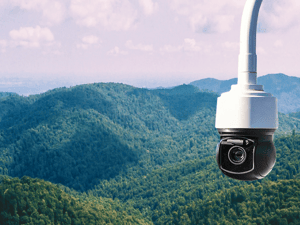
The Samsara system pairs a forward-facing lens monitoring the roadway with a second lens directed at the bus operator. AI algorithms running on the device analyze both feeds in real time, detecting risky driving conditions such as following too closely, distracted driving, and potential pedestrian conflicts. When the system identifies a hazard, it triggers an audible and visual alert inside the cab to prompt immediate corrective action.
Beyond real-time intervention, the cameras continuously record high-definition footage that is uploaded to Samsara’s cloud platform. Supervisors can retrieve on-demand video for post-incident review, safety trend analysis, and structured coaching sessions with individual operators. The platform is designed to move transit agencies from reactive incident management toward a data-driven safety culture built around prevention.
Contract Terms and Funding
The contract carries a three-year base term capped at $240,000, with an option for up to three additional one-year extensions totaling a further $240,000. SamTrans estimates annual subscription costs at approximately $79,000, plus a one-time $2,000 shipping charge in the first year. Samsara was selected through a competitive cooperative procurement process that the agency said evaluated pricing, feature set, and managed services.
Funding has been allocated within SamTrans’s fiscal year 2026 and 2027 operating budgets, with future years to be incorporated as the program continues. The agency noted that the deployment builds on prior experience with AI-enabled dash cameras on its contracted bus services, suggesting internal data from that earlier trial informed the decision to scale fleet-wide.
A Fleet in Transition
SamTrans currently operates 76 bus routes across a 446-square-mile service area, with a total fleet of approximately 322 buses including zero-emission vehicles. The 235 fixed-route buses receiving Samsara cameras represent the directly operated core of that fleet. The agency recorded approximately 11.1 million passenger trips in 2025 and was named the 2024 Outstanding Public Transportation System by the American Public Transportation Association.
The AI camera rollout arrives as SamTrans is simultaneously executing its Emission Zero program, a multi-year initiative to convert its entire diesel fleet to zero-emission vehicles by 2034, six years ahead of California’s 2040 mandate. The agency has approved the purchase of 118 hydrogen fuel cell buses and 37 battery electric buses, backed by a $36.3 million charging infrastructure agreement for its South Base facility in San Carlos and a $17.4 million hydrogen fueling station under construction at North Base in South San Francisco. Adding AI safety cameras to this modernizing fleet layers digital safety capabilities onto vehicles that are already being physically upgraded.
Samsara’s Growing Role in Public Transit Safety
Samsara is primarily known as a connected operations platform for commercial fleets, but its expansion into public transit has accelerated. The company claims its AI is trained on data from over 80 billion miles driven annually across tens of thousands of customers in North America and Europe.
In January 2026, Samsara published research conducted by Wakefield Research surveying 400 U.S. public sector leaders managing more than 85,000 vehicles. The study found that agencies deploying dash cameras recovered costs within months through reduced claims, lower insurance premiums, and faster investigations. In the transit sector specifically, Coach USA reported a 92% reduction in preventable incidents after deploying Samsara’s multi-camera system across its intercity bus fleet, along with a 35% decline in speeding events and a 50% drop in tailgating incidents within a single year.
Where AI Cameras Fit in the Broader Transit Safety Landscape
SamTrans’s adoption of inward-and-outward-facing AI cameras for operator coaching represents one of two distinct models of AI camera use emerging in U.S. public transit. The other is outward-facing automated enforcement, where cameras mounted on buses or trolleys detect parking violations blocking transit lanes and stops.
That enforcement approach has gained traction in cities such as New York, Washington, D.C., Los Angeles, Chicago, and Philadelphia, where Hayden AI has deployed its vision AI platform on more than 2,100 transit vehicles globally. Hayden AI, which raised $90 million in growth equity in early 2025, recently expanded from buses to trolleys and parking enforcement vehicles, and piloted its system in Barcelona as part of the city’s Innova Lab Mobility program. In California’s Alameda-Contra Costa Transit District, bus-mounted Hayden AI cameras have been used to enforce bus lane violations since late 2024.
The SamTrans deployment differs fundamentally: it is not an enforcement tool aimed at other road users, but an internal safety system designed to reduce collisions and improve operator performance. No citations or fines are issued through the Samsara platform. Together, the two approaches reflect a growing consensus among U.S. transit agencies that AI-powered cameras can address safety challenges from multiple angles, whether by coaching the drivers behind the wheel or clearing the lanes ahead of them.