 in Barcelona
 3 to 5 Nov 2026
An IOT market powered by crypto. Do you see that switch cam looking things stuck in the window? Well, that thing actually makes me money. The Helium network has attracted hundreds of thousands of users across the globe. They buy a gateway that provides LoRaWAN coverage. In return, they get rewarded with HNT based on the service their hotspot provides. There's always doubt over it. things like cryptocurrency -funded systems, because when you look at the business model of Helium, there are significant doubts as to whether that's profitable and sustainable. Some players question the value of a community network within the LoRaWAN ecosystem, but the chairwoman of the LoRaWAN Alliance says... So we don't deal with the crypto side, right? But what we deal with is the gateways or the hotspots that they deploy, and they have many, partnerships with our members, especially in areas where it's hard to reach. And so we have a deployment in California, for example, where we saw a 7 % increase in water meters for a specific water utility. It just gets it close to 100%. In this video, we'll explore the inner workings of the Helium Network, a network owned by Nova Labs, which has raised over $360 million from investors. We'll explore its push. to become a coverage extender for LoRa and now 5G, and the value that all this could bring for smart city players. Can Helium become the roaming partner for all IoT and LoRaWAN players, and later with other types of connectivity? The Helium network first launched in 2013, with the goal to create an open, wireless, decentralized network. But it wasn't until 2019 when the... company began to see some success the same time when a crypto incentive was added to the business model. We started in Austin, Texas with 150 helium hotspots, which is our word for a gateway. And as of yesterday, we've got about 900 ,000 helium hotspots have been deployed across 180 countries, 67, 70,000 cities. So the incentive mechanism has worked much better than anyone could have ever imagined. But will volatile crypto market like the one we're seeing now impact future growth well according to nova labs not so much the company quotes surveys that have found a large group of people who are interested in playing a role in the growth of decentralized networks regardless of a crypto incentive plus the cost of entry and maintenance is low in comparison to other bitcoin and blockchain projects which brings us to the topic of the gateways they sell anywhere from 350 to 1500 dollars each that depends upon if it's indoor outdoor and any other additional functions they're manufactured by an ecosystem of about 60 vendors each device must be approved by the helium foundation essentially that foundation approves that the device is compatible with blockchain security protocols we need to be able to generate private keys on the gateway and then sign transaction with those private keys and those are also used to onboard the gateways to the Users connect for free and they earn crypto based on the amount of data that passes through their gateways. There are about 250,000 of those type of users, but that's just one group. A second group consists of enterprises who are connecting sensors to the Helium network. They gain coverage in areas that would otherwise be a LoRa dead zone. And so that second group of users that deploys their own coverage, they earn the token HNT, which is also used in a way to pay for traffic. a nice virtuous cycle. You basically create coverage, you add to the ecosystem, and then from that you get free traffic essentially for your devices. Now, right now, there are about 900,000 Helium gateways deployed worldwide. Is it enough to make it a serious contender within the LoRaWAN ecosystem? LoRa is not a coverage-driven business. That's what we think public cellular networks do a grand job of, and cost optimizations, and that will more than meet the needs, we think, of public networks in the future. and LoRaWAN is really highly targeted at sensor-type solutions. There is a typical error that have been seen in the IoT since the beginning where we're starting a business in the IoT networking with one main performance criteria, that is the coverage. And we have seen players like CFOX, we have seen players like Taza Communication in India. Basically, they deployed nationwide thinking people will connect to the network. It didn't happen. So the other model that basically Helium is now trying to focus on is to become the roaming partner for players who are effectively addressing use cases and projects. In September of 2021, LoRaWAN network and services provider Sennet announced a partnership with Nova Labs, then still known as Helium. The partnership enabled network roaming so that Sennet customers' devices could connect to Helium hotspots. Senate pays Helium a fee for its customers to use the Helium hotspots, which means Senate customers aren't charged anything and they also don't earn any crypto. In return, the owners of the Helium hotspots earn crypto based on the amount of data that flows through their gateways. When we turned on the Helium network in New York City, we saw a 25 % increase in the number of devices that our network sees. and you know what i think that proves is that there are nooks and crannies you know in every major city especially a city the size of of new york city where you know even the best network doesn't kind of reach those and what helium does is it gets into the nooks and crannies and gets those places where a high tower based or building based network may not may not hit the last strategy there is is um connecting islands of deployment so you know we have major metropolitan areas across North America, for example, that are already deployed with the Senate network, but you may have a truck or a container that's passing between those islands, and helium helps connect those islands while in transit. There are the types of benefits that Nova Labs now looks to replicate, or maybe even find more success, as it expands into 5G within the United States. Freedom FI, developing the 5g hardware which consists of local gateways that have a war wind radio paired with a 4g or 5g radio the idea is to complement the coverage provided by the big telcos so there's a roaming deal in place now with dish uh as well as an mbno called gig sky and we've got a few other ones that are in the works and so when those things are solidified um you will be able to take a sim card that's supposed to use you know a major carrier network and use the helium network and and really know um different sort of work. It underscores a trend within the cellular market specifically with 5G which requires a lot of gateways. As a result we're seeing a new type of service providers popping up to provide these gateways in areas where the big telcos aren't doing it. The network game is a good enabler. It can be a good tool to penetrate the market. It can be a good tool to enable other applications, but at one point what portion of the value chain you are capturing is a big question. So industry experts agree that in order for IoT connectivity players to find success in this space, they need to go beyond infrastructure deployments to actually power real use cases. It'll be interesting to see how the Helium network develops to meet that need. Will it be through roaming partnerships or new sensor applications? Follow along right now. on Current Insights as we continue to dig in.
Can a Crypto-Powered IoT Network Connect Smart Cities?
5GBlockchainConnectivityLoRaWAN
In this video
-
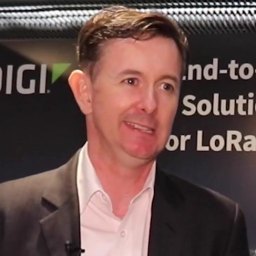 Nik Kitson
OEM Solutions Business Development, Digi International
-
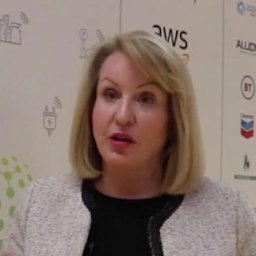 Donna Moore
CEO & Chairwoman, LoRa Alliance
-
 Bruce Chatterley
CEO, Senet
-
 Mark Phillips
VP, Business Development, Nova Labs
-
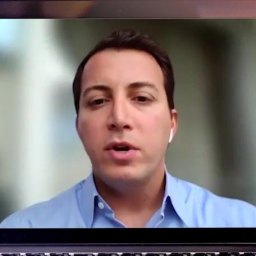 Antoine Kassis
CEO, Kurrant
About this video
This video provides an in-depth look at the Helium Network, a rapidly expanding global network that combines Internet of Things (IoT) connectivity with blockchain technology. The focus is on how users contribute to the network by purchasing and setting up gateways that provide LoRaWAN coverage, for which they are compensated with HNT, the network's cryptocurrency. The video aims to unravel the complexities and operational dynamics of the Helium network and its implications for the IoT landscape, particularly in smart cities with Nik Kitson from Digi International, Donna Moore CEO and Chairwoman at the LoRaWAN Alliance, Bruce Chatterley CEO at Senet, Antoine Kassis CEO at Kurrant and Mark Phillips from Nova Labs.
Nova Labs, the company behind the Helium Network, plays a central role in the discussion. The video examines how Nova Labs has attracted significant investment, raising over $360 million, and how this financial backing is fueling its ambitions in the IoT space. Key to this strategy is the network's push to extend coverage for not only LoRaWAN but also 5G, which represents a significant leap in terms of capabilities and potential applications.
This content is especially relevant for those interested in IoT, blockchain technology, and the development of smart cities. It provides valuable insights into how innovative approaches to connectivity and network management can transform urban environments. The video is informative for tech enthusiasts, urban planners, and professionals in the IoT sector, offering a deeper understanding of the emerging trends and technologies shaping the future of cities.
Read the transcript machine-generated
Latest Originals
See all 4:45
AI Agents in Digital Twins: Bringing Promises to Life?
 5:57
Nature as a Sensor: Rethinking Smart Cities, Utilities
 2:57
Audio, the Forbidden Fruit of Smart Cities in France
 2:56
Why did the metaverse fail?
 4:54
High-resolution, Predictive Weather Data: The Next Step for Mobility
 5:20
The State of the Smart Traffic Industry in 2026
Latest news
All news- National Measurement Institute Approves Itron Streetlight Controllers For Type 9 Metering20 Nov 2026
- UK Government Commercial Agency Adds Pelion To £1.5B Mobile Services Framework20 Nov 2026
- Maddalena Names Biesenthal Exclusive Distributor For German Water Utilities20 Nov 2026
- Enea to Present Supplier Opportunities Under PLN 107.5 Billion Investment Plan20 Nov 2026
Kurrant advisory
Planning a smart city or utility project? Talk to Kurrant.
Behind these interviews is Kurrant's advisory team, working with utilities, cities and the companies that serve them.
- Strategy AdvisoryKurrant is actively involved in resolving the challenges that cities, utilities and industry players are facing.
- M&A AdvisorySmart city and utility expertise for successful deals, turning insights into strategic gains.
- Engineering & ProcurementBetter engineering and procurement decisions, by identifying and developing digital and IoT solutions across use cases.
Or write to us: contact@kurrant.com
Send us a message