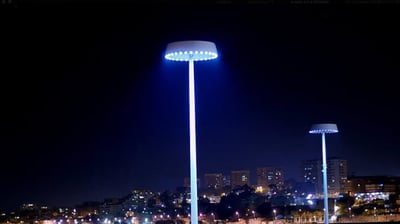
21 years ago, Dublin was established as a high tech city when Google moved its European headquarters to the Irish capital in 2003. And in the past years, its council has been working hard to keep up with its reputation by incorporating smart technology into its management and city services to face challenges like environmental issues or flooding, and even looking to accelerate the use of 5G, which we covered in a previous video. The Dublin Council's Smart City program efforts have even been recognized by the European Commission, which named Dublin Smart Tourism Capital for 2024. We sat with Jamie Cudden, Dublin Smart City Manager, to understand better their smart city strategy and what it means for future projects. To make the most of the smart city opportunity, we've structured our program in Dublin under four kind of key pillars. One is on digital connectivities. Without connectivity, good fiber, good mobile coverage we're not going to be able to deploy these. So connectivity is an absolute key plank for us. And we recently set up a telecoms unit in Dublin City Council to really help accelerate investments and address any connectivity challenges in the city. We then have another three key planks. One is data and how do we innovate and use data more effectively to have better decision making and address our challenges more effectively. The other area is emerging technology and how do we kind of create a safe space in the council to look at what's coming down the line? So we hear about AI, Internet of Things, we hear about drones and 5G. So we have a team, I think a team about 20-25, depending on the time of year and what projects we have to actually work together to think about how do we accelerate the use of these technologies to address the challenges that the city faces. And then all this is built around engagement. The city has ten people in the team who are core workers employed by the city council, and the rest come through partnerships with companies or academia to bring a diversity of skillsets, depending on the projects, putting collaboration at the center of operations and leveraging the innovation in the city. The city strategy has been to create test-beds like the Smart Docklands district. It's their way of helping companies test out their solutions, but also for them to see what technologies could benefit them in the long run and already have benefits during the testing, a strategy we've seen other cities, like New York, turn to. To fund the smart city pilots and test-beds, the council allocates €1 million annually funding that is treated as a seed fund. The Smart City program’s mantra is that each euro of that should be doubled or more by leveraging other funds like those of innovation, academia or industry. And then we're able to tap into multi billion euro budgets within the organization and look at the setting of a pilot that when we get to a certain point and we've seen that there's some success, then we can embed them through procurements into the organization. And there's a whole wave of projects that we've done that, particularly on Internet of Things, looking at smart waste management looking at areas like flooding and tourism innovation and connectivity solutions for the city. So we’re really lucky in Ireland, and I think most countries are the same, we have national innovation agencies, we have enterprise agencies to support startups. So we were able to tap into organizations like Science Foundation Ireland, Enterprise Ireland and others where we can co-invest. We're able to tap into European funds, European innovation funds and also private investments where sometimes they're looking for a city in the world to test or deploy a new idea or a new solution. Dublin is an example of key trends in the EU. The city has focused on changing its streetlights to LED to save resources, and they're following the trend of environmental monitoring with air quality and flood monitoring, as well as the use of smart waste solutions. So in Dublin, some of the bigger projects will be street lighting upgrades. Upgrading a lot of our 45,000 streetlights to LED, connecting the central management system to all those assets and energy savings on the back of that for better ways to manage that more effectively through technology. To smart waste investments. We have over 350 solar smart bins across the city that are really making a difference. To connected sensors around flooding, river levels and rainfall monitors to catch where the flooding and the rainfall is hitting hardest so that we can respond more effectively. To a whole range of environmental sensing around noise and air quality, which we've heard over the last couple of years, is such a hot topic. And we've experimented also working with companies like Google over how do we integrate these sensors in fleets. Another topic Dublin is now focusing on is digital twins. They've created a digital twin program and hired people for it with the goal of understanding the intersection between 3D modeling and real time data. This makes sense as the city's next focus is going to be put on data and digital twins could also help them have a more centralized platform for that data. Digital twins are great tools for simulations, but also to have data centralized and make it visually attractive and easier to understand. So it could be an idea for the city to explore. I think the challenge with having one platform is that there's so many different specialisms within the suite of applications that we see across cities, whether it's flooding or whether it's waste or it's transport. So you do need to spoke ways of kind of visualizing and utilizing that data. But then you also need like a high level kind of platform to start pulling that in to do more interesting things. Like we talk a lot about digital twins and how can you have that holistic view. So I think cities are at that early journey. It's hard just to get new technologies in across different verticals and in the next stage as well, how do we integrate all that across the whole organization? So we're we're slowly kind of get into that phase, but it's not without its challenges. In Dublin, for example, we've just set up a centralized data unit to try and achieve that on behalf of the organization. Dublin is testing out 5G use cases, but what does it mean when it comes to smart cities? Beyond NB-IoT and cellular IoT, there aren't many use cases around 5G right now. For example, a key one will be autonomous vehicles, which still have a long way to go in Europe and which are experiencing setbacks in the US. So cities in the EU might be showing interest in 5G to stay competitive, but they're still shy when it comes to investing in the infrastructure because they still haven't seen strong use cases. But Dublin is still willing to work with partners to get to the forefront, hoping to be seen as a pioneer once these use cases take off. It still seems a bit away and some of the real innovations and use cases are still in that kind of experimental phase. And we're seeing the European Commission and others trying to stimulate that through investments. But I think the journey is still another few years away for cities. We're preparing in Dublin to make sure that we're ready to build the infrastructure to support this when the market's ready to scale. So I think that's all you can do is be future ready, be 5G ready. In the end, Dublin is mainly focused on pilots and being seen as a city at the forefront of technology and innovation and for now, it's hard to see how they will really move from that stage to real procurement for large scale city wide projects with use cases. The next step for Dublin could be to continue to modernize their streetlights with the deployment at scale of smart controllers connected to the central management system, which would accelerate the smart city dynamic and unlock a potential to scale for other applications.
Dublin’s Smart City Strategy and Future Plans
Dive into the heart of Dublin's evolution into a leading smart city, where the legacy of becoming a high-tech hub over two decades ago continues to inspire its journey towards a sustainable and innovative future. With Google's European headquarters marking the beginning of this transformation, Dublin has since integrated smart technology across city management and services to address pressing challenges like environmental sustainability and urban efficiency. In this detailed exploration, we sit down with Jamie Cudden Smart City Program Manager at Dublin City Council, to uncover the strategies and technologies driving Dublin's smart city projects and what these developments mean for the future.
View transcript auto-generated







📰 Latest News
🎬 Kurrant Originals
🎥 Recent Event Coverage



Featured Case Studies
Real client work behind the news. Strategy, M&A and engineering projects we've delivered for cities and utilities.
Stay in the Loop
Get smart cities and utilities insights delivered your way. Choose your channel
Join our WhatsApp Channel