 in Barcelona
 3 to 5 Nov 2026
smart city players are buzzing about the promise of digital twins after noticing a common trait amongst cities who successfully navigate the challenges of COVID -19. COVID was such a shock to the system in terms of rapidly changing all the dynamics it immediately showed that historical data was effectively invalid. Instead it appears as cities who invested in real -time data applications, data platforms, and data analysts were the most prepared. London really found that the investments they've made over the last 10 years, they found a huge advantage during COVID where they were rapidly rezoning streets, changing the purpose of districts, pedestrianizing sections to accommodate people not using public transport. The mission now is to take that data to the next level, which digital twins do. Digital twins go beyond the analysis and presentation of data. They will simulate possible scenarios so that a city can create future designs based on its projects. The goal is to create a 3D replica that provides a comprehensive understanding of a territory. To do this, they must aggregate massive amounts of data. And I think the beauty about a digital twin in the future, it's not there yet, is the ability for private business to take part. So how well are their buildings being cooled? The efficiency of their buildings. So all of that comes into play. Ultimately, digital twins are expected to perform real -time analysis in a way that wasn't possible before. But how exactly does this all come to life? We turn to Seardell for some answers. Our clients have the desire to start with one or two use cases. To see, somewhere, it's normal. So, some use cases that are already quite mature at home. And it allows us to implement a first version of the digital game with a capitalization. We don't arrive in saying that we need one year to develop everything, deploy everything, collect the data, put in line the teams. No, very quickly, we need to be able to produce value with one or two cases of usage that are already pretty good. Cyrodiil has constructed 3D digital twins in over 60 countries, each customized for that particular city by leaning on its smart city explorer. The Explorer collects and connects data from the entire production chain. Its solution uses data from LiDAR and aerial satellites to model the cities and create environmental simulations. Ciardell will then combine those simulations with machine learning algorithms and a risk modeling engine to optimize the data for network planning. The goal is not only to simulate possible use cases, but also create transparency so that you have a real sharing platform. and that will then enable new economic models. Finally, when I talk about new economic models, I talk about models that go beyond a classic model, for example, license, which are own digital editors. For example, we can note some energy performance contracts, which is the case with Angéloire Métropole. He also plays a digital model, but quite different. First, we are in a market of infrastructure and hypervisors of the territory. through the knowledge of the function of these infrastructures. So, since an hypervisor developed by Engie and co-developed by Cyraddell, since there are components of our society in the hypervisor of Angeloire Métropole, we will be able to connect to some buildings, to the pollution, to the irrigation system, to the feux tricolores. So, there are nine infrastructures like that, which are connected. piloter en temps réel dans une vue intégrée, toujours en ayant la capacité d 'accéder à des superviseurs métiers plus dédiés à l 'infrastructure qu 'elle pilote. Et cet hyperviseur nativement est également connecté aux jumeaux numériques de CIRADEL et ce qui est intéressant c'est qu'on va pouvoir utiliser ces données qui sont très riches évidemment pour le pelletage du territoire mais également pour la planification. urbaine puisque ces données peuvent être utilisées offline quelque part pour pouvoir anticiper l 'optimisation d 'une infrastructure voire des choses qui n 'ont rien à voir avec les infrastructures mais finalement c 'est des données qui sont disponibles qui marquent un petit peu comment le le territoire fonctionne et qui peuvent être utilisés pour d 'autres choses ce jumeau numérique pour l 'instant to use on topics around climate change, how to understand and reduce the urban heat in the new territories, for example, and other topics, also related to climate resilience. In a prior report on Current Insights, we presented the Smart City Plans of AGE, home to a 120 million Euro Smart City project that will largely be funded through energy savings from the deployed applications. All these services are displayed on a hypervisor platform where the city can remotely manage these assets. That platform will also serve as a basis of a digital twin. Together, it costs around 5 million euros to develop. energy and optimize the service. What is interesting is that Cyradel, especially thanks to its activities in the world of telecoms, has already produced more than 3000 cities in 3D. This allows for the most part of the time to be able to immediately work with our clients on a concrete case. We don't arrive at them saying yes, sir, it's already going to a plane. and then in three months, we will start with your case of use. We have the chance to have a lot of cities, almost all in France, almost all in Belgium, a lot in North America, Canada, the US, and in other parts of the world. So, immediately, we can work on the concrete. Now, interestingly, when Ciredale got its start, it focused on the business of telecoms, a strategy that now serves as a major building block for its operations. It's not easy to interpret a result, so the quality of the entry data is evident, their frequency of the mises a jour, their quality intrinsically or large, there can be a lot of things behind it. The quality of the calculations that we use, because they all have some biais, they will make more or less approximations of the physical phenomena that they model, for example. I give an example that we occupy regularly with the knowledge of the materials that we use. construction on façade des bâtiments ou leur toit tuyles etc évidemment ces matériaux de construction ils vont avoir un impact sur des simulations propagation des ondes électromagnétiques va avoir un impact sur des simulations pour les bilans énergétiques de bâtiments vont avoir un impact sur la capacité d 'un bâtiment à générer de la chaleur toujours dans ce contexte de l 'eau je pourrais citer d'autres exemples Obviously, we don't have the knowledge of the construction materials of all the buildings of a territory, so we are obligated to make hypotheses. There are more or less thin strategies, but we are still on hypotheses. Cyril Del will also buy data from private partners and occasionally fly planes over territories to update his database. This data is all in addition to the available open data from his city's collection of sensors and Wi-Fi access points. But the big challenge is the complexity of this solution. Kristoff notes how difficult it is to model the interdependencies between all the parameters. The build -out of a digital twin can also be very long, 8 to 10 years, according to Kristoff. And the costs are quite high, depending upon the use case and the city. Cyrodiil, for that reason, is developing more turnkey solutions so that it can immediately get started when it enters a city. Now, this all comes as ABI Research... predicts that over 500 cities will look to deploy a digital twin by 2025. Aside from Cyrodiil, we've seen a lot of news around Cities Enit in the United States, where the company is piloting digital twin technology in major cities to address carbon emissions. And it's hard to talk about digital twins without looking at Singapore. However, is it too much of a good thing to have that much success with a digital twin? Singapore reviewed its digital twins because some critical buildings were too accurate and they needed it. to prevent possible terrorism. So clearly digital twins are on the rise, but will they ever move from just use case and pilots to full-fledged scaled operations? Well, Singapore certainly gave us a taste of that. It'll be interesting to see what happens next.
Originals Smart City Platforms
Urban Digital Twins Hype Becomes Reality
Digital twinsSmart City Platforms
In this video
-
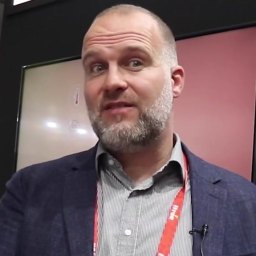 Brian McGuigan
Director Smart Cities, EMEA, Itron, Inc.
-
 Michael Sherwood
Chief Innovation Officer, City of Las Vegas
-
 Christophe Papin
Smart Solutions Director, Siradel
About this video
This video report delves into the increasing adoption of digital twin technology by cities worldwide, a trend driven by the need for more efficient and informed urban planning and management. Digital twins, sophisticated simulations that replicate real-world environments, are updated in real time and utilize 3-D mapping, data analytics, and machine learning to aid decision-making for both current and future urban projects.
We speak with Brian McGuigan, Director Smart Cities EMEA at Itron, Micheal Lee Sherwood, Chief Innovation Officer at City of Las Vegas and Christophe Papin, Smart Solutions Director at Siradel about how cities approach the decision to implement digital twin solutions. Our discussions reveal the considerations and strategies involved in adopting these technologies, emphasizing the importance of understanding the specific needs and capabilities of each urban area.
One of the key points highlighted is the role of digital twins during the Covid crisis. The pandemic underscored the practical utility of digital twins, showcasing their ability to respond to immediate, real-world challenges effectively. This example serves to demonstrate not only the current applications of digital twins but also their potential for future use in crisis management and response.
This video is particularly relevant for urban planners, policymakers, technology enthusiasts, and anyone interested in the intersection of urban development and advanced technology. It provides a nuanced understanding of how digital twin technology is being integrated into city planning and the implications for future urban development. The insights from Christophe Papin and the practical examples included make this report a valuable resource for those looking to understand the real-world impact and future possibilities of digital twins in urban environments.
Read the transcript machine-generated
More in Smart City Platforms
See all 8:30
Digital Twins: Key tool to make utilities more resilient, efficient?
 7:18
Analyzing a Smart City Startup Series B Funding Round Success
 7:03
How a Game Engine is Powering Orlando’s Digital Twin
 8:26
Digital Twins for Cities: From Hype to Reality?
 7:37
Las Vegas City’s Digital Twin Deployment Challenges Explained
 5:39
Founder’s Journey: How An Architect Built A Digital Twin Business
Latest news in smart city platforms
All news- Dubai’s Moro Hub Partners With ThingsBoard To Host Government IoT Applications On Moro Cloud25 Oct 2026
- Barbados Government Explores Urban Hypervisor Platform Modelled On Brazilian System18 Oct 2026
- Oviedo Council and Telefónica Deploy Smart Tourism Platform for Camino Primitivo17 Jul 2026
- Greek Private Equity Moves Into Municipal Technology With IoT Operator26 Jun 2026
Kurrant advisory
Planning a smart city platforms project? Talk to Kurrant.
Behind these interviews is Kurrant's advisory team, working with utilities, cities and the companies that serve them.
- Strategy AdvisoryKurrant is actively involved in resolving the challenges that cities, utilities and industry players are facing.
- M&A AdvisorySmart city and utility expertise for successful deals, turning insights into strategic gains.
- Engineering & ProcurementBetter engineering and procurement decisions, by identifying and developing digital and IoT solutions across use cases.
Or write to us: contact@kurrant.com
Send us a message