 in Barcelona
 3 to 5 Nov 2026
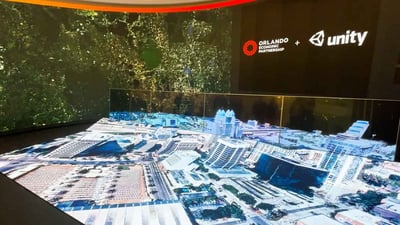
When we go to a smart city or utility event, we see many digital twin solutions, as they can be displayed on big screens and give booths a very attractive visual component. But sometimes, the real use cases and benefits of such an investment aren’t too clear. In the world of utilities, we are seeing the interest in this smart solution increase. For example, parts of Global Ominum’s water network have been digitally replicated, and the government of Wales announced last year the creation of a digital twin of its electricity grid, showing how there’s a growing trend of utilities looking to replicate the real world in the digital one. It’s, how can we link physical assets that we see out on the grid to their digital form? And from that, being able to see not only how assets have performed in the past, with the implementation of historical data, but also taking those assets, pushing them to their limits without any type of financial or infrastructure risk involved. Digital twins really are used all around. In our case, we're heavily focused on the distribution space, the EV charging infrastructure, and also on the substation design and transmission. So it is really applicability everywhere. Generally we like to say, if there is a physical asset, there needs to be a digital representation of that asset, the digital twin, to make it successful in terms of operations, in terms of work, maintenance and making sure that utilities can drive the most efficiency out of the capital that they spend on those assets. The benefits of digital twins are that data can be gathered, whether it’s historical or thanks to IoT devices, and displayed and integrated in a manner in which the digital world replicates the real one. With the solution, utilities can run simulations or predict situations, avoiding surprises, which is one of the biggest allures for utilities, as it means preventing interrupted services. As utilities are inundated with data from their massive network that can overwhelm them, digital twins can serve as a second layer to a data lake, as it brings purpose to the data. So where I would see it the most is typically on the distribution side, because that's where beyond the meter assets become a big player. Because one of the things many utilities can't control is in the past it's always been generation-transmission-distribution and then all the way down to the meter and that's where it stops. Consumers are making the decisions as to what they want to do back behind. What the digital twin can kind of help with is to start making that connection between those beyond the meter assets and the power that's actually being generated behind them, to kind of help make that handshake between that utility and the consumer, to not only have a potential from a resiliency perspective, to call upon those dispatchable loads that are being brought in beyond the meter, but also build a partnership between utilities, their commercial industrial loads, their residential clients to have a stake, in the helping of the implementation of that distributed energy from an installation standpoint, a financial perspective, and building that kind of contract saying, hey, if the grid is in a high demand situation, will you allow me to to dispatch some of that load from the assets that you have beyond the meter. It leads to higher level operational pictures. And that's where we see utilities, EPCs, really drive asset wide decisions. You know, how do we upgrade our whole distribution system for advanced distribution management systems. How do we improve the efficiency of those? And that is where having large scale asset information in those digital twin formats allow these organizations to drive high level operational efficiency through the use of digital twins. Digital twins can help utilities in maintenance as they can simulate the behavior of utility assets in real time, predicting potential failures before they occur and decide the best course of action. They can also help utilities understand where the best deployments will be. For example, in the installation of EV chargers or if an area is getting new houses built, utilities can run simulations to understand how the load will affect the grid, or if more transformers are needed. Utilities have a very extensive network, so inspecting their assets in person can be a very lengthy and challenging process. A company using digital twins for utility inspections is land surveying firm AJS. They use LooqAI’s computer vision tool and digital twin platform when checking utility construction sites. Mainly right now we're using it to capture all the data after construction to make sure that everything was built in compliance with the specs from the utility. So it's a check, a third party check on the construction process. It has to be very, very exact. So much so that we want to document if a bolt is out of place, if the wires are to close, things like that. So it has to be exact and it has to be a perfect digital capture of what it is, because there's a lot riding on it. For example, if I didn't have a digital twin or a tool like this, I would have to send out field crews to spend hours and hours basically surveying and performing a conventional kind of traditional survey of every transmission pole, every distribution bolt. Obviously, we work on hundreds of those. It's hundreds of man hours. There's some risk involved for safety. So it eliminates a lot of that. Very quick scan, gets my guys safely out of the field and collects all of the data in one shot, kind of reducing human error. You know, every year our clients want us to get faster and better. They don't want to see the quality drop, but they want us to take on higher volume of these inspections. So we have to keep up somehow and to be creative. As we saw with this example, AI has also made its way into the digital twin world of utilities, as it’s enabling the technology to speed up operations. In the case of LooqAI, the company uses computer vision and then portrays it in the digital twin, something that helped them raise 2.6 million dollars in a seed round from VCs like BootstrapLabs, a firm focused on applied artificial intelligence, proving how AI is becoming key in many solutions. With the market I think there is definitely a huge drive in seeing how that AI and computer vision can apply to real industrial problems, to save bottom line value. And because of that impact the AI has, there is definitely huge attraction in the investment space. So in our case, the AI is very specifically used to help extract the asset information you need for object detection and asset management across the distribution space. We're doing a lot of our ground classification, vegetation management, all of that through the use of AI. So what artificial intelligence is allowing us to do is to build those machine learning models based upon historical data. And based upon how assets have performed in the past, we can make reliable predictions as to how they're going to perform in the future, even with new technologies being brought in. Based on models of both simulation models, building those additional and artificial intelligence models, we can start to make a more reliable system to give a better recommendation. To sum it all up, digital twins allow utilities to link their physical assets to a digital platform, to see how they work and have worked in the past, run simulations to curb financial and infrastructure risks as well as allow for predictions that improve maintenance without having to wait for the service to fail before finding a fault, performance optimization and better planning, which will lead to optimised investments when building and extending the infrastructure, making operations efficient and improving services. They can also help bring utilities, their vendors and consumers closer to improve the resiliency of the grid. As for AI, since digital twins are very visual, computer vision and other types of AI help companies capture and classify spaces, and also, on the platform, through machine learning, make predictions and even recommendations with the data gathered, allowing for decisions to be more informed. It is considered the icing on the cake of digital twins.
Digital Twins: Key tool to make utilities more resilient, efficient?
When we go to a smart city or utility event, we see many digital twin solutions, as they can be displayed on big screens and give booths a very attractive visual component. But sometimes, the real use cases and benefits of such an investment aren't too clear. In the world of utilities, we are seeing the interest in this smart solution increase. For example, parts of Global Ominum's water network have been digitally replicated, and the government of Wales announced last year the creation of a digital twin of its electricity grid, showing how there's a growing trend of utilities looking to replicate the real world in the digital one.
In this video we talk to Jamie Tate, Director of Business Development at Enxchange, Dominique Meyer, CEO of LooqAI, and Amanda Jones, of AJS, to discuss the benefits and use cases of digital twins in the utility industry and the role AI is playing in advancing the solution.
View transcript auto-generated






Similar Picks


📰 Latest News
🎬 Kurrant Originals
🎥 Recent Event Coverage
Featured Case Studies
Real client work behind the news. Strategy, M&A and engineering projects we've delivered for cities and utilities.


Stay in the Loop
Get smart cities and utilities insights delivered your way. Choose your channel
Join our WhatsApp Channel