 in Barcelona
 3 to 5 Nov 2026
there are many great things about the midwestern state of Iowa but its winters aren't among them cities in this state never know when mother nature will strike but with the right technology they're ready when she does it's just having this hard data that's critical data now at our disposal that we've never had before Brett Hahn is the public Services Director with West Des Moines, Iowa, a city home to 800 miles of roadway that carry up to 150 ,000 people per day. For years, the city struggled to understand where to send its snow plows during harsh weather and even how much salt those plows needed to dispense. It's information state weather agencies like the Iowa Department of Transportation captures easily. they use large but expensive road weather information systems like this most of the fixed mounted units were expensive they were typically you know back then about fifty thousand dollars per unit so we approached viceland said you know we can't afford to buy these fixed mounted units but what would you think about developing a lease program to where we did a five -year lease an annual agreement and renew renewal and then you take care of all the maintenance and calibration and we get the information. So we started with one of those and we've expanded to five now. The city mounted four Aurises on traffic lights and one on a bridge. The units are customized to meet the needs of West Des Moines, Iowa. They feature a weather detector, a surface temperature probe and sensors that measure water level, snow depth and wind speed. There's a. infrared and laser technology that measures road friction, pavement temperature and relative humidity. Access cameras meanwhile take images of the roads every 10 minutes and several algorithms bring in raw data from surface state sensors. All that data communicates over a cellular network to the Vaisla software platform which the city monitors to understand current and future trends. We take in weather forecasts, we take in satellite data and weather radar data, and then we model that. And what we can now do is we can show the state of the road network across the whole city. In 2020, the city took this technology to the next level, adding mobile road weather sensors to its plows. The Vaisla Mobile Detect MD -30 is a sensor that gathers very similar data to the Arwis units. but at a hyper-local level and at a fraction of the cost. We've got six of these units right now, and we've got two more that are coming in this fall for two new trucks, so we'll have eight of these. And, you know, you're probably going to be in the neighborhood of $6 ,000 to $8 ,000 roughly per unit. Those units have enabled the city to reduce its salt application by... 30 percent which in turn has saved west des moines about 150 000 in one year what's harder to measure though that's a factor too is um what's the what's the real cost of the reduction in the footprint on the environment you know what's the what's the real cost of not having you know using any more chemical than you really have to use to get to the level of service you want and not create issues like you know groundwater pollution or or salinity issues in streams and creeks. But why stop there? Especially when you can actually embed these devices into the ground, or at least a similar kind of device. This piece is a compact road weather station that you embed into the pavement. So it's embedded fully, and it provides you then measurements about the surface body temperature up to the depth of 30 centimeters. It tells you also if you still have chemical left on the road, so if you're salting it will tell you the residual salt amount and it will also tell you if your road surface is dry or not. The device communicates that data over an MB -IoT network and the built -in battery lasts an estimated three years. It will be piloted this winter by West Des Moines, but can the device actually last that long, especially considering all... the wear and tear that happens on the roads so what this sensor does is that it actually wears down with the road so when you install it you will want to level the upper surface with the road surface and then as the pavement starts to wear down also the sensor sinks into the drill hole. West Des Moines expects to combine all three solutions the Arwises, mobile sensors and ground cast sensors into its winter war room. This technology though can also benefit other operations once the city ties that weather data into its existing intelligent traffic systems. Listen to this. You know, our entire traffic network is driven, is modeling off traffic adaptive network where the signals are coordinating and talking to each other. Now, what we may have talked, we've talked a little bit about in the future is even utilizing the weather data off of the ARWIS to tie into our traffic signal network to actually Operate it a little differently based on road conditions to where you may have longer delays or staggered, you know, longer yellows to allow traffic to get through those intersections, maybe if it was slick. Vaisla has also added air quality sensors to the Arwis units. Some mirrors are very inspired by sustainability and for them also air quality can be a door opener and with the compact air quality sensors that we have. We can then place them in problematic spots where we know that we have a lot of traffic or we have emissions or also in sensitive areas where we know we have a residential area or we have a school. And then we can start just monitoring how is the air quality behaving and we can start doing correlation analysis. So how much of that is actually dependent on traffic. And just to give you an example, in Birmingham, in United Kingdom right now, we're running 62... air quality sensors and we have compact weather stations and then we have traffic counters on the same sites and then we can start seeing is actually traffic causing bad air quality and what kinds of traffic patterns and we can also see well under what kinds of weather conditions do we see these kinds of adverse developments and I think that nobody has figured out the holy grail yet but at the end of the day you know where we want to be is that first of all we want to be able to predict bad air quality and then we also want to be able to put in mitigating efforts even before the air quality has worsened. So clearly a lot of use cases for these devices that traditionally were marketed for the winter months. But if you take a deeper look, they're just as useful on a warm summer day like many of us are currently experiencing. For more coverage on these devices and on Intelligent Transit systems. Be sure to follow along on Current Insights.
West Des Moines Discovers Big Value in Road Weather Systems
Air quality monitoringEnvironmental MonitoringMobilityRoad monitoringWest Des Moines
In this video
-
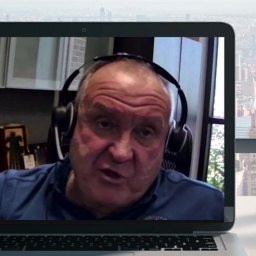 Bret Hodne
Public Services Director, City of West Des Moines, Iowa
-
 Erik Sucksdorff
Dir., Sales, UK & Ireland and Ground Transportation Western EU, Vaisala
About this video
The video features Bret Hodne, Public Service Director at the City of West Des Moines, and Erik Sucksdorff of Vaisala, discussing the monitoring and improving of road conditions with smart solutions. These solutions represents a significant advancement in road maintenance and safety, providing in-depth insights into the state of road infrastructure.
Hodne explains how technology goes beyond conventional road condition monitoring. By utilizing advanced sensors and data analytics, the system effectively tracks various aspects of road deterioration. This includes identifying potential hazards like potholes, cracks, and wear and tear, which are critical for timely maintenance and ensuring road safety.
The video highlights the dual benefits of such a system: not only does it offer a precise assessment of current road conditions, but it also aids in predicting future deterioration. This predictive capability is vital for proactive road maintenance, helping to prevent accidents and enhance overall road security.
Hodne emphasizes the role of this technology in transforming how cities manage their road networks. By adopting such solution West Des Moines has been able to make more informed decisions regarding road repairs and upgrades. This proactive approach to road maintenance not only ensures smoother and safer travel for residents but also contributes to long-term cost savings for the city.
The video is particularly relevant for city officials, urban planners, and professionals in public works and infrastructure management. It provides practical insights into how integrating advanced monitoring systems like Vaisala's can significantly improve road conditions and safety.
Viewers interested in smart city technologies and urban infrastructure will find this video informative and enlightening. It showcases a real-world example of how technology can be leveraged to enhance the quality of urban services and infrastructure, making cities safer and more efficient.
Read the transcript machine-generated
More in Mobility
See all 4:11
From Cameras to Insights: VisionAI Transforms Motorway Operations
 6:29
VisionAI Helps Boost Security During 2024 Olympic Games
 8:19
Curbing Noise Pollution with AI-Enabled Solution
 7:29
Brussels’ Smart City Strategy – Part 2
 7:59
Smart Parking Landscape Changes with New Players, Enforcement
 8:13
Mobility Data: New Paradigm for Smart Cities
Latest news in mobility
All news- City Of Zadar Selects ELIPSA For €197,900 Design Of Intelligent Transport System Phase Two31 Oct 2026
- Via Lietuva Awards Jenoptik Baltic €2M Contract For 216 ANPR Cameras On Lithuanian Toll Roads31 Oct 2026
- USDOT Selects UCLA, University Of Michigan And Derq For $5.5M Intersection Safety Phase One25 Oct 2026
- MBTA Begins Hayden AI Bus Lane And Bus Stop Camera Enforcement On Routes SL4 And SL525 Oct 2026
Kurrant advisory
Planning a mobility project? Talk to Kurrant.
Behind these interviews is Kurrant's advisory team, working with utilities, cities and the companies that serve them.
- Strategy AdvisoryKurrant is actively involved in resolving the challenges that cities, utilities and industry players are facing.
- M&A AdvisorySmart city and utility expertise for successful deals, turning insights into strategic gains.
- Engineering & ProcurementBetter engineering and procurement decisions, by identifying and developing digital and IoT solutions across use cases.
Or write to us: contact@kurrant.com
Send us a message