 in Barcelona
 3 to 5 Nov 2026
Air quality monitoring is nothing new for cities, which for decades have been relying only on regulatory measurement stations and satellite imagery to detect global pollution levels. But after two years of pandemic and increasing citizen awareness, air quality is a trending topic more than ever, and the Smart City Expo showed it. I think... Like one or two years ago, clean air in cities was one of the top 10 consumer trends worldwide. And since we are starting to see more data and have more awareness about the topic, people actually have it on top of their mind and they're thinking about it. But there's a twist to traditional air quality monitoring. The trend now is mapping hyperlocal air quality by combining data from regulatory measurement stations. owned by municipalities and government agencies, satellite imagery, low-cost IoT sensors, and a range of other urban data like traffic to provide cities with highly granular data. The Sentinel-5P is the main atmosphere satellite in orbit at the moment. And the Dutch Meteorological Agency and Lobelia, we have been partnering on this service to provide urban air quality. services at very high resolution, at street level resolution. We use satellite data, we use ground data, meteorological data, traffic data that is assimilated in a dispersion model to get these very fine maps of concentration of air quality. Taking into account different parameters, first of all the kind of pollution, but also the weather conditions and information related to the city, traffic information, population density and even politics. What are the boundaries of the municipality, where we want to measure and so on. It's all about the data, which to collect and what to do with it. Cities for example use it for decision making. But we more and more in Europe at least see clients moving into use cases like traffic management and then it's more important to understand a little bit about the traffic network and then it makes sense to really have a kind of combined. measurements of pollutants and maybe vehicle numbers at that location to really get the data actionable. But more interestingly, the monetization of data has become the focus of the air quality monitoring vertical. So now their business models are focused on data as a service in which rather than selling and installing sensors, they offer clients a subscription for the data their sensors and the other sources collect. Some of our solutions are provided as they... as a service so for example our air quality modeling and forecasting solution is provided as data as a service is a subscription well the core of our business model is as a service so anything we do including the hardware we we offer within an as a service model there is not really such thing of a data ownership but we grant rights to data and for For our city customers, we grant all the rights that they want. Globally, they can sell it, they can keep it, they can open it, whatever they want. Cities are the first users of the data, but they can also partner with air quality monitoring vendors by allowing them to share their data with third parties. Cities can then generate revenue and pay back part of their smart city investments through air quality data monetization. But the biggest data consumer is suspected to be the private sector. There is a lot of interest from major brands in having air quality data as it can help the business. For example, the cosmetics world has found a benefit in having air quality data. Former L 'Oreal CEO Jan -Paul Agan once said in an interview that pollution was good for business, as the higher the pollution, the more cosmetics residents needed. So having this type of local helps company know when and where to push each product and what aspect of the product to focus on. Sports and health companies that might want to include that in their in their running apps or you know in their asthma alert apps because air pollutants like ozone can also trigger asthma attacks and by having this hyper local information in their in their applications they can really add value to the product that they're providing to their customers. Israeli company BreezoMeter has been key in this. They were pioneered in that their main target for their air quality monitoring data was advertising. Their business model caught the eye of Google, who bought the company for some $200 million in September of 2022, meaning one of the big five has seen in this data an interesting investment. Among BreezoMeter clients, we can find Neutrogena, who using real -time and hyper -local air quality... information was able to adjust its marketing campaign to each specific location and the needs of their residents. Breezo Meter has paved the way for this kind of business model. So the data is always the property of our client, of our customer, but we are giving them the choice of us also being able to use the data and what that gets them in return is a... subsidized charge and on the other side we are currently building a data exchange hub where those that have air quality data can put it in and then we have on the other side a number of corporates and other interested parties that want to use air quality data to build new apps, new business models, new products and are willing to pay for that. As we saw at the Smart City Expo, air quality monitoring's main challenge is no longer sensor deployment, but rather a data game with vendors focused on a data -driven business model and the revenue opportunities it brings. Air quality monitoring is clearly leading the way, but we have seen other types of vendors focusing on data monetization, like PeopleFlow data providers with players like MyTraffic in France who just raised 30 million euros, but will data monetization models generate viable revenue for solution vendors and opportunities for cities to finance and accelerate smart city project deployments let's see follow current insights if you don't want to miss out
Originals Environmental Monitoring
Air Quality Data: A Holy Grail for Differentiation
Air quality monitoringEnvironmental Monitoring
In this video
-
 Robert Heinecke
CEO, Founder, Breeze Technologies
-
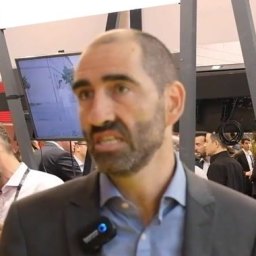 Aytor Naranjo
Director Business Development, Lobelia Earth
-
 Elena Garcia Pallas
Business Development Manager, Vaisala
-
 Frank Felten
CPO, Hawa Dawa
About this video
In this insightful video, we delve into the evolving landscape of air quality monitoring in urban environments, a subject that has gained significant traction in recent years. With the backdrop of a global pandemic and heightened public consciousness, the focus on monitoring and improving air quality has become more pertinent than ever. This video explores the shift from conventional air quality monitoring methods to the innovative concept of hyperlocal air quality mapping with Robert Heinecke of Breeze Technologies, Aytor Naranjo of Lobelia Earth, Elena Garcia Pallas of Vaisala, Frank Felten of Hawa Dawa (Now Bernard Gruppe),
The concept of hyperlocal air quality mapping is not just a scientific endeavor but also a burgeoning business model. Vendors in this space are now exploring the monetization of air quality data. This development represents a symbiotic relationship between data vendors, city administrations, and corporate brands. Such collaborations are redefining the utility of air quality data, transforming it into a valuable asset for various stakeholders.
Our discussion highlights how cities and brands are leveraging air quality information. This data, previously overlooked, is now being seen as a critical element for differentiation and advertising strategies. The video features expert opinions and case studies that illustrate how the integration of air quality data into marketing and urban planning strategies is creating new opportunities for innovation and engagement.
Join us in this exploration of how air quality monitoring is evolving into a critical tool for urban development and marketing, and how it is shaping the way we understand and interact with our urban environments.
Read the transcript machine-generated
More in Environmental Monitoring
See all 4:25
The Tech Behind Tsunami Alerts: How AI and Sensors Save Lives
 4:32
Exposomes: Where Smart Cities, AI, and the Scientific Community Meet
 7:24
The Evolution of Smart Cities and Utilities in the US
 5:50
Cleveland Turns to Air Quality Sensors to Tackle High Asthma Rates
 7:15
How AI-Enabled Cameras and Predictive Analytics Helped Fight LA Fires
 6:13
Austin Energy Steps Up Wildfire Prevention with Vision AI
Latest news in environmental monitoring
All news- UK National Parks Launch Wildfire Resilience Programme In Cairngorms29 Oct 2026
- Victoria Adds 11 AI Bushfire Cameras To Seven-Unit Plantation Network In A$3.8M Programme29 Oct 2026
- Korea National Park Service Builds Bandal Lens AI To Identify 17 Mammal Species From 1,300 Cameras20 Oct 2026
- UK Space Agency Opens £2M Satellite Grant Call For Environmental Intelligence And Emissions Monitoring20 Oct 2026
Kurrant advisory
Planning a environmental monitoring project? Talk to Kurrant.
Behind these interviews is Kurrant's advisory team, working with utilities, cities and the companies that serve them.
- Strategy AdvisoryKurrant is actively involved in resolving the challenges that cities, utilities and industry players are facing.
- M&A AdvisorySmart city and utility expertise for successful deals, turning insights into strategic gains.
- Engineering & ProcurementBetter engineering and procurement decisions, by identifying and developing digital and IoT solutions across use cases.
Or write to us: contact@kurrant.com
Send us a message